Archive for the ‘Opinion’ Category

Give India another chance to prove themselves

Posted: September 14, 2011 by The CouchExpert in Cricket, India in England 2011, Opinion

Srikrishnan Chandrasekharan

There have been plenty of comments against team India’s performance in the ongoing tour of England. Fans, press reporters, journalists, former players across the cricket world have spoken about the Indian players’ lack of preparation and their involvement towards Test cricket is below par. Some of them commented Indian team can go back home if they are not willing put up a fight against their team.

Across the globe many feel that India’s interest in T20 has spoiled their chances in Tests against England. Some of them blame the players, the BCCI, the IPL and ICC. Are these the real reasons for India’s loss against England?

The answer is a very simple NO! Let’s look closer as to what has happened since the year 2011 for team India. As like other teams, India participated in ICC Cricket World Cup 2011 and played 9 matches starting from 19th Feb to 2nd Apr. Generally there is a 2 day intervals period between ODI matches these days which is mandated by ICC. The world cup lasted for 43 days and India had match on 9 days out of that. Instead of 2 days per match, on an average there were 4-5 days between matches.

It is unfair to blame all our shortcomings in England on IPL alone.

Next is the IPL 2011 wherein many players who were part of World Cup team also participated in the IPL. The tournament lasted from 8th April to 28th May (close to 51 days). Players from Indian team have played 16 days out of 51 days. Since IPL matches are half of the ODI time frame, the tournament still give sufficient time frame for the players to have rest. There is really no great deal of tough schedule to the players other than the peak summer that takes it toll. Many would argue that the post-match parties take out more than the games themselves. It is a player discipline issue here. Most owners want them to show their faces to the fans who buy into these parties. No one is expected to party late into the night.

When compare the Cricket with Tennis, the cricket players get more time to relax than the others. This clearly depicts the team had a reasonable schedule to relax and get ready for the next tournament. One cannot blame the players, the IPL tournament, the BCCI and ICC on the scheduling front.

Let’s move on to the T20 format which has been reported by several senior players stating spoiling the cricket environment on longer formats. Certain things need to look from a different perspective as T20 format has transformed the cricket fever in the individuals across countries. It has given plenty of opportunity to the players to explore their talent and in the young age to play unbelievable cricket of smashing great bowlers out of park and take their team to glory. There have been plenty of talented individuals who are now known to the world through this and they have also got opportunity to play for their country not just stop at the level of some T20 tournaments.

These T20 formats should happen frequently in a year so that the emerging players will get opportunity to make their mark at national level. Some of the senior players from other countries have declared that their focus is towards longer version of cricket and not on T20.

Also there have been comments from senior players stating players shouldn’t look for money and choose T20, but need to focus towards serving their country in longer versions. The comment is valid, but a country like India wherein you have 1.2 billion people wherein only 14 to 17 members will be chosen to play in the national team. The players who spend their life starting at the age of 12 to 25 or 30 should rely on cricket to survive their life as they may not have any other choice of making an entry into other fields for livelihood post their cricketing days.

In every field, victory and defeat is but natural. It is not possible to always end up victorious or otherwise. Sport isn’t supposed meant to be that way. Nadal isn’t a bad player because he’s been cleaned up by Djokovic on all occasions this year. When a good team ends up losing matches in a tour, those are real tough times for the players to learn and move forward. The current series lost against England in Tests is one such incident and this team will really come back stronger and show the world how powerful they are. You will see the same critics waxing eloquence of the same players when they get back to winning ways.

Let’s not judge team / players who are on top of the world based on a single tour of failure. India has managed to put a good fight in the test matches wherein nothing went their way. Yes, England was the biggest Test challenge of the year. In a way, it is really good to see the team fail after the World cup. It would really have been hard for players and fans of India to have digested failure in the world cup.


Rajat Jain
Head of Tennis, The CouchExpert
13 September 2011

Feeling of Invincibility

Feeling of Invincibility


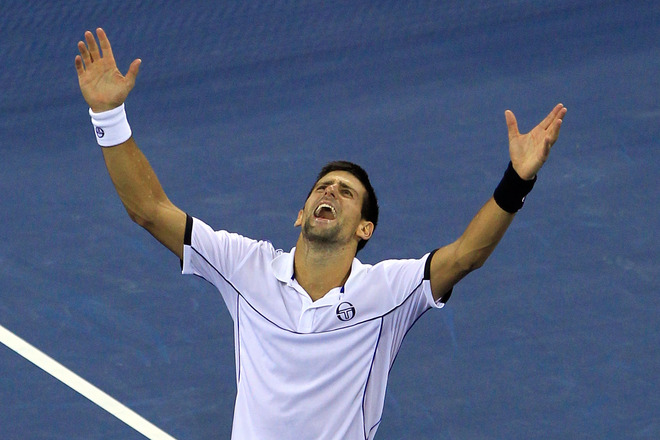
It is no secret that Roger Federer and Rafael Nadal are the two greatest players of this era and rank at or near the top in the list of all time. It is not difficult to see how Andy Roddick would have won multiple Wimbledon titles, or Andy Murray would have ended the British drought if it were not for these two men. Novak Djokovic himself struggled to compete against the two for a while and has gradually improved himself to the point where he is almost unbeatable against the two — well, everybody. Look at how he monumentally increased his performance at majors this year. First, he beat the defending champion, Federer, in Melbourne. Then he beat Nadal, again the defending champion, at Wimbledon. To top it off he beat both, Federer and Nadal, at New York.

I have mentioned many times that the Miami finals this year was the turning point in the rivalry. Actually, the trivalry. He beat Nadal at his own game — by outgassing him in the final set tie-breaker. Even after beating Nadal four times in the Masters, we still thought that is a different task to take three sets off Nadal in a major final (Nadal had lost just two major finals before this year). He did that at Wimbledon. Today, he completed his dominance over Nadal.

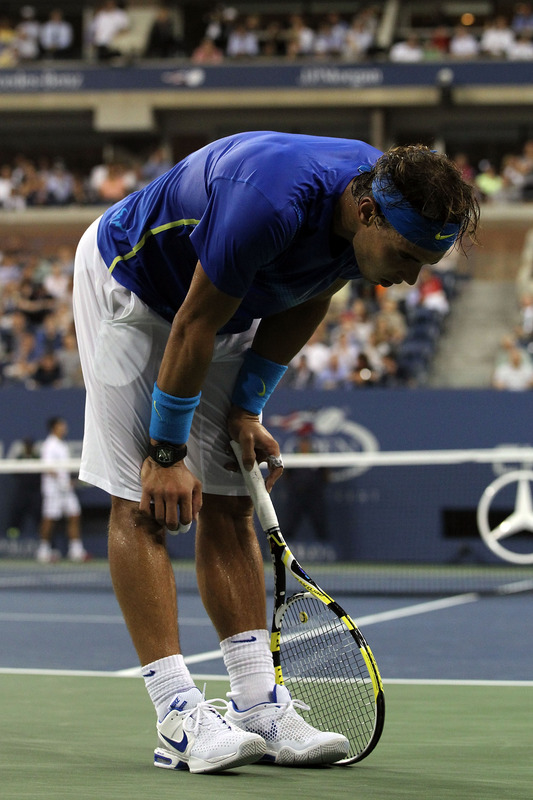
A scoreline of 6-2 6-4 6-7 6-1 loos like a routine four set win, completed somewhere around 3 hours. It was anything but. The actual time of this match was north of four hours spanned over 268 points. Most of those 268 points were contested in brutal, physical rallies of the highest magnitude, ones which we have rarely seen. Each point had to be won two, three or four times. One of these games lasted 17 minutes and rarely was there a game not going to deuce. They battled from the baseline, came to the net to hit volleys, were lobbed and had to scramble back to start the point over …. I can go on. The physicality of this four set match was even more than most of the five set epics that Rafa has played in his career.

In the past, Rafa had made a career on outlasting his opponents. After magically winning the tie-breaker with his extreme fighting ability, he had finally turned this match into a physical battle. Djokovic called for the trainer and did not hit a first serve above 100mph thereafter. Everybody thought Rafa would take the match in five. Except Rafa, that is. Because he used his entire fuel tank to bring cramps on his gulten-free opponent. When Djokovic hit the final forehand winner, Nadal did not make an attempt to reach for it. The tireless opponent was also robbed off every ounce of mental energy by then to fight any longer.

What a difference a year makes. What changed? Nadal said, “less mistakes.” Federer said the same. Djokovic called the change in his “attitude.” But one feels it is more than that. Nadal was broken just five times last year but Djokovic broke him 11 times today. The latter has taken the return of the serve to an entirely new level. Everybody, including Djokovic, felt that he was lucky on the return winner down 15-40 to Federer, but he showed today that it was not

Solutions? Still Looking ...

Solutions? Still Looking ...

mere luck. When Nadal’s signature serves wide from the ad court are blasted for return winners, you know you are witnessing something special. It might not be an overstatement to say that Djokovic did a great job “holding” his return of serve. The most scary statistic: Nadal lost every second point on his first serve. And this was when Nadal was not playing bad himself. He broke Djokovic six times in the first three sets and saved 15 break points. Even though his backhand was no match against Djokovic, he kept himself alive in rallies using great combination of slices, forehands and change of pace. He fought from the deepest hole when Djokovic was serving for the match in the third to extend it for another set.

In the end he kept everything in perspective during the press interview by saying he is closer to finding the solution than he was at Wimbledon. Which he is, considering he kept the scoreline same on his worst surface (hard courts) compared to Djokovic’s worst (grass). Djokovic, on the other hand, is still trying to come back to earth. When asked about his accomplishments this year he rightly said it will take time to realize what he has done. For him, as well as for us. 66-2 and counting …

The Myth About Captaincy

Posted: September 9, 2011 by The CouchExpert in Cricket, Opinion
Tags: , , , , ,

Srikrishnan Chandrasekaran

Kapil Dev, Allan Border and Clive Lloyd led their respective teams to their first world cup titles

The hottest topic that is discussed during any series in the sport of cricket is about captaincy and captains. Captains from both winning and losing team will be called up after the completion of every match to talk about the positive and negative of that day’s match. The Indian media is very famous for the creating hype about the series and also the way they convert small information into an atom bomb which sometimes results in good players being dropped. (One example is the former Indian captain Ganguly). In case the Indian team ends up losing the series, they invite former players from India and other countries to discuss their failures and especially about the captaincy.

Recently the Bangladesh captain and vice captain were sacked from their responsibilities for losing in Zimbabwe. Every country is king on their home soil irrespective of the opposition. Even though Zimbabwe had not played much cricket over the years at international level, they will have played a lot in those conditions domestically. It is really difficult for any team to play against a team which has not appeared in international arena for few years.

Even the first test match between Pakistan and Zimbabwe was very closely contested wherein Zimbabwe players missed several opportunities of catching Pakistani batsmen. Generally it is Pakistan who are renowned for missing opportunities while fielding. It was a nail biting finish to the first ODI as well. Even though Pakistan is better side than Bangladesh with the amount of experienced cricketers in their side, they still found it difficult to win a match against them convincingly so far.

In the recent years, there has been improvement in the Bangladesh cricket team. They should be given some more years of time to stabilize at the top level. At present they don’t have any players who have got good experience in International level to lead the team.

Fans, reporters, former players, editors across the cricket world often talk about the captaincy. There were astute people who were good captains between 1970 and 1990 – like Clive Lloyd, Allan Border, Kapil Dev, Imran Khan, Mike Gatting.

Clive Lloyd led the West Indies to 2 consecutive World cup wins in 1975 and 1979 and to the final of 1983. The WI team during 1975 through 1983 had got real talent comprising of great fast bowling and excellent batsmen.

Kapil Dev became  the first Indian captain to win the World cup in 1983. He led a team which had a good mix of quality batsmen and bowlers.

Allan Border became first Australian captain to win the World cup in 1987. The team had real class batsmen and good quality bowling.

Starting 1990 there has been only a marginal improvement in terms of captaincy. There are still a lot of talk towards some of these captains being great captains – Mark Taylor, Arjuna Ranatunga, Wasim Akram, Nasser Hussain, Shaun Pollock, Steve Waugh, Richie Richardson, Ricky Ponting, Stephen Fleming, Sourav Ganguly, Anil Kumble, Grame Smith, Kumara Sangakkara, MS Dhoni, Andrew Strauss as they have won more no. of matches and tournaments for their respective countries.  Are they really so?

These captains lead a team which had got at least 2 out of 3 bases covered with some of the best cricketers. Qualities like very good batsmen, best all-rounders and great bowlers. There is nothing really great when you leads a team which has such brilliant talents. Even 50% of the players perform, the team ends with a win. None of these leaders really took over the team when it was at the bottom 3 or 4 in the ranking table and finished their career as captain in the top 2 position.

It seems almost mandatory rule a team should have a captain and a vice captain. To project that for every team players have been picked and given the position to lead. None of these captains really led their team to a tournament victory with less skilled players in the team.

Some of these captains holds the skill of utilizing talents existing in their team at the right time of a match / tournament and succeeded with good results. It is part of a job of a captain. There are only few eligible players who can be considered as emerging captains like Shakib Al Hasan, Misbah-ul-Haq and Bredon Taylor. Their teams are currently in the bottom 5 of the ranking tables. Let’s see their performance after 2 years as how they transformed their lead role talent to form their teams to next level.

Why reduce overs in cricket?

Posted: September 7, 2011 by Editor in Cricket, Opinion
Tags: , ,

Srikrishnan Chandrasekaran

You never have a football match reduced to 15 minutes a half because of rain or a Grand Slam final reduced to best-of-three sets because of rain or inclement weather. When was the last time you saw a badminton final reduced to a one game affair? Or do you reduce the golf major reduced to a 6-hole final round? So, why only cricket? Who gives them the power to reduce a 20-overs per side game to a 5-over contest and call it a game? Are they afraid of refunds? Or, are they worried that the TV crew will have to work a day extra to set-up their cameras and have less time to move to the next stadium?

Cricket is unique because it has three distinct formats. When overs are the distinguishing factor from one format to the other, how do you call a 20-overs per side game as a T20 game one day and a ODI the other?

The ICC should come up with a new set of rules for the game of Cricket. The teams travel to a cricket country once in 4 years to play a full series. During that time there might be unavoidable circumstances that rules out the entire match irrespective of the purpose of the series. The first ODI between India and England was washed out because of rain. The series will be decided only with the remaining of the 4 matches. The system doesn’t look meaningful. At any cost the series should happen as is either by extending the schedule or reducing the number of days between the next match.

The farce of calling a 20-over per side game as ODI is unique to cricket

There are a lot of other things involved in a series, like preparing the ground, infrastructure to the players and other officials, facilities to the fans and visitors to be handled by the home board. But there should be a backup plan from ICC or respective boards in the case of a match not being held for a reason, and then it should be compensated with in that stipulated period. The 2nd ODI between the teams had been reduced to 23 overs due to heavy rain. The match should be played as per the number of over scheduled. A 50 over game or a 20 over game at any cost should not be reduced. How can a 50 over match be reduced to 23 overs and it is considered as ODI match?

It doesn’t happen in many of the other sports as well as space. Take an example, due to unexpected circumstances a 10th standard public exam can be cancelled and it will be rescheduled. It will never be reduced from 100 marks to 5 marks exam. When a match is measured between 2 teams over 50 overs, how can it suddenly change to 23 overs and measure that performance as an ODI? It doesn’t make any sense.

Even during the last IPL final, the 20 over match was reduced to 17 overs per side. Why should the final of a tournament to be reduced due to rain. To bowl 6 overs it hardly takes about 30 minutes. For 8 PM IST IPL matches, the fans used to arrive at the ground by 6 PM and they will be very happy leaving the ground 30 minutes after the schedule by the playing the quota for a 20 overs match rather than have number of overs reduced.

In case the stipulated overs are not complete on the given day, the ICC/home board should schedule the match to a next day bearing all the cost and other infrastructure. For every space, there is back up plan for execution, why is it there not in cricket? Whether fans, reporters, advertising agencies and etc will be available or not, there should be at least few camera troops from ICC/home board to record the match and telecast it later. ICC can still earn their broadcast charges form their respective vendors / advertising companies by broadcasting the match next day.

The current system looks like ICC/home board want to run the matches because they doesn’t have a backup plan and they want to ensure their profits are met irrespective whether the players / teams / billions of fans across the globe will feel happy or not. Let’s try to play the games as is instead of reducing the overs for any unavoidable circumstances and changing the reality of the game thus reducing the spirit of the game.


Rajat Jain
Head of Tennis, The CouchExpert
7 September 2011


The fact that serve-n-volley is practically dead today has been a common discussion point among tennis afficianadoes. While it is true that it is now an extinct art, I do not miss that aspect of the same so much. There is still great baseline tennis on offer and the spectacular winners from the far court than makes up for that. In fact, I enjoy the occasional serve-n-volley points that players do today as an element of surprise, which is why I enjoy watching players like Roger Federer, Mardy Fish, Jo Wilfried Tsonga (coupled with Michael Llodra).

An aggressive slice is becoming a lost art

An aggressive slice is becoming a lost art

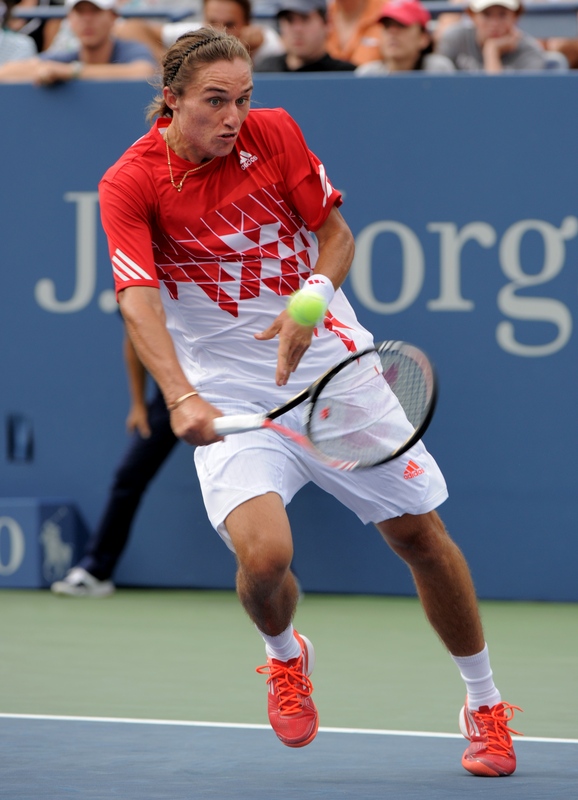
The side effects of the above has been more telling, in my opinion. One of them is the slow decay of the backhand ‘slice’. I know what you are saying. Don’t players today use slices a lot? Rafael Nadal and Andy Murray have a great slice, Novak Djokovic does it sometimes, and Andy Roddick has modeled his backhand purely on the slice as the zip on his two hander has declined over the years. In fact, youngsters like Dolgopolov use it heavily, and yesterday’s match against Djokovic was a great example. The Ukranian troubled the Serb for the greater part of the first set with the lack of pace generated through the slice.

But the common pattern among all of these players is the exclusive use of defensive slice. Most of them use slice only when they are not in a position to hit a strong two hander. In fact, the aggressive slice down-the-line, one of the more difficult shots in the game, is almost absent in the game. There were countless times in yesterday’s match, when I yelled from my seat, “Slice to the forehand!” It never came. Or it came only when Djokovic was present mid court, and was in a great position to make a decent pass. Just like the backhand down-the-line is used to open up the court, the slice up-the-line was a great ploy used by serve-n-volley players which either resulted in some of the best running forehands or in a makeable volley at the net.

Dologopolov’s used heavy cuts on the slice, which were devoid of any pace and stayed very low even on these courts which have more bounce than in the previous years. For some time it troubled Djokovic, but it was only a matter of time before this pattern became routine, and Djokovic, with arguably the best backhand of all time, started handling it easily.

The other side effect has been the inability to recognize a good approach shot and closing the net. The sight of Roddick becoming a dead duck at the net against Federer occurs frequently in their encounters. Yesterday, Kuznetsova was passed time and again against Wozniacki. Part of it was because she made wrong approaches by hitting to Wozniacki’s stronger wing, the backhand. The inability to hit a good slice up-the-line to Wozniacki’s forehand. And because she was passed so frequently, she did not come forward on a potentially good approach. The other part of it was the lack of confidence to take the net which usually resulted in her in no (wo)man’s land in the mid-court. She took a lot of difficult half volleys as a result which were easy pickings for the Dane.

The very fact even Federer, the best aggressive player of this era, has hired Paul Annacone to improve his chip-n-charge tells the current condition of the game.