Posts Tagged ‘Zaheer Khan’


Goutham Chakravarthi

Numbers

India have more than held their own against Australia since 1995 when Australia became the numero uno side in the world. Since then, India is the only team with a positive Win/Loss ratio of 1.2 (12 wins, 10 losses in 28 matches) against Australia among all Test nations with England a distant second with a Win/Loss ratio of 0.56 (13 wins, 23 losses in 44 matches). India has not only played on equal terms over these years, but are the only team to have consistently competed with Australia through the last 17 years, both home and away.

Team Matches Won Lost Tied Draw W/L Ratio
England 44 13 23 0 8 0.56
India 28 12 10 0 6 1.2
South Africa 26 6 17 0 3 0.35
West Indies 31 6 22 0 3 0.27
Pakistan 20 2 16 0 2 0.12
New Zealand 20 1 14 0 5 0.07
Sri Lanka 16 1 10 0 5 0.1
Bangladesh 4 0 4 0 0 0
Zimbabwe 3 0 3 0 0 0

Table: All teams vs Australia (home and away) since 1 January 1995

Stats can only tell you so much. In this case, it quite clearly tells you that India have done well over Australia in this time. But only 2 of those 12 victories have come in Australia (2 wins, 6 losses in 11 matches) giving India a W/L ratio of 0.33 behind England whose W/L ratio stands at 0.42 (6 wins, 14 losses in 23 matches with 3 of those victories coming in the last series).  Restricting the performance in Australia to the last 11 years, you see that India have competed almost on an even keel with a W/L ratio of 0.66 (2 wins, 3 losses in 8 matches), with England second best with 0.4 (4 wins, 10 losses in 15 matches)

Team

Matches

Won

Lost

Tied

Draw

W/L Ratio

England

15

4

10

0

1

0.4

India

8

2

3

0

3

0.66

South Africa

9

2

6

0

1

0.33

New Zealand

9

1

5

0

3

0.2

Bangladesh

2

0

2

0

0

0

Pakistan

6

0

6

0

0

0

Sri Lanka

4

0

3

0

1

0

West Indies

7

0

6

0

1

0

Zimbabwe

2

0

2

0

0

0

Table: Teams in Australia since 1 January 2001

Indians have also racked up the highest score (705/7 dec) in this period and their team scores more runs per wicket (37.07), almost 5.25 runs more than the next best team, England (31.85).

Battle of the weakness

Even taking into consideration India’s no show in England earlier in the year, its batting continues to be its strong suit. Stats above show that they have done well in Australia in the last 10 years, and, largely, its top performers over these years are still part of the team – Sehwag, Tendulkar, Laxman and Dravid. This series proves to be the battle of the weakness that’ll largely determine the outcome of the series: India’s bowling vs. Australian batting.

Spicy wickets might give India its best chance of a series victory. ©AFP

India’s ability to take 20 wickets will determine how the series might pan out. So, green wickets might prove to India’s best chance of winning. Durban, Leeds, Perth and Cape Town victories were built on favourable bowling conditions. Indians will back their experienced batsmen to put one over the sporadic Australian batting should it boil down to that.

Favourites

Not since 1978 have India come into a series in Australia as favourites. This time they are favourites only slightly, but not overwhelmingly so. Australia’s depth in pace reserves gives it renewed optimism to put one across the very experienced Indian batting side. The freshness in the attack will also be the factor Indians will look to exploit. Sehwag’s first knock of the tour might be crucial for the outcome of the series. And should India keep the Australians on the field for a day and half, it might break the Australian backs pretty quickly.

Injuries

Injuries to bowlers might well decide the fate of the series. Zaheer Khan and Ishant Sharma are crucial to India’s chances and both come in to the series with dodgy ankles. Zaheer has some cricket under his belt, but it remains to be seen if he will last the course. Ishant’s fitness and form will be crucial given the impact he has playing Australia, especially Ponting and Clarke.

It is difficult to see Ishant and Zaheer playing all four tests. Spicy wickets and a fit Zaheer and Ishant are India’s best chance of winning this series.

Prediction

2-1 India


Prasad Moyarath

An Australian tour always provided an ultimate test of character for any cricketer and remained a tough frontier to conquer for any team. The pace and bounce of the Australian pitches combined with its bigger boundaries intimidated the batsmen from the subcontinent to such an extent that a big innings in Australia is epitomised as his ability to play quality fast bowling. Off-spinners struggling, fast bowlers bowling a wrong length, fielders struggling with their throw from the boundary, wicket-keepers fumbling are all common problems faced by the teams from the subcontinent in Australia. The Australian media are well known for their attack on opposition captain and almost all sub-continental teams have had some bitter experience in the past.

Yet another Australian tour is round the corner for the Indian cricket team. Indian selectors have announced a 17 member squad for the four test series which looks strong and well balanced in paper. But for any cricket connoisseur, this team does not inspire any confidence. Though this team has a set of talented youngsters and established stars, the way this team has been groomed as a unit and its preparation for this tough tour has raised the eyebrows of many. Having followed many Indian tours of Australia particularly the last two in 2003-04 and 2007-08, this team for me, does not look strong enough to conquer Australia even with their new look side.

Sreesanth and Harbhajan are known to get under the skin of the Aussies. They might be missed. © The Indian Express

India drew the series 1-1 in 2003-04 and lost 2-1 in 2007-08. Sehwag, Dravid, Tendulkar, Laxman and Zaheer who were part of those two tours are still there in this team. Dhoni toured Australia in 2007-08. Team with 6 experienced players should have an upper hand against a new look Australian squad. But a look at the performances of the 6 Indian experienced stars makes me jittery. Zaheer is coming out of an injury. Though Sehwag has scored a few half centuries after his come back, his performances have not been convincing. But Sehwag is unpredictable and can fire any time and India’s performance in Australia depends to a great extent on the innings he plays there. Dravid has been in great form and should continue his dream run in Australia. The whole nation is waiting for a century from Tendulkar and this expectation seems to affect the great master. Despite his big knocks in India, Tendulkar does not look to be in a good rhythm. Laxman has always produced some wonderful performances against Australians, but age seems to have caught up with him. His feet are not moving like in his younger days and with his slow reflexes, he can be a burden on the field in Australia. Dhoni has a dubious batting record outside the sub continent and his keeping has also not lived up to the expectations recently. Australians are well known for their meticulous planning and they are sure to exploit the above weaknesses of Indian stars.

It will be the first test series in Australia for Gambhir (though he impressed in the one-day series there back in 2008). Kohli is yet to cement his place in the test squad and his weakness against short pitched balls which became evident in West Indies will be exploited by Australians. He needs to display how he has rectified this short coming. Rahane and Rohit Sharma are yet to make their debut in test cricket and don’t expect to play any part in the test team unless any of the batsmen gets injured. Only one among the two spinners will play in 3 test matches except in Sydney. Praveen Kumar, Umesh Yadav and Varun Aaron will relish the conditions and it is up to them to make their presence felt. Saha will be a mere passenger unless Dhoni gets injured. India needs to play Umesh and Varun in all the test matches and knowing the leadership style of Dhoni, it looks a distant dream.

What is lacking in this “strong” team compared to the previous tours? To be honest, this Indian team lacks characters, those who have the guts to fight it out in the middle and those who can inspire others with their cameo. India will surely miss players like Saurav Ganguly, Sreesanth and Harbhajan. It is not that these players should be included in this squad, but this team lacks “something” which these players have which will help them fight against all odds.

What could have been done to improve India’s chances? The West Indian tour to India ahead of this Australian tour is a big blunder. The flat pitches here did not help the cause either. The Indian selectors and the team management never bothered to groom the players. Rohit Sharma was identified as a test batsman very late and the captain did not have the courage to play him in place of an established star even after winning the series. Same is the case with Rahane. The Indian selectors have still not identified the players to replace the 3 greats. They should have played Rahane and Rohit by resting Dravid, Tendulkar and Laxman in rotation. Now it is suicidal to blood these batsmen in trying conditions in Australia in case of a crisis. Parthiv Patel as a reserve keeper would have solved the batsmen’s injury worries considering his experience in Australia. Why the selectors don’t consider him as a batsman despite some crucial knocks against Brett Lee and Shoaib Akhtar is still a mystery. By denying a chance for Umesh Yadav and Varun Aaron to bowl in tandem in Mumbai, the Indian team management missed a golden opportunity to groom a new fast bowling pair. With a captain who wants the Indian test pitches to assist spinners from the first day onwards, this was not unexpected.

The years 2003 and 2007 left the Indian cricket lovers broken hearted due to the Boxing Day test matches in Melbourne. The year 2011 seems to end in the same note. Unless the Indian openers give a sound start and our team management gives up their defensive thinking and our new fast bowlers rip through the Australian batting line up, this Indian team don’t seem capable of presenting a happy 2012 to its fans. Good Luck Dhoni and team.


Chandrasekhar Jayaramakrishnan

October 27, 2011

It is now apparent that the year 2011 will be remembered for symmetrical disasters, focusing two nations that destructed the enemy on their own soils. Both these nations were made to portray a political peacock, powerless to manage their own vanities away from home.

The shift in cricketing super powers, of late, is happening at a rate unseen in cricket before. History will depict clearly that when the British Empire started entering its period of decline, the West was waiting, and ready, to take over the role of attaining global supremacy. It is about getting your best resources ready, as my colleague Goutham Chakravarthi pointed out in his recent article, with the best laid plans to counter your enemy and ascend to the top.

The 5-0 whitewash of England, a score line that would flatter any Indian fan when he goes through the scorecards some day in the future, paints a picture of a team that simply wasn’t ready to build its fortresses in stone as it travels across the world. But the bigger question remains: will the tilt in scales assist India in carving a path to supremacy that they had against their names, in the form of ICC Rankings, until a few months ago?

A lot would depend on how these ‘resources’ are handled. Time and again, the renowned cliché of great sides having great bowling units that can take 20 wickets, has come to haunt the Indians and impose a harsh reality check against this aspect of their supremacy. The long renowned criticism was that centric around the Indian bowlers lacking in pace, a theory whose hypothesis was proven recently by Zaheer Khan’s postulates on the inability of Indian players’ bodies not being designed to bowl fast.

Zaheer had raised a few eyebrows with his Theory on Indian Fast Bowlers

As farcical as this might sound to a few, especially when India’s neighbors to the Northwest churn our products that who are quick, Zaheer’s theory has a fundamental flaw. Historically, Indian fans have witnessed young, exciting talent who enter the arena with commendable speeds only to find that with time, their speeds decay exponentially to embarrassing levels. Likewise, genuine swing bowlers who’ve attempted to bowl fast to exclude themselves from this bracket of embarrassing entities have lost their art, almost mysteriously.

But any Indian fan would welcome the sight of a bowler who can put Zaheer’s theory to rest. After all, if neutrinos have suddenly emerged to question the validity of Einstein’s theories – that were based on the fact that particles that travel faster than light practically cannot exist – some bowlers could opt for the neutrino route to travel back in time and make Zaheer eat his words. After all, physics and cricket do mix – remember why the ball swings?

When Ishant Sharma was at his rampant best, during the tour of Australia back in 2008, I recall Harsha Bhogle making a statement along the lines of, “If anyone advises this kid to reduce his speed so that he sustain for longer periods in international cricket without being a victim of injuries, we’ll have to snap their hands off.”  I couldn’t have agreed with him more, and unfortunately, our worst fears came true.

The inherent drawbacks of having men in cricketing bodies across the country, mainly politicians and businessmen unqualified to run cricket, the sport revives itself in the worst possible way – similar to how the current Congress government has inflicted damage to the nation: the poor and the middle class will pay, in eternity, for the numerous sins of the powerful.  

So, can these resources be ready for war if the number of brick walls to climb internally is aplenty? If there are larger interests ahead that deviate the focus away from the core values of the sport, will it be reasonable for a fan to hope for an extended run at the top of the rankings? Yes, I know India has just whitewashed England at home, but I’d still like to think that England’s own flaws had a greater bearing on the result than India’s brilliance, which, I of course do not doubt.

With a challenging tour to Australia fast approaching, India can take a leaf out of England’s Ashes preparation last winter – a factor whose absence qualified (and quantified) India’s miserable display in England earlier this year. It might make a lot of sense to start afresh and build gradually on success, forgetting the fact that India were world beaters, if I may use the term, until not too long ago.

The platform now seems particularly ripe for a plan that can provide sufficient insurance to the impressive young crop of players who’ve done so well during the absence of the seniors. Aberrant errors, such as the simple case of including/calling A Mithun for a test match in the West Indies and not considering him as a replacement for the injured seamers during the tour of England, and ironically flying in RP Singh based on his 2007 series reputation need to be avoided.

Fortunately, the ideas for the platform have already been laid during the tenure of Gary Kirsten. Kirsten’s success as Indian coach is mainly attributed to his understanding of the Indian culture – one in which sensitivities played a very important role. Kirsten also saw the unprecedented need for psychological counseling for players who survived horrific spells of inconsistency/lack of form in the middle – for, the dynamics of the game had changed to such a great extent that the pool of players to choose from became so large, whereas the time a player got to showcase his potential was a matter of a few games.

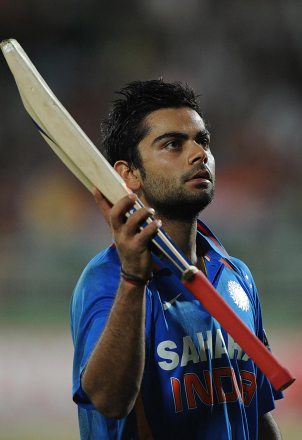
Virat Kohli, with his rapidly rising run tally and maturity, with an extended run in Test Cricket can become a fulcrum of the Next Gen Middle Order

The case discussed earlier could’ve also dented the confidence of RP Singh, who’d have probably been more surprised than anyone else on his call-up, given the fact that he hadn’t played a first class game since January. Such cases, with a hint of a double-edged swordness about them, have buried the careers of a number of talented cricketers who have been victims of poor decision making.

What Indian cricket needs to build on requires the skill of a movie director – role play. Harsha Bhogle had spoken on this earlier, and if it wasn’t evident back then, it is evident right now. If this approach isn’t taken downstream, the absence of the cusp would mandate an explanation. This is very unlikely to materialize during the build up to the Australian tour, given the fact that all the senior players would play a role in the starting XI – given that this might be their last series down under.

But if the names don’t change, at least the structure can. Back the quickies and give the younger batsmen an extended run. Most crucially, eliminate the bottlenecks. Now that is where the trouble begins.


 Eniyan V

 2 August 2011


The ongoing England India Test series is one of closely followed and much anticipated in the recent past. It’s expected to be a fierce battle between two strong teams, in their prime form, for the top spot in Test cricket. But, has the contest lived up to the expectation so far? Unfortunately, it hasn’t. To the exasperation of the Indian fans, bliss of English fans and disappointment of the neutral fans expecting close contest, the first two tests have been utterly one-sided – England winning by margins of 196 and 319 runs respectively.

Unlike the ODI ranking, test ranking is not officially updated after each match. It’s updated only at the end of the test series. So, India is still the No. 1 team. But, England is pretty much on course to become the No. 1 team at the end of the series. All they need is one more win or draw the remaining two matches to topple India.

Quality players are mandate for a top class team. But that is not adequate. Characters such as never-say-die and go-for-the-kill are required to stamp the authority. England has shown the characters so far in this series, in coming back from 124-8 in the first innings and scoring 544 in just 120 overs in their second innings and ruthlessly dismissing India for 158 in the fourth innings of the Trent Bridge test. England’s 7 wins (including those two glorious Ashes victories) and one draw in their last 8 test series is not just a coincidence. Indeed, England is a serious contender for the No. 1 test spot.

Time India showed their ranking was not an accident

But, what does India hold? After the annihilating defeat, India could feel shattered. Team India could be wondering what led to this. May be lack of preparation, may be the unfortunate injuries, may be poor captaincy, may be the tiring IPL, but definitely not lack of quality and character. India is not the No. 1 team without a reason. In the last 3 years, India faced all the Test playing nations except Pakistan and didn’t lose any test series, winning 8 and drawing level in 3 test series in this period. India defeated Australia twice, New Zealand twice, England, West Indies, Sri Lanka and Bangladesh once. That’s a remarkable achievement, worthy to be No. 1 in test cricket.

India might go on to lose this series and the remarkable streak could be broken here in England. But, that shouldn’t happen without a fight. The last time India lost two test matches in a row in a series was when India toured Australia in 2007-08. But, India fought back bravely to win the third test at Perth. Such character was fundamental in the rise of India to the summit.

India should show more of such character in the next two tests. Individually, many Indian players have done well in parts. Dravid is amongst runs; Laxman has got couple of fifties; Tendulkar has got into form in the last innings; Praveen is getting wickets; Ishant and Sreeshant have done well in parts. Sehwag, Gambhir and Zaheer could be back in the eleven for the next match. All India needs to do is to regain the focus and hunger for success to stage a comeback in this series. Let’s hope the remainder of the series is closely contested and lives up to the expectation of the clash for the summit.


 Goutham Chakravarthi

With time, details fade and only memories remain – the sweetest and darkest. Day 4 of the 2000th Test will be remembered for an outstanding spell of 3 for 1 by Ishant Sharma. Sure, Stuart Broad and Chris Tremlett later conducted an interrogation of India’s top order, but Ishant, in a spell articulating perfect rhythm, when body and mind danced to the heartbeat, composed a telling tune that exposed the English middle order of holes it didn’t know existed.

Ishant looked nothing like the highest wicket taker in tests in 2011 in the first innings. He lacked the rhythm and confidence he exhibited in the Caribbean only a month ago. His rhythm was cranky and Kevin Pietersen bullied him. But, today, Ishant, in a magical spell of fast bowling, his long locks billowing in fresh summer air, his run-up so smooth it was a glide, he unleashed magical, unplayable deliveries. He was in such a trance that the batsmen can be forgiven for being unaware of the ambuscades about him. Whilst it lasted, each ball was poetry that warmed the hearts over and again.

Ishant Sharma produced a memorable spell of fast bowling before lunch

Even cruelly, I thought Zaheer’s absence was a useful expedient to get Ishant to a new level. Ishant had left England in tatters as lunch was taken. Former cricketers of India and England paraded the hallowed turf celebrating the 100th contest between the two countries, while the crowd feasted on the cake and the ale, and the prospect of a potentially cracking test in the making loomed deliciously upon us. But only till India came back on to the park and Raina was introduced to up the over rate!

What followed was a session of some very poorly constructed cricket by the visitors. With only three fit bowlers, the hard yards of the first innings had taken its toll and a determined Prior and Broad ran them ragged. From the Himalayan heights of titanic struggle between bat and ball, it turned to a contest of India doing the last stage of Tour de France by foot and England by motorcade. England ran the fielders and captain ragged and when the bowlers returned with fresh legs, they had already been lapped twice over by the English. Prior will get his opportunity at 6 should England struggle to bowl India out on day 5 and feel the need to go with five bowlers. His century was well constructed with almost a Usain Bolt sprint to the finish line.

Injury and illness to Gambhir and Tendulkar meant Indian had to go in with a re-jigged batting order. Facing a rampant trio of English quicks who fancied their chances against a tired batting side, they bent and bounced the ball in rapid cadence. Old hands Dravid and Laxman, architects of some of the stoutest batting accomplishments, battled and survived. It was exhilarating cricket. The old firm of Dravid and Laxman held fort for India to fight another day. Their methods so precise and contrasting, but complement each other.

Sophistication is easy to be associated with Dravid – who combines the technical mastery of his art to suit the wicket and the opposition, the situation of a drying wicket and the waning strengths of opposition trundlers. He plays the attrition game as well as anyone to have walked a cricket pitch and his powers of concentration are of a Grand Master. On the other hand, Laxman, India’s best 3rd and 4th Innings man is as intense but with a game so pleasing, it makes you wonder if batting was ever so pretty anywhere else. He can look clumsy in his set-up and dodgy wafting without much feet movement early, but he can hardly ever made an ugly run. It is almost fitting that he produces his best when his team needs it the most.

Anderson, Tremlett, Broad and Swan will believe that there is enough in the wicket to produce nine mistakes on day 5, but India will be confident that they can survive the overs. It quite resembles the Lord’s test from 2007 and it promises to be as tight this time too. England have dominated this test, but India have shown tremendous determination to be not blown away. They will hope the D/L (Dravid/Laxman) method saves this test for them.

Bring on day 5.