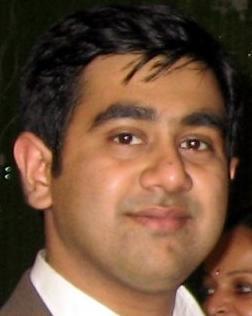
Rajat jain

Head of Tennis, CouchExpert

15 January 2011


Another season starts, and brings with it lots of questions and expectations. Will Rafael Nadal bag his fourth Slam is at the top of this list, with the expectations from the reinvigorated Roger Federer, who recently paired with Paul Annacone and had an excellent fall 2010, not far below. Novak Djokovic has given enough to his fans to look forward to after his runners-up performance at New York (and Melbourne is place where he has bagged his maiden major), while Robin Soderling (surprise, surprise! In a repeat of last year, Andy Murray doesn’t find himself at No. 4 at Melbourne) expects to increase his cushion in the top-4 by gaining points even if he wins his opener.

Andy Murray, and Great Britain, is still in search for his elusive feat, while the other Andy, Roddick, says he has never been more motivated. There is a small matter of Juan Martin del Potro coming back in the circuit, while Nikolay Davydenko performed well at Doha too.

Lots of action await, and the year’s first Slam is due for a major surprise this year. The last two years had surprisingly predictable finalists considering the history of this court to produce dark-horses (Thomas Johansson, Rainer Schuettler, Marcos Baghdatis, Fernando Gonzalez to name a few) and Melbourne cannot get third time lucky. The distorted seedings due to injuries will make the earlier rounds very interesting, and to add to the unpredictability, we’ll have the wrath of rainfall too, adding the unnecessary breaks in between and spoiling player’s rhythms.

Amidst all this, a draw analysis is an indispensible part of the event, whether important or not, differs with one fan to another.

Rafael Nadal’s Quarter

Promises to be a blockbuster. Right from the start, we will revisit an old rivalry—Lleyton Hewitt vs David Nalbandian. While they are more famous for being the two counter puncher finalists at Wimbledon, it was the last time at Melbourne, when they played an epic, which went 9-7 in the fifth. Both men have lost their firepower since then, but this promises to bring back some of it—the war of two great return of serves, and two great backhands.

Other than this highlight opening round match, this seems to be a fairly routine draw for Nadal, with compatriots Feliciano Lopez expected in the third (Lopez can only trouble Nadal on a fairly fast surface, and given that he was unable to even break him at New York, Melbourne should be a breeze), and David  Ferrer expected in the quarter finals. Ferrer has troubled Nadal in past, but that was way back in 2007 where he was having the year of his life, and Nadal was …. well, not quite the Nadal we know today. He may be very well troubled by Marin Cilic, though, even if he is out of form. He likes Melbourne, and would be hoping to repeat his semifinal performance this time around.

Richard Berankis is the kid to look out for after having a great season last year to spring himself in the top-100 and earn a place in the main draw. Michael Llodra, who brought Paris Masters to life last year, is also the one to look out for, even though he may not like the slower surface here.

First Round Matches: Hewitt vs Nalbandian

Dark Horse: David Naldandian

Semifinalist: Rafael Nadal


Robin Soderling’s Quarter

Or if we want to go back to the routine top-4 we have enjoyed for most part of the past two years—Andy Murray’s quarter. This also promises to be the most exciting quarter of them all, with lots of potential upsets on card, and a great chance of a dark horse to emerge. Both the top seeds expect to have smooth sailing for the first three rounds, and things will start getting explosive by then. Murray might get any one from the former finalist, Baghdatis, Melzer, or ….. del Potro, who finds himself nicely hidden in the draw. Soderling would also find it difficult in round four, with any one of Tsonga, Gulbis or Dolgopolov opposite his net. There are also dangerous players in Thomaz Bellucci or Phillip Petzschner lurking around.

All in all, this promises to be a very exciting quarter, and look out for a definite dark horse emerging from here.

Potential matchups to lookout for: Gulbis vs Dolgopolov, Tsonga vs Petzschner, Baghdatis vs del Potro.

Dark Horse: Ernests Gulbis

Semifinalist: Jo Wilfried Tsonga


Novak Djokovic’s Quarter

Again, not much to choose from. Berdych has been out of form since ages, Kohlschreiber has enjoyed some upsets in Melbourne, Verdasco achieved a dream run (albeit with a bitter ending) in 2009, Davydenko almost upset Federer last year, while Djokovic has had his own personal problems with the heat and humidity here. Adding up the veteran Ljubicic, and the unpredictable Almagro and Gasquet only add to the confusion. Djokovic might struggle against the fellow Serb Troicki, while Davydenko and Verdasco may light up the Melbourne night in the third round. All in all, your guess is as good as mine.

Potential matchups to lookout for: Davydenko vs Verdasco, Djokovic vs Troicki, Gasquet vs Kohlschreiber (the battle of two one handed backhands)

Dark Horse: Can Davydenko be called one?

Semifinalist: Fernando Verdasco


Roger Federer’s Quarter

Federer may not have won as many titles in Melbourne, as he has won in New York or London, but all of his four victories here have been ruthless dominations—in 2004 against Safin, in 2006 against Baghdatis, in 2007 against Roddick and Gonzalez, and in 2010 against Tsonga and Murray. When he is in form, he enjoys this surface as much as, if not more than, Wimbledon or U.S. Open. And given his form over the last few months, it is hard to see any player coming even remotely close to upset Federer before the semis. Sure, Simon may have beaten him twice, but he is half as good as he was in 2008, while Federer is twice as much efficient. Monfils, Roddick, Wawrinka …. All are capable of giving him a scare, but not outdo him in the war of attrition.

Federer is fit, fresh, motivated, match-fit, confident, and on a winning streak. Anything less than something really special will be insufficient to stop this man.

Semifinalist: Roger Federer


Semifinals: Tsonga d. Nadal, Federer d. Verdasco

Champion: Roger Federer

An Indian Fast Bowler – A Distant Dream

Posted: January 12, 2011 by The CouchExpert in Cricket, India Cricket

Prasad Moyarath

Bangalore

12 January 2011

The history of Indian cricket can be divided into two, Before 1983 World Cup and After 1983 World Cup. This article is on Indian fast bowling after 1983.

When India won the Prudential World Cup defeating West Indies in 1983, the whole nation rejoiced. The newspapers highlighted the all round performance of Mohinder Amarnath and the wonderful catch by Kapil Dev in the finals. But even the most fanatic Indian fan was unwilling to accept India as the World Champion in cricket. The fact that India didn’t have a fast bowler made every one doubt India’s credentials. Cricket was not the most popular sport in India then. This victory changed the face of cricket in India.

The West Indians toured India immediately after the 1983 World Cup and demolished the Indian side with ferocious fast bowling. Those Indians who never followed cricket till then got a real time demonstration of quality fast bowling from Malcolm Marshall, Michael Holding, Winston Davis, Andy Roberts and Wayne Daniel on that tour.

India won the Benson & Hedges Trophy in Australia in 1985 and had many victories in Sharjah, but had to be contented with the medium pace of Kapil Dev, Chetan Sharma, Sanjeev Sharma etc. BCCI’s inability to find a quality fast-bowler hurt the country so much that a corporate giant came forward to help the country. MRF started the MRF Pace Foundation at Madras in 1987 with Dennis Lillee as the chief coach. Youngsters getting selected to this academy and then playing for their state teams in Ranji Trophy made news in sports pages of national dailies at that time.

India toured Pakistan in 1989 under K. Srikkanth which saw the birth of Sachin Tendulkar as a batsman in international cricket. India had two MRF Pace Foundation products in that team viz. Salil Ankola and Vivek Razdan. There were no speed guns to monitor the speed of the bowlers and the sight of these two youngsters bowling with a long run up excited many though they didn’t make any impact like Kapil Dev and Manoj Prabhakar. These two played some more matches and vanished from the scene with injuries.

1990s saw the rise of Javagal Srinath and Venkatesh Prasad. Though Srinath had raw pace, Prasad was a swing bowler. After 2000 speed guns became popular and people started rating pacers by the speed of the delivery. Zaheer Khan excited Indian fans with his 140+ kmph deliveries in the 2000 Chanmpions Trophy. Munaf Patel troubled Steve Waugh in the nets of MRF Pace Foundation with his pace and the news of Dennis Lillee declaring Munaf as the fastest bowler in India was read with great interest by Indian cricket lovers. Atul Wassan, Subrato Banerjee, Abey Kuruvilla, D. Ganesh, David Johnson, Paras Mhambrey, Avishkar Salvi, Ajit Agarkar, Tinu Yohannan and L. Balaji were some of the Indian pacers who appeared and disappeared from the scene in quick succession. Injury was a common problem for all these fast bowlers and all of them kept losing pace after each injury. Zaheer Khan and Munaf Patel who used to bowl at 140+ kmph at the start of their careers are now bowling at 130+ kmph or even less. Ishant Sharma and Sreesanth are no different.

Many Test nations have come-up after 1983 like SriLanka, Bangladesh etc and they all have quality fast bowlers without any training facilities. Don’t forget that MRF Pace Foundation in Chennai is training fast bowlers from these countries too.

Lack of fast and bouncy pitches in India was always cited as the main reason that prevented the emergence of a quality fast bowler in India. But a comparison with sub continental teams like Pakistan and Sri Lanka will reveal that this is not the root cause. Fitness is a major concern for many. There is a popular belief that Indians cannot become tear away fast bowlers. If stamina was the major handicap, we would have seen many quick opening spells in our first class cricket. Even after getting selected to the national team, there is no improvement in the pace of fast bowlers even though we see a difference in their body weight. Every now and then our former cricketers express their opinion that speed is not the first priority for a fast bowler. I believe that these comments are having a negative impact on the mindset of young fast bowlers. The fast bowling coaches, the coaches of the State teams, our first-class cricket system and also our national bowling coach, all should be under scanner and as a responsible body for the development of cricket in India. The BCCI should appoint a committee to scientifically analyze this problem and find a right solution for it.

India might have won many matches with its swing bowling medium pacers, but going forward, the team needs to have a set of fast bowlers who can bowl consistently at 140 kmph and above. Line and length may be the key for getting wickets but pace adds extra venom to the attack.

An Indian fighter jet which was a dream in 1983, the same year in which India won the World Cup has been made a reality by DRDO and TEJAS has been inducted to IAF a few days back but an Indian fast bowler still remains a distant dream.


Chandrasekhar Jayarama Krishnan

Chennai

11 January 2011


What happens when an irresistible force meets an immovable object? The theory notes that the immovable object and the irresistible force are both assumed to be indestructible, and furthermore assumed to be two separate entities.

If there exists an irresistible force, says the theory, there cannot be anything such as an immovable object, and vice-versa. Strangely, I’ve just finished witnessing it.

If you asked me, what was the most fascinating cricketing event I’d witnessed over the last year, I wouldn’t shy away from mentioning that I’d seen the irresistible force paradox in motion up and until the end of the recently concluded series between the top two teams in world cricket.

Sachin Tendulkar and Jacques Kallis are far from refraining to the pleasure of playing the sport.

As the paradox would once again question: Can God create records that are so mighty that they cannot be broken, not even by God himself?

People often think of champions as repositories of unique skills, who, by reason of their immense talent can survey things that others cannot. Mortals are inspired by a certain awe, one that is directed towards their ability and stardom, if not for the human being that occupies it.

But it is that very human being within that fights out the battles ranging from the ones within his mind, to the ones penned down by nefarious critics who yell out to those who care to listen. Tendulkar and Kallis have had their share of critics over the years, critics with obnoxious perspectives on the approaches taken by these greats during games when they haven’t been at their best.

If these loudmouths had known better, they’d have been on the field playing in their national colors. But the fact is that they didn’t, for they don’t, and will never possess the repertoire of skills that champions possess – commencing from a sheer work ethic to the ability to outmaneuver opposition in their territory. Alastair Cook and Michael Hussey, who’d endured through a nightmare pre-ashes window, ended up topping the batting charts for their respective teams, with the former even collecting the inaugural Compton-Miller medal.

With stardom often comes a lot of controversies, but these two men have shied away from anything that attracts media glare. A lot of talented sportsmen have come in to the big arena and vanished instantaneously as they couldn’t quite handle their exponential rise to stardom. To sustain one’s star status over a span of more than a decade, or even more, is no doubt a daunting task. Few have managed to sustain thus far.

This moves me towards addressing the focal point of this discussion. The advent of T20 cricket and more so IPL in particular, has enabled the world to witness cricketers who, in some cases, were unheard of. The recently concluded IPL auction does justice to the statement. Although I must admit that personally, tagging players with numbers & running an auction surely is a precarious approach towards hurting the ego of cricketers, but I haven’t seen an alternative that works better – so there ends my displeasure.

Cricketing greats were dwindled to insignificance because of their inability to do a Babe Ruth in cricket. Relatively unknown and unproven players have gone for unimaginable sums of money owing to their ability to bang attacks out of the park. That is what T20 can do to you, yet, when you examine the last few IPLs closely, one can’t hesitate to point out the fact that two men under the scanner in this prose have done exceedingly well to expand their game to adapt to this version of the game.

This certainly calls for the younger crop of players to model their game and approach based on Tendulkar and Kallis to be successful in all forms of the game, and more importantly, not let the idea of stardom get on top of their heads. Rohit Sharma, one with immense talent and from what I gather, one with a poor work ethic, has been lucky to have got the number of chances, after repeated below-average performances, to sport the blue colors of India. I’d be very keen to see how he mends his ways to cement a place in the team, in all formats of the game.

There’s a lot of talent around the globe that needs to be tapped, and tapped with caution. A few young batsmen have caught my eye during the last year or so, and I’m quite sure that the world is going to see a lot more of the likes of Dinesh Chandimal from Sri Lanka, Lendl Simmons from the West Indies, Ajinkya Rahane from India, the lattermost being a heavy run-getter in the domestic and India ‘A’ circuits.  What I like about these lads is their fearless approach towards stroke play at a fairly young age.

Eoin Morgan of England and C Pujara of India have their names carved in the cricketing Rosetta Stone, batsmen destined to achieve greatness, with the former stamping his authority in limited overs & T20 cricket, and the latter proving to be another immovable object in the longer form of the game.

Kemar Roach is a youngster who has been around for a while, and is definitely one of those bowlers from the Caribbean who can bring back memories of the pace bowling armory that they’d once possessed. Suraj Randiv, the spinner from Sri Lanka, seems another impressive talent and with the height he possesses, I’m sure he’s bound to mature and trouble a lot of batsmen around. Mitchell Starc of Australia has looked every bit a potential weapon, from the little that I’ve seen of him.

We’re also seeing a lot of players, who’ve been around for a while, slowly stamping their authority in international cricket and paving their paths towards greatness. Cook and Bell from England definitely seem to have the temperament to carve their names alongside the likes of Boycott and Gower from England, possibly even out-achieve them. AB de Villiers is on his way towards cricketing greatness, and one can only hope that the additional duties as keeper do not have detrimental effects on his batting. Hashim Amla can be bracketed in a similar category with a large section of the South African crowd looking up to him as the man to replace Graeme Smith as captain of the South African team – even though that is quite some time away.

Other names that hit the top of my mind include Angelo Matthews, Cameron White (a potential Australian captain in my mind –he needs to work on his approach in the longer format of the game), Adrian Barath, Craig Kieswetter, and Tim Paine. Unstoppable and Immovable can be the echelon adjectives for greatness for all these men. Can they defy physics? Only time will tell.

On the other hand, I was forced to exclude a few Pakistani bowlers, as they’ve had their share of defying mathematics to bowl from 18 yards, instead of 22. One can only hope, for the betterment of the game, that they’re cleared or eradicated.

Either ways, I’ll definitely miss watching Mohd. Ameer’s rise to stardom in case the stars don’t favor him.

Youngsters For The Future

Posted: January 10, 2011 by The CouchExpert in Cricket, India Cricket, Opinion

Prasad Moyarath

Bangalore

10 January 2011
The recent popularity of Test matches has put the one-day and Twenty20 cricket enthusiasts who predicted the death of Test cricket after the advent of Twenty20 cricket in a conundrum. They are forced to agree to the mantra of Test cricket aficionados, “Test cricket is the actual cricket and it tests the technique and patience of a cricketer and separates the strong hearted from the rest”. Tendulkar’s batting against Pakistan in Chennai with acute back pain, Kumble’s spell in West Indies with a bandaged broken jaw, Graeme Smith going out to bat with a broken hand and the recent Kallis’s innings against India fighting acute pain due to side strain are some of the instances of bravery shown in a cricket field in Test matches.

The Australian strategy of fielding separate set of players for one-day and Test cricket was seen with suspicion by many, but the failure of some of the best one-day players like Michael Beaven, Shahid Afridi and Yuvaraj Singh in Test arena has forced them to accept that there is indeed some difference between Test cricketers and the rest.

Indian Test team had the best four batsmen – Sachin, Dravid, Ganguly and Laxman – in the middle-order and it was almost impossible for any new youngster to get into the middle-order unless any of these four were injured. Indian selectors never nurtured any new batsmen to take over from them and the fact that Ganguly’s replacement has still not cemented his place in the team is a testimony for that.

With Sachin, Dravid and Laxman in the late thirties, Indian middle order will need replacement for these players soon. Indian selectors have already identified Murali Vijay and Cheteshwar Pujara and it is their duty to persist with them. I would suggest two more names to fill the void that is going to be created when these greats decide to hang their boots.

Parthiv Patel, the 25 year old Gujarat captain is a Test discard for many. He came in as a 17 year old wicket-keeper with very little first-class cricket experience and played 20 Test matches out of which the majority was outside India. Not many knew that he was the under 19 Indian cricket team captain at that time and that he had got the Border-Gavaskar scholarship for the best talented youngster in the country. Parthiv’s batting ability was never doubted and his compact technique against Brett Lee in Australia, Shoaib Akthar in Pakistan and Harmison in England was applauded even by his critics. Inexperience in keeping wickets in different surfaces against Kumble led to his downfall. Much water has flown under the bridge and Parthiv is an experienced player with a lot of centuries in first class cricket. He has improved his keeping and is the captain of Gujarat.

Dhoni will have to give up wicket keeping soon and concentrate more on batting and the presence of Parthiv in the team will make his work easy. Parthiv can play as an opener, middle order batsman or a wicket-keeper batsman. A batsman coming back after being discarded by selectors is nothing new for Indian cricket considering the history of Siddhu and Ganguly. I will stick my neck out and say that if properly nurtured, Parthiv Patel will be an asset for the Indian Test team.

Virat Kohli is the new find for the Indian One day team for many. For some, he is the former captain of the Indian under-19 team that won the World Cup. But for me, he is the hero of a story which appeared on the newspapers in December 2006. Delhi was playing against Karnataka in a Ranji Trophy match. An 18 year-old Delhi batsman hit a chanceless 90 and saved Delhi from a certain follow-on. When he fell in a dubious manner, instead of celebrating, the Karnataka players applauded his effort. You may wonder what is so special in that innings. Kohli lost his beloved father that morning but decided to continue batting from his overnight 40 and took Delhi to safety. He left for his father’s funeral after his innings.

It is no wonder that Kohli who showed maturity beyond age at such a young age is scoring in tons in Indian first-class cricket and in one-day internationals. More than his runs, it is his attitude towards batting that makes him different. Selectors should spare no time in inducting this youngster to the Indian Test team.

With India touring England, Australia and West Indies after the World Cup, the Indian selectors have got a golden opportunity to test these future stars of Indian cricket. I have no doubt that Parthiv Patel and Virat Kohli have it in them to pass this litmus test.


Goutham Chakravarthi

Bangalore

9 January 2011
Much has been written about the captaincy of Graeme Smith in the Newlands Test. Questions have been raised about the defensive tactics and if he’d missed a trick by not inserting India at the fag end of the 4th day’s play. Smith is still the same impressive man that took over from Pollock following a disastrous world cup at home in 2003. A South African team still in the doldrums post Cronje-gate turned to him. He impressed with his freshness in approach. He impressed with his performance and leadership. He had never met Hansie Cronje and therefore lay to rest any lingering doubts of his influence on him and his leadership. He said he had hoped to be a captain of his country someday and was expecting it. No politically correct answers, but plain straight talking. That showed in his leadership and his batting. South Africa had found the right man to represent it.

Two double-hundreds followed in his first series as captain. His field placings and reading of the game and tactics reflected a shrewd mind. He showcased an ability to inspire a team of elderly statesmen of the caliber of Gary Kirsten, Shaun Pollock, Mark Boucher, Makhaya Ntini and Lance Klusener. Just like that, at 22, Smith became the leader.

Some controversy followed when he didn’t shy away from calling Klusener overweight and later when he told the media what the Aussies had called him on his first tour there. Inevitably it wasn’t received well, and was seen as soft and a tell-tale by the Australians especially. Soft, he had never been. His courage was never in doubt. His start to the innings in the chase of 434 in Johannesburg showed the Australians that he was not merely a man of talk and that he backed it with deed. He was a fighter and he finally won over Australia when he walked out to bat with a broken hand in Sydney. He needn’t have and the world would have understood for the series was already won. But he strode out to the middle to support a team that showed admirable courage battling a rapid Mitchell Johnson to save the Test. He didn’t want to let down his mates who’d fought so admiringly to save the Test. A nation that saw him as a bully saw him as a fighter and gave him a standing ovation when he walked out to bat.

Along the way he has managed not to fall in the trap of stereotypes and it has showed why his team has been more competitive in India than either Australia or England. He has been shrewd to play two spinners and tie-up Australians in their backyard in one-day games and bombard Asian teams with quick and impact players when playing in Asia. Not that he has never shown ill judgment or never crossed the line. Sportsmen are allowed to lose their cool once in a while – it is inevitable when the tussle is taut and a bad decision here or a bad stroke there can bring efforts carefully structured over sessions to a nought. He has largely been controversy free and has spent less time with the match-referee than most of the captains.

Though South Africa have travelled impressively and often been successful, a major title has eluded it. Agreed that it has briefly claimed the top Test spot and has won an ICC event (inaugural Champions Trophy in Dhaka back in 1998), but is still seen as a unit that can crumble under the weight of expectation. On the back of a historic series win in Australia two summers ago, it was expected to win the return leg at home, but lost tamely to a young but resurgent Australian side. That Australia would go on to lose in England almost straight after would have disappointed Smith and his boys immensely. They were largely seen as the team to take over from Australia post that series, but it wasn’t to be.

The last two home seasons have been disappointing in that regard. They were unable to bowl out a determined English lower order twice last summer. Nor was his team able to match words with deed against the visiting Indians over the last three weeks. His tussle with Sreesanth and Zaheer affected him and showed on his captaincy in Newlands when he was defensive and perhaps missed the chance of declaring early and push for a victory.

Also South Africa have been shown to be in slight in the world cups (both T20 and ODI) over the last 4 years. Sometimes, failures can prey more on the minds. Personnel changes have be sought and tried with little success in major tournaments.

Smith has been smart enough to sense this and has called time on his one-day captaincy post this year’s one-day world cup. It is a smart move considering that he has been at the helm for eight years and captaincy and ideas last only that long. He might want to give-up captaincy to a younger man and concentrate on his batting alone. He will be 30 shortly and perhaps the next three years will be his best as a batsman.

Smith and team will try its best to win the world cup no doubt. His team stands as good a chance as any of the other leading teams and will enter it as one of the favourites. They might go on to win it. That he has already relinquished captaincy post the tournament shows that he may have recognized that he is coming to the end of the road as a captain. Smith has never been the one to shy away from reality. He will go when he knows that he no longer is the right man for the job.