India Staring At A Whitewash

Posted: August 2, 2011 by The CouchExpert in Cricket, India in England 2011, Opinion
Tags:

 Srikrishnan Chandrasekaran

 2 August 2011

With players being part of IPL having ruled themselves out stating an injury and it has cost the nation to its no. 1 ranking. As like teaching is a profession, cricket is a profession for players and they look to earn more money and get fame in a short span irrespective of playing longer format of the game. The problem is, in most other professions, the impact is with the person or with the organization, but in a game like cricket, it is a wish for 1.2 billions people and it has harsh impact on their feelings.
When players make their decision to decide which sport to choose from the choices, it will be great / wise if they look from a wider angle rather than from few specific pointers.

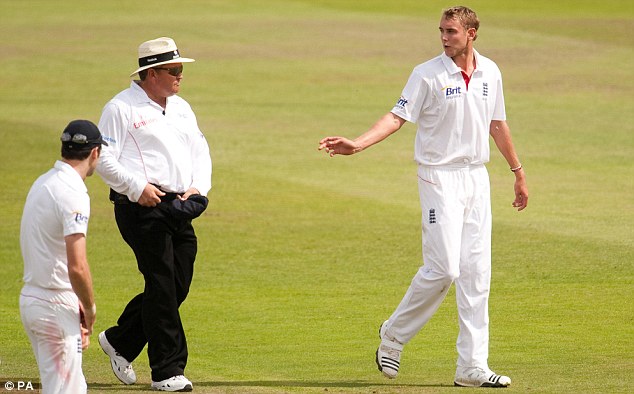
India have not put up a fight befitting their ranking so far this series

Engalnd have outplayed India in this series so far. Loss in 2nd test match is primarily on sending Dravid as opener and Laxman at No 3. Not sure who has taken that decision to position these 2 players but not at all a great decision. There have been plenty of occassions where Dravid has had to come in in 1st over itself as no. 3. India would have tried with some lower-order batsmen to open with Mukund even if they last only a single delivery. Laxman should be positioned only at his favorite spot.

Since we are already one down in the series, it is really important to keep our players at the right order as they play freely and confidently at the spot. The Indian batting has looked really odd during these 2 test matches. Even though the conditions here are quite different as there is a lot of bounce and swing, the current team has played lot of cricket (all forms) and they have the ability to cope-up and come stronger, but the way they played is un-imaginable.
Our pace bowlers made a good come back in both innings expect few key areas of improvements. This match is of a huge difference we had to change our batting order which resulted in a loss of the test match on other hand, Bell at no. 3 changed the course of the test match. He set the tone on 3rd morning with his amazing stroke play by punishing all the bad balls to the boundary.
During the last 2 test matches, our bowlers have really struggled against lower order batsmen than the top / middle order. The experienced coach / senior players in the team should have guided the right path for the bowlers as to where to bowl and where not to bowl. It seems like there is no discussion / team cooperation in this regard. On a same ptich, England scored 5 runs per over and Indian team got bowled in less than 2 sessions. The variation in bowling is really missing. They should mix-up deliveries
The non-attacking style of Dhoni needs to be revisited. The approach has now yielded the worlds no. 1 test team to go down to no.2 and will continue to fall further if Dhoni continues the same tactics and doesn’t learn from his mistakes. Even a score of 150 to 175 for India was really going to be difficult to achieve in the 4th innings – we have lost plenty of matches when the score is over 200 on the last innings. Dhoni didn’t have a third-man till the lead went past 275.
On the 3rd morning when Bhajji came to bowl there were only 2 players around the bat, slip and leg slip, but it is not enough on any tracks. If a spinner needs to get wickets there should be at least 3 men around the bat, silly point, short leg and slip. What this makes is, the batsmen have to give respect to bowler by playing soft hand shots. There is a possibility of batsmen making a mistake and end up in either a caught behind, caught at short leg or silly point,  run out,  stumping, slip catch, mishit or sweep popup to the short-fine fieldsman. If there is no one around the bat, there is no risk for the batsmen to get out, the only way the wicket can fall is the batsmen himself doesn’t want to hold his wicket. Even a no. 11 batsmen won’t prefer to do that.
Even if we are going to play to our full strength in next test match, Dhoni should change his approach otherwise it will be definitely 3-0. There has been plenty of Dhoni as the winning captain of world cup, t20 and other tournaments. This is a team game and it is the effort of all the players and not just Dhoni’s alone. Even on the world cup only on the last match Dhoni scored runs. AHe scored only one 50-plus knock through the entire world cup. The selectors should think from that perspective whether he is really fit to be there for both ODI & test cricket. Definitely Dinesh Karthik would have played  much better cricket in both batting and keeping in this series than Dhoni.
All the best to India for the third test match. I’ll feel really happy even if this series ends with 4-0 to England if India can play a fighting come back and lose the match not like what we lost the first 2 test matches.

Chandrasekhar Jayarama Krishnan

Head of Cricket, CouchExpert

1 August 2011


During times when an Indian fan walks along that thin line which separates faith from hope, most often observed when the team isn’t doing well as it is capable of, the common fan’s sword and the journalist’s pen come together to diminish that metonymic adage of the pen being mightier than the sword.

Much of it emanates from the status of virtual invincibility India had attained after topping the ICC Rankings in Test Cricket, only to be followed by the euphoria of being crowned World Champions. In a continent where today’s superstars run the risk of being relegated to the status of forgotten heroes if they fail, sometimes even if just once, immortality would appear an easier wish to attain than consistency. The packed schedules do not favour either.

And along this thin line, the Indian fans started their walk on Day 4 of the Trent Bridge test when they were left to rue with harsh memories of momentum and advantage escaping their grips, at various instances during this test, to hand England a clear sight of victory within the horizon.

In a test where Dhoni’s tradition of shrewd leadership seemed subdued, the scars left by Bell, Prior and Bresnan, by the time England’s second innings came to an end were painful, and India’s morale, gaunt. The Indian skipper’s faith enabled him to appreciate the bowlers who attempted to make the most of the conditions, but it didn’t force him to lay a trap to dismantle the English batting cheaply, even when he’d possessed the upper hand at times.

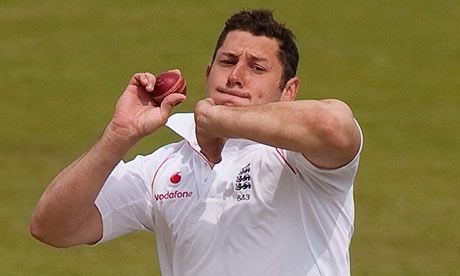
Bresnan's outstanding all round contribution has given the English selectors a pleasant headache ahead of the 3rd test at Birmingham

This clearly is at the heart of what is disturbing about an Indian fan’s faith at this moment of predicament: it doesn’t worry him enough; neither does it drive him to have second thoughts before lamenting over the captain’s lack of ideas when the England tail wagged once again, as he watched Bresnan and Broad scoring at a rate of more than 6 an over. Third man, once again, bore the greater share of the Wagon Wheel.

Talks of India having to restrict England to a score not in excess of 300, prior to the start of their second innings, seemed imminently laughable as the lead stretched to 477 – leaving India five sessions to battle through. A more than decent outfit was made to look hapless by England’s lower order batting.

Tim Bresnan was unlucky to miss out on a deserved hundred, but he did enough to place the English selectors in a spot of bother as they were left pondering over the moves to be made once Tremlett returns for the third test.

When the Indians came out to bat, it looked as though they were batting in a different wicket to the one in which the third innings of the match had come to a conclusion. Batting through five sessions was never going to be an option and the result clearly seemed to have only one way about it.

Excepting Tendulkar, none of the Indian top seven crossed single digits. At no point of time during this test did the Indians look like a champion outfit – barring the session on Day One where Dravid and Laxman negotiated through tricky spells of seam bowling.

Bresnan’s breezing spell that fetched him four wickets (and the selectors, additional aspirins – for the good) in his total of a five-for was complemented by Anderson removing his man, Tendulkar, yet again, for 56. Like MS Dhoni earlier, Tendulkar shouldered arms to one that nicked back in and was ruled out leg before.

Local hero Broad picked up the Man of the Match after amassing 108 runs and 8 wickets

The ruthlessness of the Englishmen resembled that of Nottingham’s popular folk figure, Robin Hood, while the Indian unit was made to resemble the deceitful sheriff, almost as though the visitors had stolen the sport’s supremacy from the land of its founders. Man-of-the-Match Stuart Broad, whose looks bear more resemblance to Maid Marian than the legendary outlaw, contributed both with bat and ball to lead the yeomen’s charge in conquering Trent Bridge. Bounce and seam, instead of bows and arrows, helped England take an unassailable 2-0 lead.

India’s reconstruction will be as symbolically important as Duncan Fletcher’s role in reshaping a side that probably hasn’t been on morale as low as what it is experiencing now. But the margin of victory – both an exact and significant barometer of English dominance – will linger in their minds for a long time to come.

As for England, the opportunity to top the ICC Test Rankings is a mere win away. Who’d have thought a couple of years ago that this would be a likely proposition? Even among the most optimistic of optimists, this would have seemed a far-fetched ambition, having witnessed what English cricket had been through.

Well done England, you deserve to be 2-0 ahead.


Chandrasekhar Jayarama Krishnan

Head of Cricket, CouchExpert

1 August 2011


The DRS debate has puffed up beyond any imaginable extent, as has the credibility of Umpire Marias Erasmus’ decision making.

It wouldn’t have been a very big deal without the deepening impact of controversies that have arisen during this wonderful Nottingham Test. But it also has ballast as this test clearly has exposed many a flaw associated to the DRS – not least helped by the twitter rant, thanks to Michael Vaughan, whose statement, cheeky as the intent might have been, only added ammunition to a Test that has virtually witnessed anything and everything that a game of cricket possibly can.

I am not saying Vaughan was stupid. His statement was so staggeringly incurious that it appeared as though he rarely made an effort to find the truth of the matter. But more often, that is not how the public, and more specifically the Media, takes it.  Goutham Chakravarthi’s recent article will clearly explain how such an incident can be blown out of proportion.

Vaughan should have known well before hand that his comments would obviously be blown out of proportion

Vaughan’s statement misleads not only the cricket public, but him included. He could well believe that by portraying an image of himself as a considerate conservative, he could exercise the right of every opinion he publicizes, if found controversial, to be disemboweled by those who adore him – a reflection that has been characterized by his heroics back in 2005.

But England can no longer afford their ex-captain’s self-delusions, not least when their quest to top the ICC tables is at its most intense. But what Vaughan has done, knowingly or unknowingly, is to add more fuel to the debate involving the consistency and correctness of technology.  The situation is a mess, in large part because the common man now knows that a cricketer can hoodwink technology to make the tide turn his way.

As much damage Vaseline had done to cricket balls in the past, Vaughan’s theory of the same substance being used in bats to dodge hot-spot has ignited the sparks in those criminal minds of today’s bad world. So for every decision that looks contentious, different sections of the media and public will end up accusing players from the home and/or the away team for ‘cheating’.

Fingers will be pointed at many, endless debates over what is right and wrong will persist, only for the poor old game of cricket to react to all these soulless exercises with disdainful apathy. After all, how much chaos can a sport consume?

What if only one individual was responsible for a contentious decision? What if he was paid to decide what is right and what is wrong? What if was his role to decide whether a batsman is in or out? I am, of course, talking about the Umpire. This is how the sport has been played for over a century.

If his decision was incorrect, fingers will be pointed towards him. The debates will revolve around whether this individual needs time off from the stressful activities and schedules one tends to associate with umpires these days. What Dravid negotiated on a spiteful pitch, with his immense powers of concentration, is what Umpires are expected to do through five whole days – one that translates to a mammoth 30 hours.

They are there because they are the best in the business. You hit some, you miss a few, or you nick one to the keeper or the slips – even if your concentration is unflappable. Likewise, you make mistakes – you may think someone nicked it, or you might have missed an inside edge that could unfortunately rule a batsman out LBW. You do it because you are human, and unlike technology, people cannot outwit you – for a human being is not programmed.

But you are there among the elite because in a sample set of 100 decisions you make, in over 90 instances, you are right. If you are not good, you are demoted and someone with a better consistency rises. But like a cricketer who has been dropped from the squad, you can go back to your roots, work on areas where you feel you require improvement, and come back as a mentally tough umpire targeting better statistics. Asad Rauf is having an unbelievably outstanding series!

Marais Erasmus raised a lot of eyebrows with a few of his decisions during the on-going Trentbridge Test

Indeed, there is a strange karmic genius to this argument – one can rather trust a human over a machine, for one doesn’t know who has programmed that machine. But machines, or rather technology, can be used for verification – instances that require quantifying the degree of an Umpire’s decision-making correctness, one that is done behind the scenes.

I’m okay for the use of technology in the sport, as long as people do not question the motives of those who can overcome it. For every Antivirus, there exists an Anti-Antivirus-Virus. Nothing is perfect, and as long as we learn to accept that, the sport will move ahead with more conviction. Else, the perpetuity of the endless debates will continue until that inevitable day when mankind would end up regretting excess reliance on technology for even the most basic of tasks in life.

Marais Erasmus – yes, you have made blunders. Yes, you have had a very ordinary test. Yes, you are dubiously referred to as the ‘Not-Out’ umpire, but we respect you because of what you’ve achieved to get to where you are today. Technology will make you look silly at times, but doesn’t it do that to all of us?


 Goutham Chakravarthi

 1 August 2011


Two remarkable days of Test cricket took a back seat with Vaughan’s supposedly humorous suggestion that Laxman had applied a coat of Vaseline to escape thin edges from detecting on Hot Spot. If that directed all the wrath of Indian supporters towards Vaughan’s twitter feed, the events surrounding Ian Bell run-out threatened to disrupt the entire series.

Ian Bell's run-out that wasn't: the incident that became the talking point of the day

The run-out incident

Spirit of the game is a convenience for some players. Players play by the letter of the law and stick to it and wait for the umpire to put the finger up even after nicking to first slip! Teams appeal for LBW even when they might know that the batsman may have hit it (Harbhajan Singh in India’s first Innings) or when the ball may have pitched outside leg stump. Even fielders sometimes don’t signal boundaries when they know that they were over the boundary while retrieving the ball hoping that camera angles might not be conclusive and they get away with it. Let’s go back to this incident.

Ian Bell, in an interview at the end of the day, did mention that he wasn’t going for the 4th run, but admitted to being naïve on his part to think it was Tea already. But, when asked if he would refrain from repeating it in the future, he only repeated him in being naïve on this instance and would have felt hard done if Indians stuck to their original decision that had him dismissed throughout Tea. But credit to him that he did acknowledge that he was out per the laws of the game and appreciative of his opposition captain and team chose to reverse the decision.

The entire tea session was a soap opera. Shane Warne brought the spirit of the game into discussion and it snowballed from there. Former cricketers were divided in their opinions and a history of such incidents have ensued different decisions from other teams in the past. Let’s look at them:

1. Muttiah Muralitharan in Christchurch (2006-07)

As you will see below, Muralitharan in his haste to congratulate Sangakkara upon completing his hundred, doesn’t wait for the throw to reach the ‘keeper, but turns to congratulate Sangakkara only to have the bails whipped and be given out.

2. Grant Elliott at The Oval (2008)

New Zealand cried foul following this run-out incident where Elliott is given out after colliding with Sidebottom. After the umpires offer Collingwood and England an opportunity to withdraw the appeal, England don’t, resulting in scathing criticism from Vettori and Kiwi players.

3. Collingwood at The Wanderers (2009)

In a bizarre turnaround of events, Collingwood found himself at the receiving end of this run-out against New Zealand in the ICC Champions Trophy in South Africa a year later. This time, New Zealand and Vettori withdrew the appeal.

As we can see from the above incidents, India could have stuck to their original decision and the world may not have understood, but would have had no choice but to accept it. As Rahul Dravid put it in his end of day interview, the team would have felt bad had it been one of its own players and they took a unanimous decision to reinstate Ian Bell.

Let’s hope it calls for more honesty from the players for the remainder of this series.

Ian Bell’s Century

Ian Bell looked every inch the supreme player the whole of England touted him to be when he first appeared on the scene. He was decisive in his footwork and delightful in his stroke play. He has been in remarkable form this year and continues to mesmerize opposition with strokes befitting an artist. This has been a hard fought series with England finding that extra when needed – Ian Bell in this innings.

This could well be the innings that finally breaks India’s back in this match and the series and usher a new dawn for England as the no.1 team in the world. England might have found a dominating no.3 in Bell and might want to keep him in that position for he has the game to provide early momentum for England. He is perhaps also their best player of spin and therefore will influence how well England travel in the Indian sub-continent. Increasingly, with Cook, he is becoming their most important batsman for their fortunes in the next few years.

Back-to-back tests telling on Indian bowlers

Praveen Kumar is only into his fifth test match. You can’t fault him if he feels 20 tests old for he has borne the brunt of this attack this English summer. He has shown remarkable ability with the ball and has taken wickets and kept the runs to a trickle. But all the bowling over the last two weeks are telling on him and the rest of the bowlers. With Zaheer breaking down at Lord’s and now Harbhajan rendered redundant with a stomach injury the legs are running out. As well as they may have tried their best, England have had answers this innings and Prior in the evening session ran twos hitting straight to the fielders in the deep.

Prior and England will look to pile on the misery on the fourth morning and inflict scars for the rest of the series. England have broken India’s back. Now, they will look for the kill.

Book Review: True Colours by Adam Gilchrist

Posted: July 31, 2011 by The CouchExpert in Autobiography, Book Review
Tags:

Review by Goutham Chakravarthi

When I picked up the 627 page book two weeks ago I thought I’d find all answers to my questions on Gilchrist and Australian cricket during his time. As candid and wonderful the book may be, Gilchrist has chosen to overlook some ugly incidents involving his mates during his time. But, he takes all controversies involving him though and gives his side of the story. Fascinating to read was his hot-and-cold relationship with the likes of Warne and Slater.

Reasons why you should read the book:

1. He paints a wonderful picture of his formative years playing cricket in Lismore keeping wickets to his dad, a leg-spinner, in weekend games. His interaction with his equally sports inclined two brothers Dean and Glenn and sister Jacki makes for good reading.

2. Like with Steve Waugh, Adam finds his life partner in Mel in his high school days and blossoms into a life long partnership. Some of the many incidents involving him and Mel in their High School days are really funny and worth a read.

3. His relationship with his manager Stephen ‘Axe’ Atkinson. He would become a close mate to Adam and is also the god father of Adam’s daughter Annie. I particularly liked the part when Axe defends Gilly on the incident where Gilly is accused by Cricket Australiafor having made a public statement on Shane Warne as having deceived his teammates when he tested positive for drugs on the eve of 2003 World Cup.

4. Adam Gilchrist clears the air surrounding the ugly claim by cricket365.com that Slater had fathered Gilchrist’s first son Harry. At one point he even thinks that everyone, including his teammates, is talking about it behind his back. He genuinely thanks the media which kept the anonymous story under the lid. Cricket365.com was later sued for it.

5. His love-hate relationship with his childhood mate Michael Slater which reached its nadir in the 2001 Ashes in England where a emotionally struggling Slater challenges the standing captain Gilchrist (for Steve Waugh) after missing the team bus before a practice session. As things turned out, it would also be Slater’s last Test for Australia as Steve Waugh, returning for the final Test as captain, along with Gilchrist drop Slater for Justin Langer. Things are sorted out later with the controversy surrounding Gilchrist’s first child.

6. His views on John Buchanan as the coach. Contrary to Warne and MacGill’s opinion, Gilchrist claims Buchanan played a positive role in making Australia the world beaters. He also insists that Buchanan helped them become better individuals as well.

7. The boot camp preparation prior to Ashes 2006/07 takes the entire team out of their comfort zones. While Warne and MacGill, in particular, have been critical, Gilchrist believes that it sowed the seeds for a very successful season where they won the ICC Champions Trophy, Ashes and the ICC World Cup. I loved the portion of the boot camp story where Shane Warne produces 5 packs of Benson and Hedges cigarettes when asked to produce dependent medication by the boot camp coordinator.

8. His special relationship with his Western Australia and Australia mates Tom Moody, Justin Langer and Damien Martyn. It would blossom into many happy on-field performances for Australia and also the WA Warriors.

9. His emotional state as a batsman when Flintoff repeatedly knocked him over from round the stumps through the 2005 Ashes. When Andre Nel repeated the Flintoff performance in South Africa, he seriously thought he wasn’t good enough.

10. Once, he stumps McMillan off McGrath’s bowling, standing up to the stumps in a One Day International. Little does he realize that McGrath is frantically waving at him not to stump him as he doesn’t want a stumping off his bowling!

11. I often wondered if he never thinks of getting his eye in as he generally goes for it from the go. He mentions his unique eye exercise to get his eye in. You have to read the book for it.

12. He openly admits to captaincy being a burden and that he is not a born leader. That he was relieved when Ponting was preferred over him to take the reigns from Steve Waugh is a mere understatement.

13. His days as the villain in Perth for replacing the local legend Tim Zoehrer after moving to WA from NSW and then as the villain knocking Healy out of the Australian One Day side. How he copes with it and his relationship with these two keepers is fascinating.

14. His innumerable attempts to retire prematurely owing to personal failures. That he openly acknowledges them shows how candid he has been in analyzing his state of mind and how his wife Mel, Ponting and Buchanan helped him in making the right decisions.

15. Of course, the whole deal of him being a walker. He says it was ghost that would come back to haunt him in case things got wrong for him – like in Sydney 2008. He compares himself with the ‘selective walker’ Lara and ‘not-walking-against-Australia’ Dhoni. He believes it was his way of leaving the game in a better state than when he took to it. I for one bought that.

I am disappointed the he has chosen to ignore a few things.

1. The McGrath – Sarwan row involving McGrath’s wife. He doesn’t refer to this at all though he mentions Windies’ record 4th innings chase in that match which involved this incident.

2. He keeps the controversy of the India-Australia Sydney Test 2008 to the racism row and his catch dismissing Dravid and Steve Bucknor. It is unbelievable that the decisions involving Ganguly and particularly the catch claimed by Ponting after flooring the ball of Dhoni’s pad are either forgotten or swept under the carpet. That he still sees it as a great Test victory given he claims to have seen Australia on TV while sitting out in a few One Dayers earlier and thinking them to be over the top with sledging, whingeing and bad body language was setting a poor example for the kids!

3. He claims to be a close mate of Damien Martyn, but still can’t explain the reasons for Martin’s many mysterious disappearances between tours or like after he announced his retirement post the second Test of 2006/07 Ashes. He acknowledges that it might have been motivated by the row between Martyn and Hayden during their victory celebrations post the second Test. But nothing more!

Outside of these there are various other interesting things to the book. Like how a natural worrier he is and expects things to go wrong all the time and his various tiffs with administrators and journalists. He mentions of Pakistan being a favoured touring destination by many Australians of yore. He mentions of the great respect he has for the talents of sub continental cricketers and the tough unyielding spirit of the South Africans. His first time in England as a seventeen year old in 1989 is what he says prepared him for big time cricket. He even had to put on an English accent and pretend to be a Pom in a game after his captain figures out that overseas players aren’t allowed to be playing in that game! There you go, he’s even been a Pom for a day!