Archive for the ‘Opinion’ Category


Chandrasekhar Jayarama Krishnan

Head of Cricket, CouchExpert

1 August 2011


The DRS debate has puffed up beyond any imaginable extent, as has the credibility of Umpire Marias Erasmus’ decision making.

It wouldn’t have been a very big deal without the deepening impact of controversies that have arisen during this wonderful Nottingham Test. But it also has ballast as this test clearly has exposed many a flaw associated to the DRS – not least helped by the twitter rant, thanks to Michael Vaughan, whose statement, cheeky as the intent might have been, only added ammunition to a Test that has virtually witnessed anything and everything that a game of cricket possibly can.

I am not saying Vaughan was stupid. His statement was so staggeringly incurious that it appeared as though he rarely made an effort to find the truth of the matter. But more often, that is not how the public, and more specifically the Media, takes it.  Goutham Chakravarthi’s recent article will clearly explain how such an incident can be blown out of proportion.
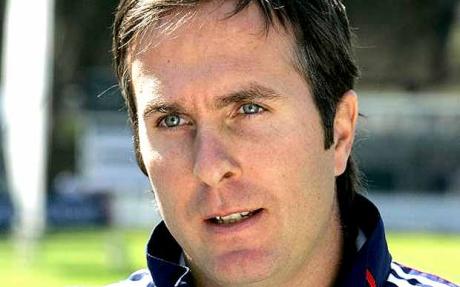
Vaughan should have known well before hand that his comments would obviously be blown out of proportion

Vaughan’s statement misleads not only the cricket public, but him included. He could well believe that by portraying an image of himself as a considerate conservative, he could exercise the right of every opinion he publicizes, if found controversial, to be disemboweled by those who adore him – a reflection that has been characterized by his heroics back in 2005.

But England can no longer afford their ex-captain’s self-delusions, not least when their quest to top the ICC tables is at its most intense. But what Vaughan has done, knowingly or unknowingly, is to add more fuel to the debate involving the consistency and correctness of technology.  The situation is a mess, in large part because the common man now knows that a cricketer can hoodwink technology to make the tide turn his way.

As much damage Vaseline had done to cricket balls in the past, Vaughan’s theory of the same substance being used in bats to dodge hot-spot has ignited the sparks in those criminal minds of today’s bad world. So for every decision that looks contentious, different sections of the media and public will end up accusing players from the home and/or the away team for ‘cheating’.

Fingers will be pointed at many, endless debates over what is right and wrong will persist, only for the poor old game of cricket to react to all these soulless exercises with disdainful apathy. After all, how much chaos can a sport consume?

What if only one individual was responsible for a contentious decision? What if he was paid to decide what is right and what is wrong? What if was his role to decide whether a batsman is in or out? I am, of course, talking about the Umpire. This is how the sport has been played for over a century.

If his decision was incorrect, fingers will be pointed towards him. The debates will revolve around whether this individual needs time off from the stressful activities and schedules one tends to associate with umpires these days. What Dravid negotiated on a spiteful pitch, with his immense powers of concentration, is what Umpires are expected to do through five whole days – one that translates to a mammoth 30 hours.

They are there because they are the best in the business. You hit some, you miss a few, or you nick one to the keeper or the slips – even if your concentration is unflappable. Likewise, you make mistakes – you may think someone nicked it, or you might have missed an inside edge that could unfortunately rule a batsman out LBW. You do it because you are human, and unlike technology, people cannot outwit you – for a human being is not programmed.

But you are there among the elite because in a sample set of 100 decisions you make, in over 90 instances, you are right. If you are not good, you are demoted and someone with a better consistency rises. But like a cricketer who has been dropped from the squad, you can go back to your roots, work on areas where you feel you require improvement, and come back as a mentally tough umpire targeting better statistics. Asad Rauf is having an unbelievably outstanding series!
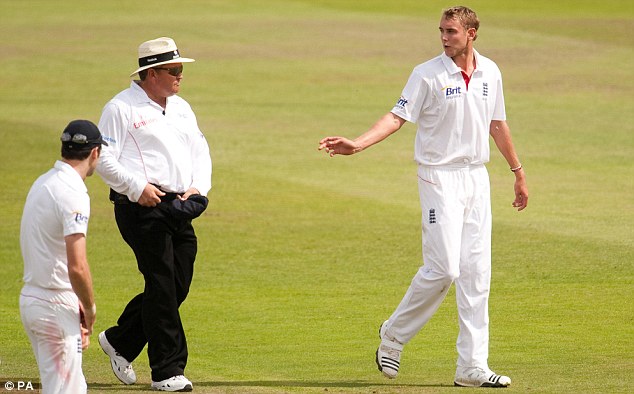
Marais Erasmus raised a lot of eyebrows with a few of his decisions during the on-going Trentbridge Test

Indeed, there is a strange karmic genius to this argument – one can rather trust a human over a machine, for one doesn’t know who has programmed that machine. But machines, or rather technology, can be used for verification – instances that require quantifying the degree of an Umpire’s decision-making correctness, one that is done behind the scenes.

I’m okay for the use of technology in the sport, as long as people do not question the motives of those who can overcome it. For every Antivirus, there exists an Anti-Antivirus-Virus. Nothing is perfect, and as long as we learn to accept that, the sport will move ahead with more conviction. Else, the perpetuity of the endless debates will continue until that inevitable day when mankind would end up regretting excess reliance on technology for even the most basic of tasks in life.

Marais Erasmus – yes, you have made blunders. Yes, you have had a very ordinary test. Yes, you are dubiously referred to as the ‘Not-Out’ umpire, but we respect you because of what you’ve achieved to get to where you are today. Technology will make you look silly at times, but doesn’t it do that to all of us?



 Goutham Chakravarthi

 29 July 2011


It is now a power struggle. It is proving to be one mighty battle for power between England and India: BCCI vs. ECB, English press vs. Indian press, ESPNStar com box vs. Sky com box. Of course, also the small matter of battle for ICC’s no.1 ranking in Tests.

Michael Vaughn wrote a piece on how to get Tendulkar out at the beginning of the series. Now, one Test into the series, Nasser Hussain has written a piece on how Anderson is proving to be too smart for Tendulkar. Simon Hughes wrote an article on how to get the better of all Indian players (bordering on something like get the batsmen out and don’t lose wickets to Indian bowlers!). Scyld Berry swears Tendulkar wouldn’t have crossed his highest score of 37 at Lord’s had he even batted the whole of the last day of the first Test. Boycott calls it the beginning of the end for the Indian team as no.1, but, Botham is already convinced that England are the new kings.

A story such as this is what media is after.

Not to be outdone, Sourav Ganguly called the English attack pretty much the same as the one he faced in 2007 and how India will tough it out and win this series. One Test in to the series, he is convinced that India will get better – a thought reflected in another former captain Anil Kumble’s recent article. Meanwhile, Sunil Gavaskar has appealed to the Indian media to get behind the home team like the Australian press and stop being negative about them (in other words, you or I can’t have an opinion of our own).

Long gone are the days when journalists described batting as art and poetry or the art of re-constructing a bowler’s clever plot in beguiling a champion opposition bowler. It is hyperbole madness today with media looking for quotes and stories. A Manjrekar calling Dravid “not talented” is a bigger story than a gutsy, carefully engineered Dravid hundred. A journalist who ekes out “Ganguly divides the team” from the coach is put on a higher pedestal than a wonderful analyst reporter who picks a pattern to a team’s issues with leg-spin bowling.

Bloggers and journalists have been working overtime to prove their points-of-view. Some English writers have even put this English team on par with Clive Lloyd’s West Indians and Steve Waugh’s Australians. The health of their bowling riches is compared to the ancient flourishing civilizations on the banks of river Nile and their seemingly endless supply of talented young batsmen are expected to back-fill any holes in their batting should there be such a need. Some credit the African and Asian immigrants’ contribution in the English uprising in the world rankings. The standard of county cricket is apparently on the rise while simultaneously they are taking a swipe at the state schools for not contributing even one English player since Collingwood.

On the Indian side, cricket enthusiasts have been digging-up stats of tours where India start poorly and stacking the series end result to be convinced that there is going to be a turn around. Health and injury history of Zaheer Khan have been researched more than will the protein pattern matching at the Indian Institute of Science. A team’s seriousness of the first test is being questioned and even alleged to be used as match practice by Sanjay Manjrekar. Never the ones to miss an opportunity, the whole of England is hell bent to point at the IPL for every Indian failure anywhere else – from the player fitness to mental fatigue.

The same can be extended to how both the cricket boards operate. Both like power and both don’t have a history of being very affable when wielding it. Like ECB’s willing and what proved to be a fatal association with Standford and now the enormous urge to protect its players from theIPL, BCCI is no different with wanting its stars playing in IPL – even at the cost of an international tour – and not the other T20 leagues around the world. Both like taking pot-shots at each other, don’t expect it to be very different should one of the two teams lose on the field either on a dodgy umpiring decision or the proverbial “player integrity” over a match altering low catch.

The team that stands tall at the end of the series will be regarded as among the finest by its fans, ex-players and its media while the losing team will face the wrath of their fans, ex-players and media. You see, they all need the men on the field to give them the bragging rights over their counterparts.

God save the team that wins. God save the team that loses.


Venkat Vedam

1 March 2011

St. Louis


The Cup that Counts. Cricket World Cup 2011, being played in India. And yeah, Bangladesh plays some games in Bangladesh and Sri Lanka plays a few in Sri Lanka.

So, it’s more like a World Cup played in the Indian Subcontinent and the hosts each trying to make sure that they get their fair share of home-advantage – to see their team advance in the Cup and more so to suck-up all the advertising revenue that can be generated by invoking patriotic fervor in the fans of the game. Correction, fans of the cricketers belonging from their part of the world. Cricket is a lowly second priority.

Yes, Cricket is not important. Home team winning the games is important. And the organizers (ICC and the boards working for the corporations which paid millions of dollars) know that. Curators stick to the formula too. So, we have a bunch of grounds with dead-flat sponge mats disguised as cricket pitches. That’s nothing new to cricket, specially the shorter versions. But this is ridiculous. Hoping to win the ‘World’ cup through home advantage.

One of my favorite experiences watching an ODI is to see fast bowlers let it rip in the first few overs and the openers battling it out with sheer talent or just plain luck: scoring runs maniacally in boundaries like Jayasuirya, Sehwag, Matt Hayden or scoring runs cleverly by manipulating the field and taking advantage of fielding restrictions like Sachin Tendulkar, Hashim Amla or Inzamam ul Haq or consolidating if wickets were lost like The Wall Rahul Dravid, Younis Khan or Steve Waugh. And the batting teams which would come out of this phase unscathed or as victors would be best placed to dictate the remainder of the innings. And then enter spinners, to slow the things down and use their guile to tie the batsmen down – good batsmen milk the spinners, bad ones wilt and mediocre ones meander towards the slog overs.

And the rubbish pitches for the games played till now in the world cup, have prompted the teams to open bowling with their spinners. West Indies, once an evergreen factory of fast bowlers – opened bowling with their spinner Benn. So did South Africa, opening with Johan Botha when they had players like Steyn and Morkel, arguably the best pace-bowling pair in the world cricket now.

For the last decade, ever since India started taking over as the leading revenue-generator for the World Cricket and thus the financial power house of cricket, cricket has been gravitating towards being a game featuring batsmen-vs-bowling-machines. And the least useful of those bowling machines are the type called fast bowlers. The grounds have been made artificially smaller by bringing the ropes in, fielding restrictions have been extended, mandatory ball change has been introduced – to ensure teams have a newer cricket ball after 34 overs to prepare for the final assault on the already demoralized bowlers.

This fundamental shift towards a batting-only cricket is due to the way cricket is enjoyed in India. Everybody wants to bat. Bowling is not so important. Fielding is a waste of time. This mindset is alike in Gully cricket (alley cricket), school and college-level cricket, club cricket and Ranji Trophy – and carries over to the national team. And the same mindset is cultivated by the fans of the game. I mean fans of a few cricketers from their respective parts of the country. No wonder India has so many batting sensations/legends and just about a handful of world-class bowlers, much less legends.

India is a high-quality Test team – if the pitch offers some swing and bounce or if the pitch deteriorates so much by the end of the 3rd/4th day that the spinners run through the opposition. It has great batters who can handle spin of any kind and on most surfaces. Otherwise, they are only a decent bowling team. And in the shorter formats where the opposition attacks the bowlers, they degrade to a mediocre team. They’re a team of great batsmen and one good fast bowler, one spinner and a bunch of sloppy amateurs. And the one good fast bowler, is known to blow hot and cold. More cold than hot in crunch situations.

And so, the groundsmen will try their best to prepare ugly, flat, spongy surfaces to somehow make sure bowling is out of the equation altogether. Home teams trying to maximize on their advantage is nothing new. But a side so hopelessly short on bowling resources, a fan-base so carelessly ignorant about the one-sidedness of the team they support and administration trying to convert a world-stage to an exhibition of batting skills by the host team, is a shame.

Not that the Indian supporters care. I feel it’s a misconception that there is huge following for cricket in India. No, we’re not bothered about cricket. Cricket is one way of supplying ‘stars’. Like movies. Sachin is God. Ganguly “Dada” is the prince of Kolkata (and we boo other players from his team, if required). Harbhajan is a star not because he’s a good bowler, but because he’s aggressive and arrogant at times. Sreesanth is famous for being Appam Chutiya and the slap-gate and less for his rare bowling-exploits. Dhoni and Yuvraj are famous more for their fashions and the women they date than the cricketing value they contribute.

Sure, there is always a patriotic feeling attached to wanting your country to win. But more so, the idea is to see these ‘batting legends’ and ‘stars’ win. We can care less about the cricket.

We don’t have quality fast bowlers!?

OK – lets have a few spinners in the team and a LOT of Star batsmen and let us prepare flat wickets.

Hmmm – but our players are slow and can’t field well.

OK – don’t worry. Our star batsmen will score a few more runs and the stars can win.

Well, other teams have good bowlers and great fielders.

OK – don’t worry. We’ll bring the ropes in and our star batsmen will hit out of the ground, so that they cant field.

But, the other teams have good batters too and what if they take advantage of the flat pitches and small grounds?

….. SH*T

Cricket world cup should be about cricket. Leave patriotism to espionage and wars.

Cricket world cup should be about batting, bowling and fielding.

Cricket world cup should be about good all-rounded teams and not about stars, even if they’re gods or fading legends.

Two last pieces of evidence before I end this:

1. During the game between England and India, Sachin hit a SIX against Swan and even before the ball landed beyond the boundary, the camera landed on Deepika Padukone, a Bollywood actor. And later at different points during the game, the camera focused on Business Tycoons, random movie actors, Politicians and a lot of Unknown Importants.

2. After the game was over, one great Indian Cricket Fan commented on his twitter feed:

‘Between Rahul Bose and Siddharth Malya, someone shoud F*ck Deepika tonight. India deserves this’

It’s not about cricket. It’s about stars. Some Sachin, some Dhoni, some Deepika and some Kingfisher.

This India doesn’t bother cricket. If the team doesn’t win, they’ll pelt stones at the cricketers houses and sling the proverbial mud and then get back to following their ‘stars’. After all, IPL starts within a week after the World Cup.

But, it might at least enlighten a smaller percentage of the followers of the game in the country, if the team doesn’t win the World Cup. In fact, the team doesnt deserve to reach semi-finals – surely, they aren’t among the top 4 sides in the world cricket. At least the team they selected for this event. They don’t deserve to win.


Goutham Chakravarthi

13 February 2011

Bangalore

World cup brings with it many things. Inevitably each edition plays host one last time to a group of great cricketers performing on cricket’s biggest stage in the hope of going out on a high. Expectations, invariably, sky-rocket from loyal supporters. Heroes are made of performing stars and winning teams are immortalized. Inglorious exits are met with wrath and burning effigies. Heads roll and scars linger till the next significant victory is achieved. Only a blessed few get to go out as world champs. Others walk into sunset alone and hurt.

When a player should retire is his own business. Image: Deccan Chronicle

It is a strange thing this retirement. Young men in the prime of their life otherwise are asked to leave just because a younger and stronger cricketer promises to deliver. A performer of grandeur, excellence and one of mass adulation and worship is replaced with the tone of a has-been. A retiring rock star on the other hand perhaps goes on a world tour for a couple of months one last time. Yes, Test retirements sometimes are on that scale (Steve Waugh, anyone?), but how many of the great theatre artists or pop-singers are asked to terminate their profession abruptly?

Still world cups are different. Passions reach fever pitch and average ex-cricketers find the temerity to question colossal giants. Media fuel exits with the same exaggerated care they would a triumph with inane debates and over-the-top obituaries. Fans and media move on with the next game and the next victory but a great career is ended.

Cricket, with its changing fortunes and the many twists and turns, the highs and the lows, heart burns and unbridled joy – often in the same match – is rightly compared to life and its vicissitudes. Retirement is anything but life like. A routine retirement is an occasion where friends and family collate to celebrate the career. Contributions are acknowledged by grateful peers and bosses. In cricket, retirement is often demanded following a high profile exit. Whilst selection is merit oriented and at the discretion of the cricket board, retirement is the individual’s choice. Often, cricketers are pushed into it. Some give in and some retire only to be back very soon after. And some others retire in installments. Whatever the means, it is best left unto the individual.

As with this world cup, this will be the last time truly modern day giants like Tendulkar, Kallis, Muralitharan, Ponting, Jayawardene, Chanderpaul will play in a world cup. All of them would want to go out as world beaters and nothing less. As it might turn out, none of them might be around when it is the finals time on April 2nd. It would hardly count as failure as it is players like them who make cricket invigorating and such a pleasure that you and I worship every minute of it. Their biggest contribution is in leaving the game having inspired millions of others to take to it.

As the world cup gears itself perhaps for its own future in a few days’ time, these great set of players will put on their best performances in the hope of scaling the summit one last time. Cricket will go on with or without them as it should and invariably will. Some won’t get picked after this world cup and selectors and captains are entitled to their judgment. But retirement should be left unto the players themselves. May be, some might announce it a year later from their last competitive game like Sampras did. May be, some won’t. In either case, it is none of our business.


Goutham Chakravarthi

13 February 2011

Bangalore

It is almost incredible that the world of cricket media fails to see beyond what’s with the experts. Numerous debates on the future of television coverage have raged the TV and internet space newly only to see predictable conclusions in the form of pay-per-view and HD television as its future. But I cannot fathom why there isn’t enough importance given to a whole lot of discussion, analyses and literature the non-experts’ section of the cricket world has to offer.

Largely it is a pile of waste that comes out post-game on TV or in the press. Cricinfo is among the most sought after sources of information for fans who want more than what they get on TV: pods, humour, debates being most prominent among them. But even then, Cricinfo still throws a large amount of the same rubbish all other forms of media do – pre-match predictions (templated and boringly predicatble), sound bites, injury rumours and of course a whole host of ex-cricketers not worth an ounce as experts.

It is beyond doubt that some of the best cricket analyses come from bloggers. Perhaps because these are people who enjoy watching the game and in no hurry to meet a deadline. Often these articles and opinions are far more interesting as they tend to have different flavours of perspective. Largely intelligent and even successful people on various counts of life are able to relate to various events on the game that sometimes escape even seasoned experts and journalists.

It is hardly surprising that pods like Test Match Sofa or Test Match Special are a lot more enjoyable today than a group of great ex-cricketers who give you the score every second ball or call an ingenious Laxman flick with a sponsor prefix to it. May be a day is not far off when technological advancements make inroads into television coverage where a bunch of people from across the globe connect to call the action and those who prefer their version over the official version can choose to listen to it. I would any day take Andy Zaltzman cussing over a piece of action than an ex-cricket go “he’s only gonna get better with age” everytime he sees a promising youngster.

Recently, there have been stories of journalists not being too happy with cricketers’ tweeting. Some seem to think cricketers have now taken over their jobs. Some recently have found cricketers taking a dig at their writing offensive. Ryder and Swan are a lot more fun with their tweets than many of the journalists taking offense to their comments. May be, for lesser spontaneous cricketers, they can try becoming their ghost tweeters. Much of today’s cricket journalism is bland.

Today’s writing largely remains ancient as it was decades ago when newspapers recounted the day’s events when live action didn’t reach the majority and as a result the writer unfolding the sequence of events allowed the writer to paint the game to the readers. It is a largely different world today where instant tweets even as the events unfold have become the norm (not to mention cricket coverage on phones and over broadband).

May be, that is why slightly unorthodox but mighty fine observers like Andy Zaltzman are entertaining and sought after. Great captains of yore who read the game well and inform of the likelihood of events to unfold still hold fort. Still, Opinion columns are predictable and so are post-game analyses. May be, they are going the way of player interviews that are repeats of the same thing time and again. Our experts ask the same questions, the players give the same answers and the writers write the same things. No reason why the consumer to this feels cheated.

Not sure if am being callous here. But I do believe that the best coverage out there is by the fans – amateurs who do it for fun and hobby but with as much dedication and application as the pros. Talented bloggers like Arnab Ray (Great Bong), Adam Wakefield (Bleacher Report and often in the Inbox section of Cricinfo), Subash Jayaraman (Cricket Couch), John vd Westhuizen (Cricket Guru), Brendon Layton (The Straight Bat) will provide interesting views to rival the best that goes around everywhere else. Of course, cricketwithballs, boredcricketcrazyindians, thealternativecricketalmanack keep us all entertained with their brand of cricket literature. And I hope that the best our of tweeter cricketers continue to keep us all entertained with that information their boards and press don’t want them to give us.

As much as a world cup it is going to be of Bhogle, Chappell, Boycott, Roebuck, Baum, Booth and Houwing, I will keep my eyes open for the best blogs, pods and tweets.

And may be, some of you will check out this space for more.