Archive for the ‘World T20 2012’ Category


Goutham Chakravarthi

With the ICC Women’s World Twenty20 also taking place in Sri Lanka, the Galle International Cricket Stadium is a hive of activity these days. The man responsible for getting the stadium in shape for the women’s league matches starting later this week is former Sri Lankan Test cricketer Jayananda Warnaweera. Apart from being the curator at the venue and the secretary of the Southern Province Cricket Association, Warnaweera is also on the executive committee of Sri Lanka Cricket (SLC).
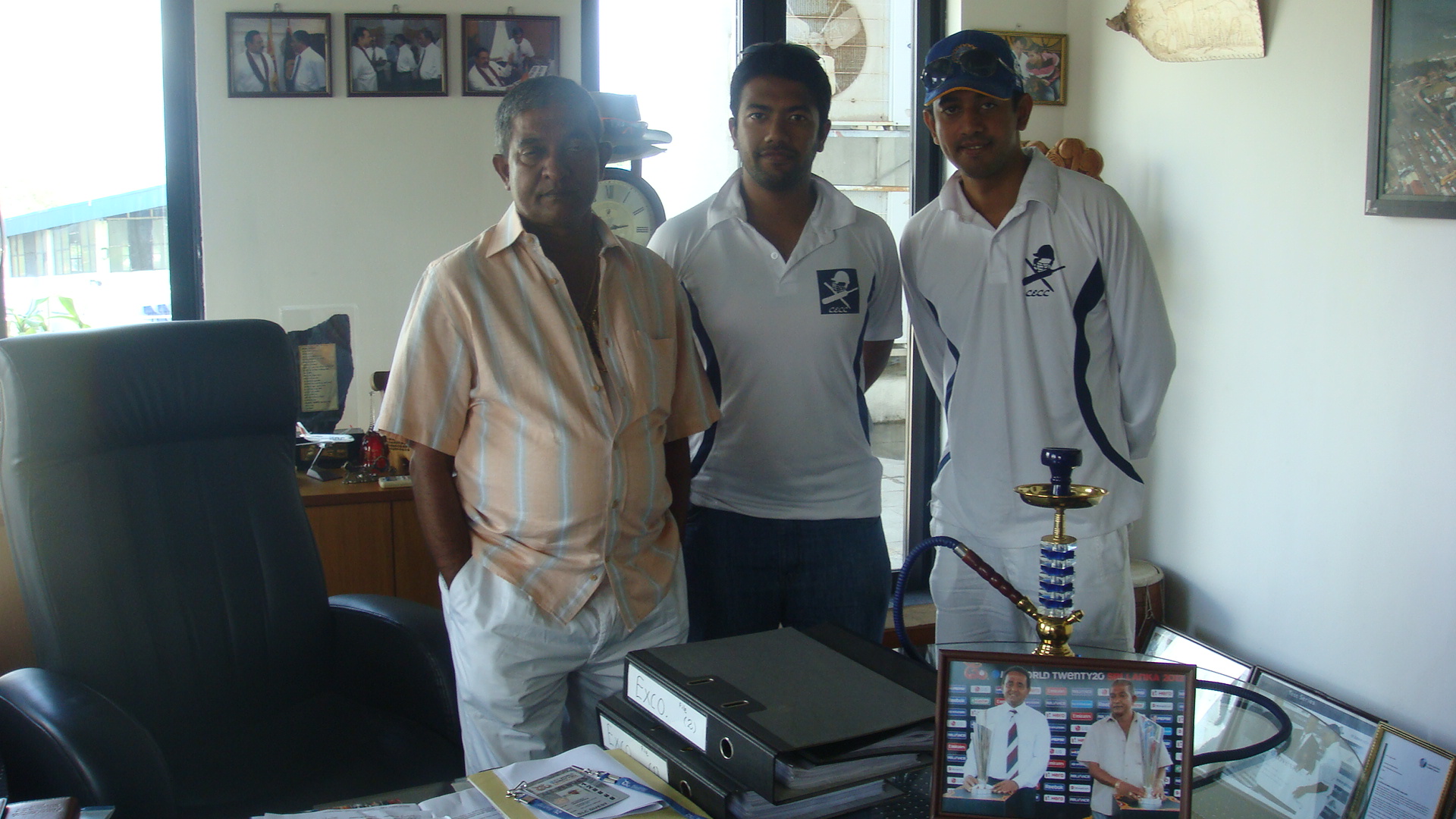
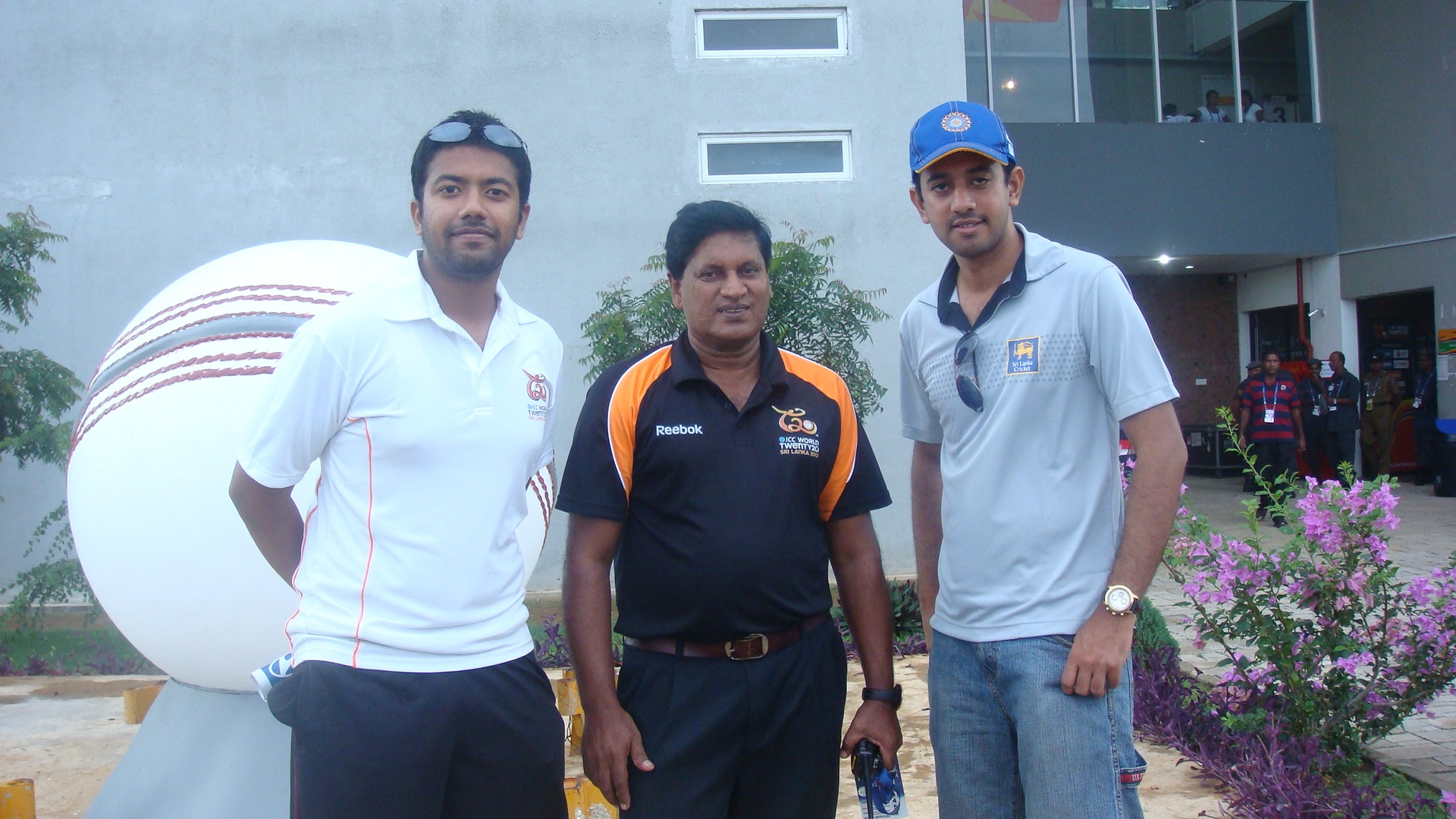
I am not a great fan of T20 cricket: Warnaweera. He is seen with CouchExperts Chandra and Goutham in this picture.

You played for Galle Cricket Club, and you were among the first to represent Sri Lanka from here. Who are the others?

Like New South Wales in Australia or Mumbai in India, Colombo is the cricket epicentre for Sri Lanka. I played cricket from here for two-and-half decades and was the first to break into the Test team from Galle. It paved the way for others like Champaka Ramanayake and Upul Chandana later. Even Marvan Atapattu is from here. Now, Upul Tharanga from Galle is in the national team as well. So, we have consistently been producing Test players from Galle from the time I broke in. Unfortunately with Galle, like with other outstations being limited in terms of opportunities, a lot of these cricketers move to places like Colombo after school and in search of job opportunities.

Are there steps taken by SLC to ensure talent remains in their regions?

There are various measures being evaluated to ensure we retain people in the local provinces. Chief among them are proposals at the provincial level where eligibility for representing the province will be earned only if you represent a club from the province. There are many such ideas being considered and we hope to provide long-term solutions.

We are about a week from the start of the women’s league games, a lot of work is being done here at the stadium already; how is the interest with ladies cricket here and what kind of numbers do you foresee for these games at Galle?

This is an ICC event and all ticket-related things are handled by the ICC. The good thing is these games are free of charge for the spectators. Sri Lankans have been known to follow the men’s game more and it is the same everywhere. But we still expect to see five to six thousand people to show up at the ground for every match

How do you rate Sri Lankan women’s chances?

In Sri Lanka, not many women play cricket although the interest seems to be on the rise. Understandably, the interest is more in Colombo area than in outstations like Galle. The hope is that with this World Cup being here, and if we do well, it will hopefully generate a lot of interest in the women to take up the game.

You were instrumental in getting the stadium ready first in 1998 and you then played a pivotal role in getting the stadium ready post tsunami. How difficult was it?

The tsunami left the stadium in ruins and we had to do a lot of work to get it up and running. Upwards of 500 million rupees was spent to have the stadium renovated. There were obstructions from the archaeological department that the new building construction would block the view of the historical Galle Fort. I am glad that we were able to get past all that. It was the ground where Shane Warne got to 500 wickets and my good friend Murali retired here a hero after getting the last Indian wicket to get to 800 Test wickets. There are many happy memories at this ground.

Being a former Test player, would you have liked to be part of these T20 tournaments across the world? Do you fancy them?

Personally, I am not a great fan of T20 cricket. Test cricket will always be the pinnacle not T20 cricket. Not even one-day cricket. You need skill and endurance to succeed in Test cricket and that is not the case with T20 cricket. Yes, commercially it is great for cricket. But from a personal stand point, not my choice.

When I run through your stats, I see that you regularly bowled 30-odd overs in an innings. Yet we see today’s bowlers, with all the coaching and scientific approach, spending more time recuperating than playing. Why is that?

In my time, fitness had to do with match routine not gym routine. Unfortunately, most of the youngsters are gym-fit and not match-fit. We didn’t know much else to do other than to bowl for long hours. We built ourselves to bowl and last sessions and days. Perhaps today’s bowlers are not that match fit.

Who are the best young players coming out of Sri Lanka that have caught your eye?

I am impressed a lot by Akila Dananjaya. He will be a very good bowler for Sri Lanka. Dinesh Chandimal has the ability to be a very good player for Sri Lanka. I hope he can go far and achieve a lot.

Who were the best players you played against?

Vivian Richards comes to mind first and then Mohammed Azharuddin. Among bowlers, there were many — Kapil Dev, Michael Holding, Imran Khan and Wasim Akram to name a few.

Who was the most difficult batsman you bowled to and why?

Mohammed Azharuddin. He was wristy and aggressive; and was very difficult to set fields to. He had good hands, and could put spinners off their lines and lengths quickly.

The best captain you have played with or against?

Imran Khan was the best and so was Arjuna Ranatunga. I would rate Mahela Jayawardene and Kumar Sangakkara amongst the best captains in the recent times as well.

As a former off-spinner, who do you pick as the best off-spinner in the world currently?

Both Saeed Ajmal and Graeme Swann have been very good for their teams in the last few years. Both are very fine spinners. I am also very impressed with R Ashwin as he seems to have a lot of variations and seems an intelligent cricketer. With age on his side, and the maturity experience will bring him, he will be a bowler to watch out for in the years to come.

Do you agree with foreign coaches coaching national teams? It seems to be the norm with all international teams these days?

I do not have a problem with local coaches coaching the national team. Sometimes, language can be a barrier for foreign coaches to communicate with the team, especially the young ones. Some teams with good and bright seniors can overcome this. Sometimes, it is seen to be an advantage, as it is seen as not showing favouritism as well. The best man for the job should always coach any team.

Finally, who do you think will win the World T20?

It is a very open tournament. South Africa are a strong team and so are Pakistan. Sri Lanka have the team to win and so do India.

This interview was first published in Island Cricket.
English fans confident that they will go all the way

Posted: September 24, 2012 by The CouchExpert in Cricket, World T20 2012
Tags:


Chandrasekhar Jayaramakrishnan

The day was almost entirely consumed by our journey back to Colombo via Galle. We stopped by Galle to say hi to Jayanananda Warnaweera, who happened to introduce us to Mr. Ajit Jayasekara, CEO of Sri Lanka Cricket (SLC). We exchanged pleasantries and updated him on our trysts in Sri Lanka.

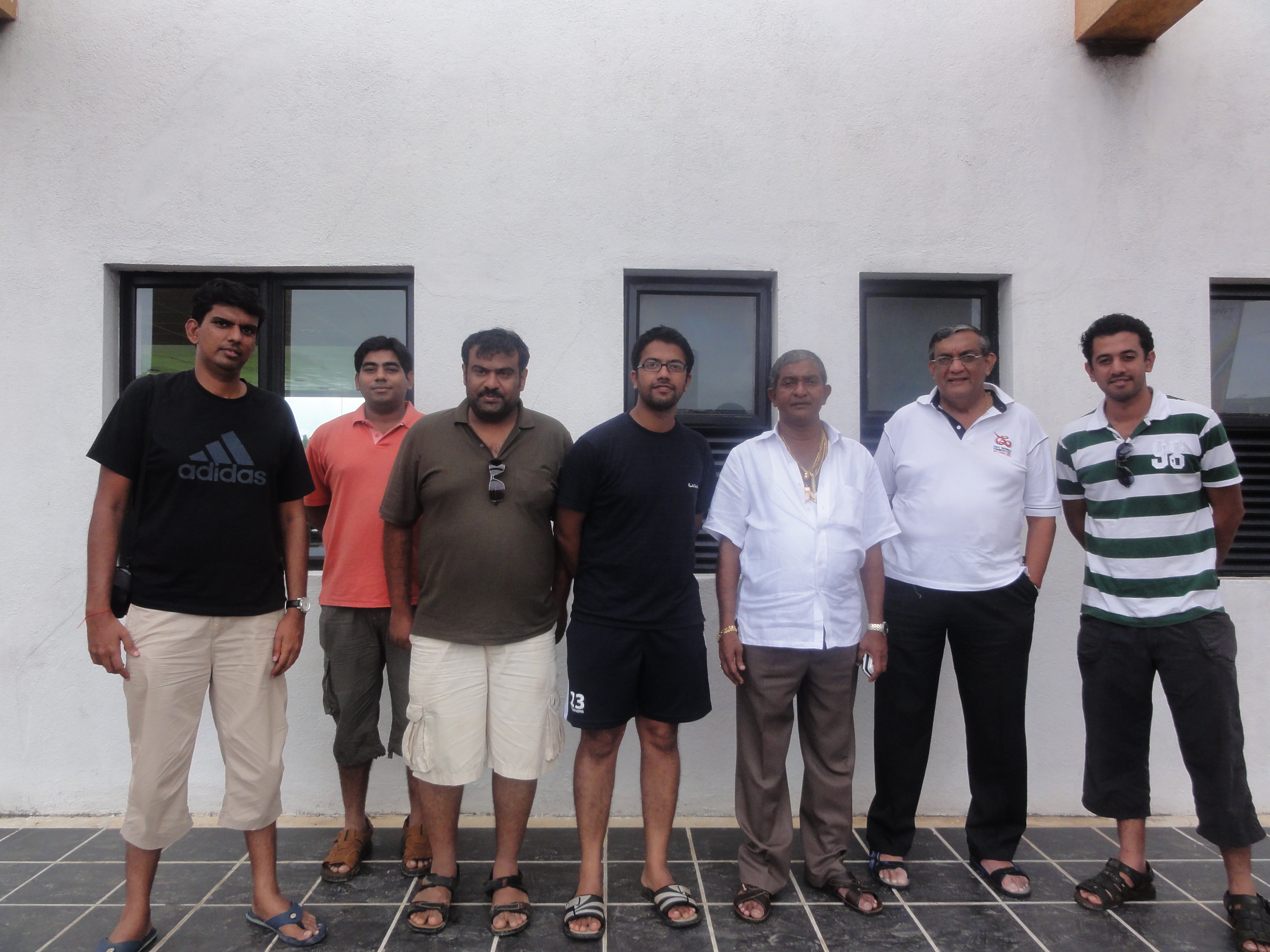
TCE team meet Jayananda Warnaweera and Ajit Jayasekara, CEO of Sri Lanka Cricket (SLC)

The halt at Galle was brief – we wanted to thank Mr. Warnaweera for the wonderful opportunity he’d provided us to get to know about Sri Lankan Cricket and Galle a few days ago. We promised to visit Galle soon and headed off to Colombo – just in time for a check in to the hotel and a taxi to take us to the India England game at the Premadasa.

Now who’d have thought …

We spent the best half of the pre-toss period running through a derisive critique of names that had no rights to be here as part of the Indian setup – triggered by observing Piyush Chawla practise his leggies on the field.

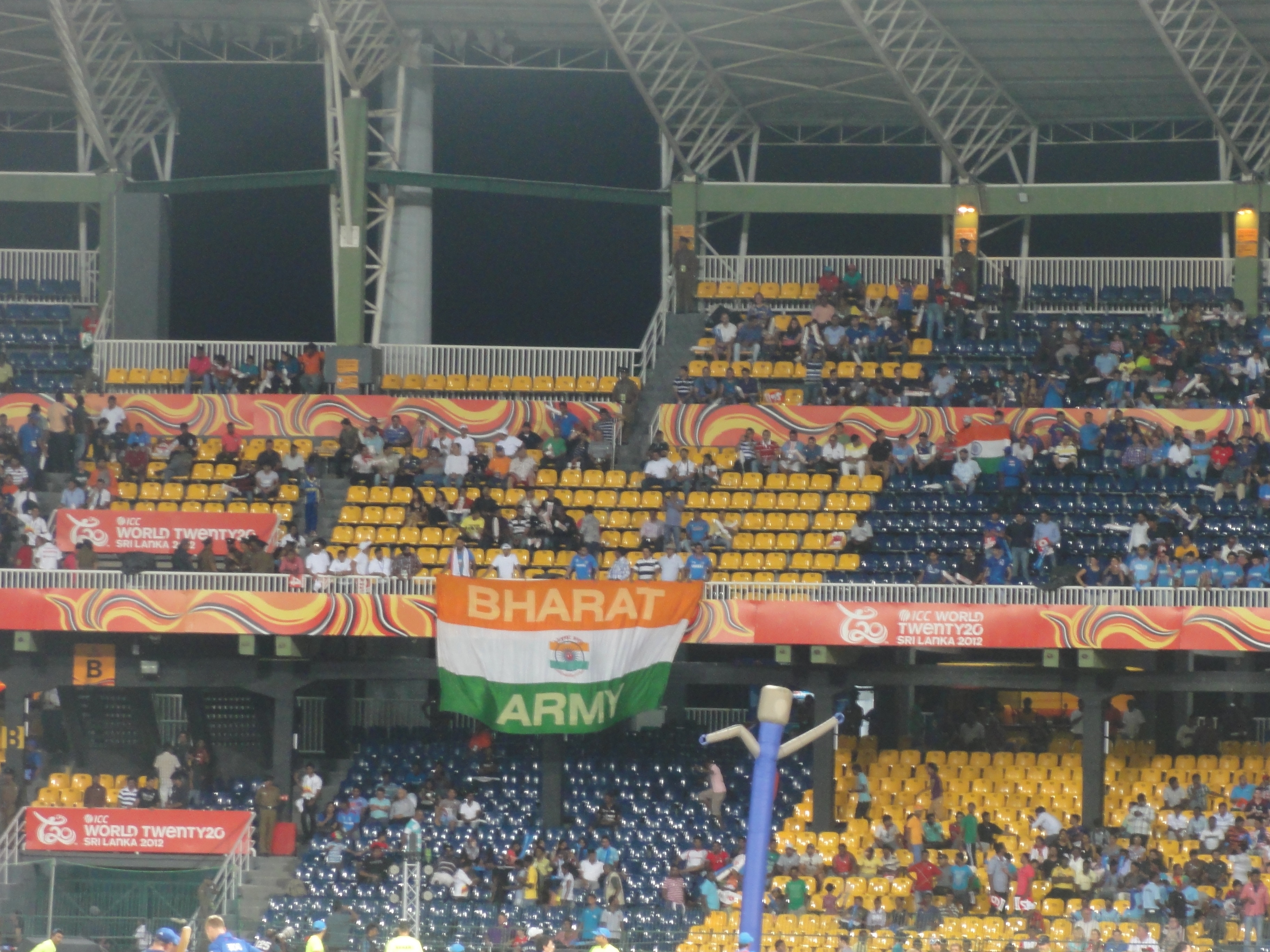
The Bharat Army © Badrinarayana Vengavasi

The popular topic was, in truth, about Gambhir’s struggles (longer formats inclusive) in the middle and how he suddenly – and unconvincingly – lost the ability to play those long innings’ we’d seen him play that landed him the ICC award a couple of years back. His innings of forty odd yesterday was quantifiable, if desultory, but this should be the natural predicate for a man who desperately needs to get his act together at home (extended to subcontinent wickets) prior to tours overseas.

The idea of opening with Pathan, at the cost of Sehwag (not in the XI), was a bad one. Pathan has been enduring through some tough times, with his name amongst a few included in the suspect-list. A low score would, in all probability, dip his confidence scales to levels resembling those that unfortunately kept him out of the Indian radar prior to this year. He looked out of sorts – period.

With Kohli extending his purple patch to another innings, it must’ve been hard on Gambhir, at the other end, to have curbed his instincts to go after the English attack – which was being made look amateurish by Kohli. To his credit, he stuck to his game plan – although one would imagine he ended up consuming a few balls too many. A strike-rate of 118 doesn’t seem to indicate that.

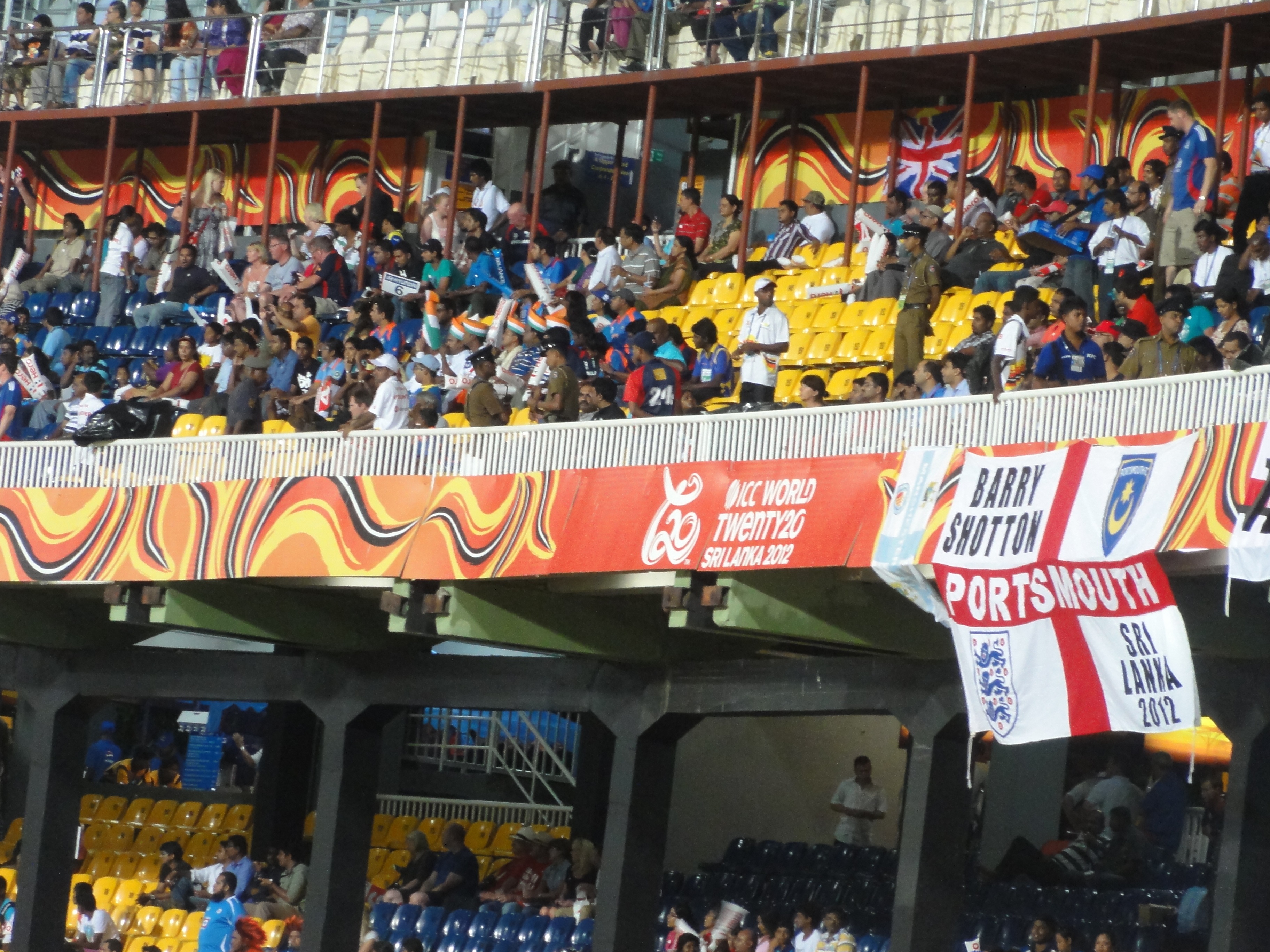
And the Barmy Army © Badrinarayana Vengavasi

Both Kohli and Gambhir decided to play Swann out (although the former did hole out to Swann at deep mid-wicket)– his 4 overs yielding a miserly 17 runs. I thought Swann was brilliant – I’ve seen him live quite a few times, but as I tried to observe Kieswetter’s work from behind the stumps (and how he reacted to Swann), I couldn’t help but admit that the Englishman is one of the best in the trade. I know Harbhajan ended up with match-winning figures, but out there, if I had to pick between the two of them, Swann looked better. But yes, I do know this is Harbhajan’s first outing in over a year – he will take his share of credit, for sure.

I know it might sound convulsive, but the Indian batsmen were sensible in paying Swann his due respect whereas, the Englishmen played shots they’d never want to see videos of against the two spinners. One striking thing about the England innings was how closely it mimicked the debates over their inability to conquer spin in the sub-continent. I almost got a feeling that Piyush Chawla was Anil Kumble in disguise – pardon the pun please.

Kieswetter, on the other hand, looked suspect behind the wickets against spin. There have been numerous occasions when deliveries flighted in line with the stumps have tempted batsmen charging forward – only for them to miss and Kieswetter to fumble. His missed stumping of Gambhir highlights the problems that he’s been carrying in his baggage for quite some time.

And finally, I know I’ll be spelt a villain if I don’t mention Rohit’s accolades here. To his credit, he played a crucial knock – his innings would’ve been more valuable had the English batsmen applied themselves on this wicket to put up a better fight. After Swann’s arrest, when the Indian run rate looked a touch below par, he did outstandingly well to push the score to 170. His six over covers off Jade Dernbach was my shot of the day – purely for its timing and (lacklustre – but popped-eyes) execution.

India will be satisfied, whereas Stuart Broad will have to recognize (in case he hasn’t already) that his young artillery has to handle spin if they want to entertain any hopes of progressing to the later stages of this tournament. We managed to spot a couple of England fans outside the stadium after the game. They were happy to agree for a chat – the video will be uploaded shortly.

PS: You can see the video here


Chandrasekhar Jayaramakrishnan

I guess in hindsight, to get 14 overs of cricket yesterday at Hambantotta was a bonus in itself. We’d arrived in the Southernmost District of Sri Lanka the previous day only to witness a night almost entirely full of rain showers.

There wasn’t enough evidence of sunshine to support the thought of the ground drying up, but we probably didn’t end up giving this a thought. So we found ourselves on a taxi to the stadium, the Mahinda Rajapaksa International Stadium – the newest of its kind in the nation. The misnomer here is that the stadium is not located in Hambantotta – but a good 45 km away from the town.

Dark Clouds and Rain delayed the start by over two-and-a-half hours © Badrinarayana Vengavasi

The ground seemed a very modern arena, although the rain gods didn’t show any mercy the moment we crossed the security check. We were surprised to find that the entire playing area had been covered; therefore removing any lingering doubts over the time it might take to get the ground dried up. The rain, merely, had to stop for play to commence.

Ranjan Paranavitana’s views

We’d managed to get an appointment with Ranjan Paranavitana, a popular Premier Division coach and journalist in Sri Lanka, who’d coached the likes of Tillakaratne Dilshan, and Dilshan Munaweera – current Sri Lankan internationals. We took a detour to the Press Box, rather to the building where it was, and met him outside the Media Box Complex.

Ranjan, in a chat with Goutham Chakravarthi, mentions his delight on how the tournament has been panning out so far. He seems pleased with the level of interest generated amongst the younger locals – a factor that he highlights as one of the key motives behind the tournament. His dream, clearly, is to groom more youngsters who can step in to the international arena and perform for Sri Lanka.

In particular, he singles out Dilshan Munaweera’s rise to fame through a string of outstanding domestic (and SLPL) performances. He is certain in suggesting that the youngster is likely to have a long stint at the international level – unlike other young, promising cricketers who’ve historically played the game of musical chairs.

On the other hand, he feels that it was a mistake to not take Akila Dhananjaya, the young mystery teenage spinner, to Australia for the Under-19 World Cup. Dhananjaya’s story is well documented – a kid who was hand-picked by Mahela Jayawardene while the latter was observing the youngster bowling in the nets. Dhananjaya is yet to play a first class game for his province – a tale that would remind Indian fans of a certain selection of Parthiv Patel almost a decade ago.

With Ranjan Paranavitana, a leading Premier Division Coach

Although Ranjan is extremely excited by the potential Dhananjaya has, the speed of his rise, he feels, may be an inhibitor in times to come – especially during the longer formats. The premature influx of cricketers in to the international setup (via camouflages in IPL, local T20 leagues), for one, is an argument that Indians have probably done more to precipitate than any other nation around. But that doesn’t deter Ranjan from having the confidence in the young spinner to succeed at the highest level, albeit extenuating circumstances.

When asked on his favourite team to lift the trophy this tournament, he picks South Africa, India and Pakistan as the teams to watch out for – other than his home country. Specifically, when requested to pick a favourite, he mentions Pakistan without a hesitation. On their day, as we all know, they can be world beaters.

We signed off around the time we suspected play might begin and Ranjan graciously handed over an autographed copy of his book to Goutham, in appreciation of his efforts to get in touch with him and drive all the way to Hambantotta for a chat. On that note, we headed back to our stand hoping to catch some action.

When Play Resumed

79 was always going to be a challenging target in a 7 over game. Skipper AB De Villiers’ blitzkrieg innings tipped the scales to favour a South African win. Munaweera’s catch of Richard Levi, in the first over of the game seemed to have got the home fans’ spirits up – given what we know of Richard Levi and his devastating hitting. Shorter the format, more valubale are players like Levi.

Play Resumes © Badrinarayana Vengavasi

Nothing much happened when the Sri Lankan innings got under way. Oh, we know there was a lot of music and cheering from the local fans – but unfortunately, in games of reduced formats, there isn’t too much of a room for percentage cricket. The odd boundary was cheered for, but the game slipped away from the home team with every ball bowled.

It was a convincing victory all right, but in a 7 over a side game, you must be mad (or possess voodoo magic) to place bets.

P.S. The video of Goutham chatting with Ranjan will be uploaded shortly.


Chandrasekhar Jayaramakrishnan

We’d planned on paying a visit to the stadium the previous day, and decided that it might be apt to hook up with facts concerning the stadium. Galle paid host to witnessing spin greats Shane Warne and Muttiah Muralidharan grab their 500th and 800th wicket respectively, with the latter signing off his legendary Test Career at Galle.

The darker side of Galle has other stories to reveal – the devastating effects of the 2004 Tsunami bearing source to tales that we’d never have entertained even in the wildest of nightmares. We realized that it might be essential to brush on a few facts that we thought we might be oblivious to – the effort behind getting the stadium back and running by 2008.

But soon, we learnt that what we’d gathered wasn’t nearly enough: if you want to know about the stadium, it only makes sense to get there and absorb its uniqueness – ranging from the Galle Fort, a UNESCO World Heritage site which overlooks it from the background and its geographic distinctiveness of being tasseled on two sides by the Indian Ocean.

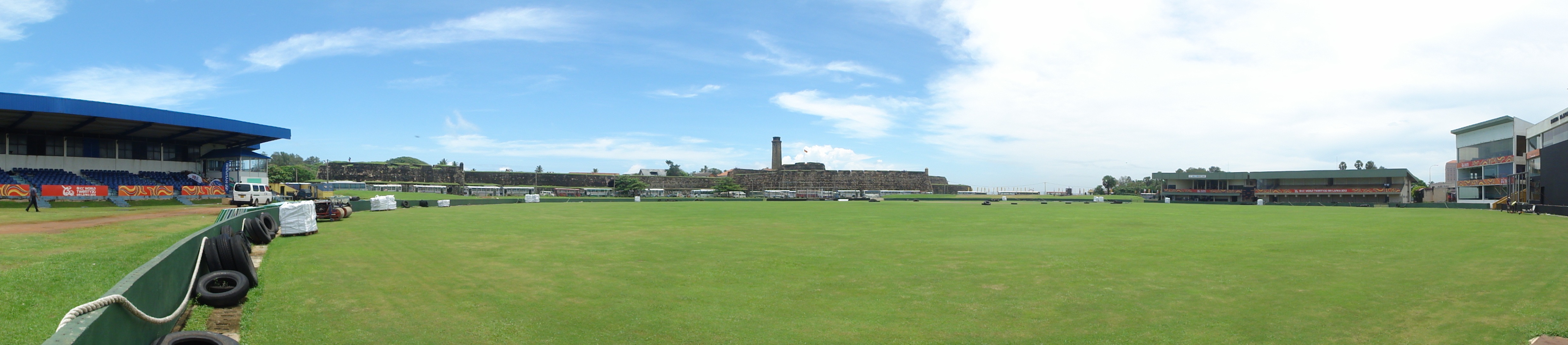
The Galle Fort at the backdrop of one of the world’s most picturesque venues. © Badrinarayana Vengavasi

Galle received sufficient press coverage to win the sentiments of people from around the world, following the tsunami tragedy of 2004. A volatile cocktail of facts would spell out the laudable efforts that were put in to get the stadium reconstructed (a project that cost in excess of 500 million LKR), and the battles that had to be contested against the Archaeological Department that raised its voice to object construction of buildings that would obstruct the view of the Fort.

As outsiders, we could do little but sympathize and contemplate on how quickly things can change in life. Natural disasters are ghastly under the best of circumstances.

On this note, we arrived as innocent visitors hoping to catch a glimpse of the ground which Brian Lara, among many other cricketers, had picked as among his most picturesque venues he has played in. Galle is getting ready to host the T20 Women’s World T20 starting September 26 – in fact, all the league games as part of the Women’s World T20 are being held here.

We walked in to one of the administration offices to check if we could speak to some one on recording a documentary focusing on the preparations being made for hosting the Women’s World Cup. We were directed to the main building in search of a certain Mr. Warnaweera. We met a colleague of his in the office, who informed us that Mr. Warnaweera wouldn’t be here for until another hour.

We explained our objectives and soon, we were given a go-ahead to walk around the stadium – but we were told to avoid getting close to the wickets.

An hour had passed by the time we finished interacting with staff working across different departments from within. We thought it’d be a good idea to head back to the main building and connect with Mr. Warnaweera.

We met him as he was heading to his office and introduced ourselves. He introduced himself as the Secretary of the Southern Province Cricket Association (among other titles and responsibilities he holds) and was, by his colleagues’ words, described as the sole proprietor of the Galle Cricket Stadium. He knew about the venue more than anyone else around – he undertook the responsibilities of being the curator himself.

The CouchExperts with former Sri Lankan Off-Spinner Jayananda Warnaweera at his office at the Galle International Stadium

He was very warm in welcoming us and inviting us over to his office for a discussion. The conversation that followed set the tone for a prolonged discussion on assorted topics (cricket aside – politics, culture and philosophy) in circumstances that we’d least anticipated.

As a former off-spinner for Sri Lanka (1986-94), he explained the challenges of growing up during the era of insurgency that saw very little of Sri Lanka in the international stage. This theme kept coming up in our discussions, though less vividly at later stages of our conversation.

In a free wheeling chat, he discussed a wide ranging topics from administration issues, new talent emergence, best batsmen he has seen to the best ones he had bowled to. Responses include his disappointment in the roads that T20 has paved for the younger generation of cricketers (who “cannot play Tests”) and his assessment on the match-fitness levels of players, who, he otherwise feels, are spending more time focusing on being gym-fit.

His straight-forwardness, dedication towards the sport, and his love for Galle (the stadium in particular), stand out on numerous occasions – most notably observed when his colleagues endorse the days and nights he’d put in consecutively to ensure that the reconstruction of the stadium proceeded as hassle-free as possible.

His hospitality was beyond description – incidentally, an Irish contingent had arrived at the stadium (including former Captain Peter Gillespie and former Coach, whose name I fail to recollect ) in seek of permission to have a look at their wicket (Sri Lanka has lost only 4 of the 20 Tests played at Galle) and find out the composition of the soil. He excused himself for a few minutes, and was back to continue the chat (we gather that the Irish party’s requests were not entertained).

He explained that the World Cup victory in 1996 had shaken things (for the good) considerably in Sri Lanka. There was a push from the ICC to elevate Galle to an international venue, a target that was achieved in 1998 when New Zealand toured Sri Lanka in June to play a Test at Galle. An ODI, against India, was hosted a few weeks later.

He was very open and generous with his time – we’ll never forget the long afternoon that we’d spent with him, fielding fundamental questions on the state of affairs in SLC, T20 cricket, the lack of involvement of the retired greats with the current setup, among others. We were served a sumptuous meal following which we resumed our conversation.

Goutham Chakravarthi poses with the bat donated by Brian Lara, a few days ago, on account of his first visit to Galle post 2004.

One look at the venue through the French Windows of his office is sufficient to comprehend how Mr. Warnaweera reacts to the lavish praise people shower on him with regard to his brainchild (a term used by a lot of his colleagues). The credit always belongs to the man who is day-in and day-out at the arena – the man who sweated blood during the darkest days of this venue’s history. The triumph of his phenomenal achievement has been the ability to let people watch a game of cricket at this breath-taking venue.

That his colleagues rate his work-ethic, dedication, and passion so highly is evident when one strolls around the Galle Cricket Stadium. That force is Jayananda Warnaweera’s greatest achievement, and the heart of his significant service to the people of Galle and cricket lovers from around the world.

PS: A video pod on the day’s events and various interviews with administrators, structural engineers, fans and Jayananda Warnaweera form the theme of our second video podcast that will be updated shortly.