Archive for the ‘Cricket’ Category

Roebuck and I

Posted: November 19, 2011 by The CouchExpert in Cricket, Opinion
Tags: , ,

Goutham Chakravarthi

Like most, I woke up to the beep on my mobile on Sunday to learn of his death. I was devastated. I sank to the floor on my bathroom and ran cold water over my burning cheeks. I was crying. I never knew he mattered so much.

By far my most favourite cricket book

Over the week, I have learnt to make peace with the reality of his loss. He invoked more thought and debate in me than any other writer could. Not even people I knew in life managed to have me on tenterhooks like he did. I read his work always. Sometimes, I felt he was a liar and I quickly realized it was my nationalistic feelings blinding my vision. It didn’t matter what he said, it was always going to take many readings and enough thinking and re-thinking and re-reading for me to fully comprehend what he wrote. It amused me initially that he thought matters like marriage and children could affect great cricketers and their game. To me, a cover drive was a cover drive. Married, widowed or gay had nothing to do with it. He thought differently. Society, background and mentoring, or the lack of it, mattered to him. He saw cricket through the eyes of a historian, analyst, fan, player, politics, society. Perhaps more. Definitely more. I was never clever to see through all of them.

As a child growing up in a small village in southern India in the 90s meant access to television and cable tv was a non option. The Sportstar was the only thing I read. Not even school books, but The Sportstar, yes, many times over each week. But I cannot recall reading Peter Roebuck before 1998. The Aussies had been humbled in the first Test at Chennai following a Tendulkar master class. Two weeks later, I read his column on The Sportstar. He bespoke of India as a nation and gave insights into Kumble and Srinath. It might have been about them being engineers, but I do not recall exactly. Yet I can recall that it left an impression on me. I was hooked. From then on, I have not missed an opportunity to read any of his work.

Like all, I would not agree with some of his opinions. Some of them were seriously above me. His pet hates included Mugabe and Zimbabwe. Perhaps I was too young to understand. Many years later, I still cannot correlate many things he had to say on Zimbabwean cricket and the many reforms he sought from them. Politics never interested me like it did to him. But the black arm-band incident in the 2003 world cup woke me up to some of the realities of Zimbabwe. And since, I have caught up enough to make sense of some of his writings on Zimbabwe and Africa.

Like with all sport and sportsmen, there are intangibles that go beyond the numbers they have to show for the efforts. I learnt how to look for those in my analysis of players as I read and re-read some of his works. I treasure his It Takes All Sorts and often fall back on it to learn about cricketers and cultures and minds. I tried reading the game and the cricketers as I saw them. Yet, his would be the first article I would read the following morning to see if he saw it any differently. He invariably did. And he was often right. And I would go back and read the book again!

Amateur writers like me do not have to worry about deadlines or toe the sensitive lines of the employer. But the freedom that comes with it also bestows the responsibility of trying to write to the best and honest ability of self. Often the style mattered to me though I never got round to figuring out what it was! Words were re-juggled and phrases re-written. Over time, I tried to build my works on my opinions. Unlike he, it was difficult for me to be bluntly honest or be as vocal every time I wrote my opinion pieces. I hid behind the comforting blanket of diplomacy. Perhaps it reflected my insecurity and self doubts. Even fear. What if I’m seen to be a fool, I would think. And I have hated myself for not choosing to be more forthright on those occasions.

He often mesmerized me with his conviction in his opinion and the cleverly and rationally thought-out supporting arguments in proving his cause. Not to mention his ability with words and metaphor. I have often tried imitating and always fallen flat. It didn’t matter if my opinion differed from his, I started to try presenting my honest opinion and build my argument around it. Needless to say, he was the inspiration and the standard I liked comparing myself to. Not that we were equals, but, hey, he was the best and it rarely hurt to compare yourself with him. I knew the answer to that and I tried inching my way closer but the chasm would never narrow. Like I really had a chance!

I never liked him on television when he would appear on cricket shows. His arguments were better in print than it was on television. Perhaps I was more captivated by his writing and I preferred reading him. May be he wrote exactly what he said on radio or television in the newspapers, but they were always impeccable and captivating in print. May be it was also a case of not wanting to find out your favourite uncle was indeed not the all-knowing superman you always thought he was.

Like many intangibles in life, Roebuck was one for me. It never mattered what he did or where he was, but it mattered what he said. I never exchanged an email or saw him in person. He mesmerized with his words and thought. His correlation of cricket to life and vice-versa made him the best analyst of his time. His prose was magic. Or it was infatuation. I don’t care. He remained the most honest of writers who wrote what he saw, unafraid and unbiased. It is a trait I hope to imbibe to my writing. It is the best tribute I can hope pay to him.


Goutham Chakravarthi

Steve Waugh found greatness when fighting with his back to the wall. He relished a fight and often got the best out of himself when he reduced a battle to that: individual fight with the opposition bowler. He thrived on it and often came out on top. He saved his career with that hundred against England. It gave him another year in the top flight cricket (he averaged 80 plus) and went out with a two month send off against the Indians the following Australian summer.

Now even Chappell and Benaud are calling for his head.

Now Ponting finds himself in a similar corner. Like Waugh, his greatness is not in question. His greatness is in front running and doing it like few others before him. Perhaps only Lara surpassed him among his contemporaries in doing it better.

A man of dazzling feet movement befitting the best of dancers, his gift was also in great shot selection. His ability to reduce the game to a fight and his immense desire to win made him a stand out. Few can claim to have dominated the best attacks of their time like Ponting has. Over the years, invariably, he has fallen, learnt, succeeded and failed like the rest of us. Very few can achieve the maximum of their abilities. Ponting did, and touched greatness. Of that, there is little doubt.

Not many would fault Ponting’s qualities as a batsman, but as a person he divides public opinion: considered short tempered, arrogant, loud mouthed by some, and as responsible, sharp man who understood his shortcomings and overcame them. Captaining Australia isn’t given to just any larrikin. It is a profile that is constantly scrutinized: by the public, media and even the prime minister. Shane Warne would count it among his top regrets not to captain Australia. Ponting did. His public acceptance to drinking problems as a young man and his switch to light beer showed him as man willing to learn and understand his position as an ambassador of his country. Soon, he was to become Australia’s finest batsman since Bradman and also its most successful captain.

Not that he has always been right. For that matter, no one is. He would lose temper on occasions and his ugly side would show up, not least in the Sydney test of 2008 against India. In a fiasco that defied belief, he would end up ruffling a full media contingent that questioned his team’s behavior and integrity. Not that the Indians were innocent in that Test either. That the incident propelled a huge fallout of the Australian team with the rest of the world did shake him up and his teammates to take a deep look at themselves.

Ponting’s attempts over the years of wanting to leave the game in a better shape than when he started playing is genuine. While gamesmanship may not be one of those, he feels strongly about over rates and substitutes. It has landed him in a quandary on a few occasions, especially in India where he has chosen the moral high ground over the push for a Test victory on more than one occasion . It didn’t go down well with many of his countrymen and former cricketers. That his lows as captain and as Test batsman should have come in India might be a personal regret. His successes far outweigh the inevitable failures.

Like with all great players, ability doesn’t last forever. What’s accumulated in the mind of a master batsman like him cannot be discounted for the waning of the physique. But the acceptance of falling from greatness has to come from within. Often, that is the hardest to accept. After all, Viv Richards didn’t wear a helmet just because his reflexes slowed down as he was reaching his end. He dusted it off as a dip in form and not of eroding ability. Some live in denial. Viv’s last three years had no Test hundreds. Kapil Dev’s last few years were a folly and so were Jayasuriya’s last many.

Now, Ponting is in danger of falling in that category. He has been found wanting playing the short ball over the last few seasons, yet he continues to play it. A signature shot, one that will always be associated with him, is suddenly a weakness. Falling over to straight deliveries and ending up in a walk to length deliveries are old problems now back to haunt him. Even stout Ponting supporters like Chappell and Benaud are calling for his head.

Ponting is still a mighty fine batsman. Perhaps he is hoping that there is a second wind for him like there was for Tendulkar and Dravid. Perhaps, being a good batsman is not enough for him. Once dipped and draped in greatness, it must be difficult to accept routine and the ordinary. Perhaps Wanderers will be his secret attempt at redemption; at greatness. A big innings would be most welcome for this struggling batsman and his tattered team. The end seems nearer than ever before, but may be, he can do a Waugh.


Chandrasekhar Jayaramakrishnan

November 13, 2011

The real story of test cricket has little to do with what was exposed in the newspapers on the morning of day three of the Newlands Test, and has everything to do with us fans – some who’ve challenged the entertainment plausibility of having to watch 450 overs of cricket spanning five days. The articles and reactions to the second day of the Newlands Test were only the meekest ghosts of a summary that the numbers depicted.

The build up to the clash between the Southern Hemisphere’s cricketing giants now seems inadvertent, given the fact that this battle would have given the Anglo-Zanzibar war of 1896 a run for its money. It had taken the British only 45 minutes to overthrow Khalid Bin Bargash, when five warships of the Royal Navy opened fire to commence and complete what would become one of the shortest wars fought in the history of the world.

Just as one began to wonder the chronic consequences of not having played test cricket in over ten months time, the residual effects of which were blatantly vivid during South Africa’s first innings, the landslide that followed painted a bizarre picture on how the art of temperament has gone for a toss, without doubting South Africa’s resilient response and character. It is, in one way, ironic to imagine that the teams that had once been involved in the highest ever run chase in ODI history had to enact a drama that would dubiously place itself at the other end of the spectrum.

The emergence of shorter formats seemed to have stamped its presence when a few Aussie batsmen – the main culprit being Brad Haddin – appeared to have played shots that they’d never want to see replays of. The entertaining form of attacking batsmanship was decisively rejected by the challenge posed by Test Cricket. It would now seem ironic to quote Michael Clarke in the past tense – a common ploy used by many who know that the words of the captain will appear on print post the result – just after the toss when he’d said he would have batted on this wicket.

Australia now finds itself in the middle of a two match series, with many believing that by stating the complexities of an ‘insidious’ wicket, the visitors can hope to bounce back after a break. A large part of Australia’s problems lie within their own camp – from the ineffective, unguided missiles of Mitchell Johnson to the questionable form, but not the class, of Ricky Ponting. To add to this heavy bag of questions exist a very fragile opening pair, whose lack of efflorescence against the moving ball would have undercut the post mortem’s storyline.

The Aussies certainly did well to ensure that their Trans-Tasman rivals held on to their dubious Test Record of the lowest score in an innings

Historically, the Australians are believed to be constitutionally averse to strategies adopted by other cricketing nations. If form-based remedies are displaced by class-based remedies, the number of young Australian cricketers staking a claim to play test cricket will fall incredibly. However, the recent trend scripts a contrary story, and rightly so – David Warner’s call up to replace the injured Shaun Marsh adds fuel to this theory.

Mental toughness has always been embedded into the DNA of Australian sport, but for once, ability seems to be posing a colossal question. But knowing the Australians well, they cherish pride and victory way too much to let it slip away – and no one would know that better than the set of men who’ve thrown their hats hoping to fill the vacancy left by Tim Nielsen.

In this process, the other side of the contest has been overlooked. If it probably weren’t for Amla and Smith’s centuries, it is for anyone to guess whether the other South African batsmen would have been found wanting, as they were during the first innings. But debutant Philander’s baptism of fire certainly prevented what otherwise would have been a very unpleasant courtroom featuring the batsmen responsible for a collapse during South Africa’s first innings on home soil during the month of November since 1921.

The Law of Large Numbers states that the result of performing the same experiment a large number of times would yield the expected result. The method adopted by Steyn, Philander and Morkel was to constantly hit the channels on and around off-stump – and the expected results were obtained.

The result has Australia in free fall now. Unlike gravity, a bad result can often push a team to the extremes of possible reactive decision making. There will be a temptation to replace the misfiring Johnson with the young and quick Pat Cummins – but as the late Peter Roebuck wrote in his very recent article: “Ambitious selectors and captains understandably seek players of high potential to replace time-servers, but cricket is also a game of skill, stamina and experience, and it takes time to learn its lessons.”

Sun Tzu’s Art of War states that what the ancients called a clever fighter is one who not only wins, but excels in winning with ease. Certainly, the South Africans wrapped up the game so. And they’ll look to repeat the same, excluding the first innings debacle, in Johannesburg.


Chandrasekhar Jayaramakrishnan

October 27, 2011

It is now apparent that the year 2011 will be remembered for symmetrical disasters, focusing two nations that destructed the enemy on their own soils. Both these nations were made to portray a political peacock, powerless to manage their own vanities away from home.

The shift in cricketing super powers, of late, is happening at a rate unseen in cricket before. History will depict clearly that when the British Empire started entering its period of decline, the West was waiting, and ready, to take over the role of attaining global supremacy. It is about getting your best resources ready, as my colleague Goutham Chakravarthi pointed out in his recent article, with the best laid plans to counter your enemy and ascend to the top.

The 5-0 whitewash of England, a score line that would flatter any Indian fan when he goes through the scorecards some day in the future, paints a picture of a team that simply wasn’t ready to build its fortresses in stone as it travels across the world. But the bigger question remains: will the tilt in scales assist India in carving a path to supremacy that they had against their names, in the form of ICC Rankings, until a few months ago?

A lot would depend on how these ‘resources’ are handled. Time and again, the renowned cliché of great sides having great bowling units that can take 20 wickets, has come to haunt the Indians and impose a harsh reality check against this aspect of their supremacy. The long renowned criticism was that centric around the Indian bowlers lacking in pace, a theory whose hypothesis was proven recently by Zaheer Khan’s postulates on the inability of Indian players’ bodies not being designed to bowl fast.

Zaheer had raised a few eyebrows with his Theory on Indian Fast Bowlers

As farcical as this might sound to a few, especially when India’s neighbors to the Northwest churn our products that who are quick, Zaheer’s theory has a fundamental flaw. Historically, Indian fans have witnessed young, exciting talent who enter the arena with commendable speeds only to find that with time, their speeds decay exponentially to embarrassing levels. Likewise, genuine swing bowlers who’ve attempted to bowl fast to exclude themselves from this bracket of embarrassing entities have lost their art, almost mysteriously.

But any Indian fan would welcome the sight of a bowler who can put Zaheer’s theory to rest. After all, if neutrinos have suddenly emerged to question the validity of Einstein’s theories – that were based on the fact that particles that travel faster than light practically cannot exist – some bowlers could opt for the neutrino route to travel back in time and make Zaheer eat his words. After all, physics and cricket do mix – remember why the ball swings?

When Ishant Sharma was at his rampant best, during the tour of Australia back in 2008, I recall Harsha Bhogle making a statement along the lines of, “If anyone advises this kid to reduce his speed so that he sustain for longer periods in international cricket without being a victim of injuries, we’ll have to snap their hands off.”  I couldn’t have agreed with him more, and unfortunately, our worst fears came true.

The inherent drawbacks of having men in cricketing bodies across the country, mainly politicians and businessmen unqualified to run cricket, the sport revives itself in the worst possible way – similar to how the current Congress government has inflicted damage to the nation: the poor and the middle class will pay, in eternity, for the numerous sins of the powerful.  

So, can these resources be ready for war if the number of brick walls to climb internally is aplenty? If there are larger interests ahead that deviate the focus away from the core values of the sport, will it be reasonable for a fan to hope for an extended run at the top of the rankings? Yes, I know India has just whitewashed England at home, but I’d still like to think that England’s own flaws had a greater bearing on the result than India’s brilliance, which, I of course do not doubt.

With a challenging tour to Australia fast approaching, India can take a leaf out of England’s Ashes preparation last winter – a factor whose absence qualified (and quantified) India’s miserable display in England earlier this year. It might make a lot of sense to start afresh and build gradually on success, forgetting the fact that India were world beaters, if I may use the term, until not too long ago.

The platform now seems particularly ripe for a plan that can provide sufficient insurance to the impressive young crop of players who’ve done so well during the absence of the seniors. Aberrant errors, such as the simple case of including/calling A Mithun for a test match in the West Indies and not considering him as a replacement for the injured seamers during the tour of England, and ironically flying in RP Singh based on his 2007 series reputation need to be avoided.

Fortunately, the ideas for the platform have already been laid during the tenure of Gary Kirsten. Kirsten’s success as Indian coach is mainly attributed to his understanding of the Indian culture – one in which sensitivities played a very important role. Kirsten also saw the unprecedented need for psychological counseling for players who survived horrific spells of inconsistency/lack of form in the middle – for, the dynamics of the game had changed to such a great extent that the pool of players to choose from became so large, whereas the time a player got to showcase his potential was a matter of a few games.

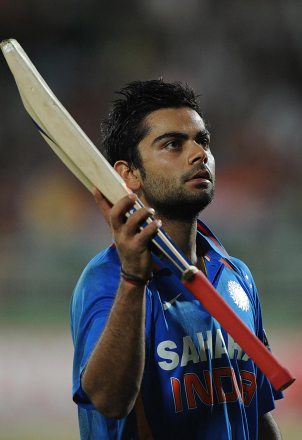
Virat Kohli, with his rapidly rising run tally and maturity, with an extended run in Test Cricket can become a fulcrum of the Next Gen Middle Order

The case discussed earlier could’ve also dented the confidence of RP Singh, who’d have probably been more surprised than anyone else on his call-up, given the fact that he hadn’t played a first class game since January. Such cases, with a hint of a double-edged swordness about them, have buried the careers of a number of talented cricketers who have been victims of poor decision making.

What Indian cricket needs to build on requires the skill of a movie director – role play. Harsha Bhogle had spoken on this earlier, and if it wasn’t evident back then, it is evident right now. If this approach isn’t taken downstream, the absence of the cusp would mandate an explanation. This is very unlikely to materialize during the build up to the Australian tour, given the fact that all the senior players would play a role in the starting XI – given that this might be their last series down under.

But if the names don’t change, at least the structure can. Back the quickies and give the younger batsmen an extended run. Most crucially, eliminate the bottlenecks. Now that is where the trouble begins.


Goutham Chakravarthi

No matter how much Cook and his boys said in each press conference that they were going to bounce back,  fans and media were certain of the white wash. That four of the five games were decided by whopping margins, it only deepens the scars of English cricketers who have won only one game of sixteen in their last three bilateral series in India.

England is known to prepare better than most for any series and it was no different when they arrived in Hyderabad ten days before the first game. Unfortunately, their planning and strategy leaves a lot to be desired.

Bell and Pietersen should both play in the XI

It is quite apparent that they have theories in place and try to pick players to fit them into those theories. The problem is, it doesn’t always work unless the player is brilliant enough fit himself to any theory. And in England’s case, there are very few of them who are that versatile.

It is silly that they had to choose between Pietersen and Bell for one batting slot. In an ideal world, you pick the best team you have – both Pietersen and Bell would be the first two to be penciled in in that case. And once the best batting team is picked, based on the strengths, the strategy is to be formed.

India showed them how it is done even when they were in England irrespective of the one-day results. With all their power players out injured – Sehwag, Tendulkar, Yuvraj – they played to the limitations of their side and planned to not lose wickets up front and let Dhoni and Raina take to the bowling at the end. That was their best chance with the team they had and they took the common sense approach.

One look at this England team and you know for certain that they have no such concrete plan. Expecting Kieswetter to do a Jayasuriya just because the pitches allow free stroke making against the new ball is silly. Kieswetter’s limitations have exposed the flawed roleplay identified for the players. You cannot score 80 runs in the first 10 overs just because that is how it is done in the sub-continent. You need to have the players to do it.

More importantly, the match winners in the team have to be looked after. And in this team, that match winner had to be Kevin Pietersen. The only time England won anything of substance in the limited overs format – T20 world cup in the Caribbean– Pietersen was the Man of the Tournament. That he was made to think his place in team was under threat to the likes of Jonny Bairstow and Jos Buttler wouldn’t have sat comfortably on him.

Not that Graeme Swann chose to release his autobiography just before the start of the series help. There was nothing sinister in his revelation that he didn’t think Pietersen was captaincy material. The timing would have hurt. Also Swann’s revelation that the four day boot camp in Germany prior to the Ashes were among the worst of his life didn’t go too well with Flower. Swann dropped catches and looked very innocuous with his off-spin throughout. It didn’t help at all in their team bonding.

On the other hand, M.S. Dhoni ensures that he gives Yuvraj Singh all the confidence in the world when he is playing. He constantly tells the press that Yuvraj is India’s key to success in limited overs cricket and he has reaped the rewards as the temperamental southpaw was instrumental in India winning the T20 world cup in 2007 and the 50 overs world cup early this year. Both Yuvraj and Pietersen have massive egos and the trick to ensure that they have the full confidence of the captain and the management. They need to be told that they are critical for their team’s success.

Also the fascination towards these power hitters in Alex Hales, Jos Buttler, Jonny Bairstow is worrying. That they are picked and placed to take advantage of the powerplays is a noble thought provided they are good enough to do it. Kieswetter has shown that be can perhaps bat in top gear or get stuck with nothing in between, while Bairstow seems to have not much idea playing spin.

It would be common sense that an ideal XI will comprise of their three best players –Bell, Pietersen and Morgan. Also, their batting positions should ensure that they get maximum opportunities to play 50 overs. How they fit the others around these three will be a good starting point, and worthy of a good planning exercise.

Also, Cook’s captaincy has been far from impressive. Pietersen looked clueless when England were thrashed 5-0 in India last time, and Cook looked not far from it. The only time India struggled against this England attack was when they got the ball to reverse. It meant they should have looked to bowl during the day and not worry about the heat. Only in Hyderabad and Kolkata did they bowl first and the heat seemed to get to them.

Mental toughness of a team is also in taking these factors into consideration, and England would have done well to let go of playing under cooler night conditions. The night dew also ensured that India chased down England’s targets with great ease as there was no reverse either. Only Finn came through with a remarkable show of strength and endurance.

It’s all right when the media points to the fact that the next world cup in 2015 will be played in Australia and New Zealand, but not to forget is the fact the T20 world cup is in Sri Lanka next year. On current evidence, it is difficult to imagine England starting favourites to defend their crown.