Archive for the ‘India Cricket’ Category


Chandrasekhar Jayaramakrishnan

It is clear from the summary of events over the last five days that the Wankhede wicket was not as much at fault as anything in bringing about the scale of the expectations surrounding Tendulkar’s milestone. Yours truly, for one, believed otherwise while witnessing a West Indian unit, with due respect, amass 591 runs. What followed was a non-verbal war between the accuser and the accused – the wicket spoke for itself, and so did the result.

The excesses of expectations throughout the cricketing fraternity have become a national problem. The media fails to see beyond the much awaited milestone, while commendable performances on the field by others have become sub-headlines to a more eye-catching, heart-on-sleeve title.  Every headline seems a verbose isomer of the other.

Hard not to associate the man with the number

The obsession with the milestone is understandable. It is easy to overstate the problem, but it is a lot easier to come to terms with the fact that it will happen, and that time will show us when and how. One would argue that it would have been befitting for the greatest batsman of the modern generation to have achieved this milestone in the same home ground in which his nation lifted the coveted World Cup – a ground in which he started playing as a young teenager.

But certainly, history would want to remember this milestone as one achieved under non-ideal conditions in an arena and environment that challenges the abilities of a batsman. Just like how Euclidean geometry had taught us as kids that the three angles of a triangle sum up to one hundred and eighty, the sport has continuously taught us that records and numbers do not matter if they don’t shape up for a team’s cause, under trying circumstances. There is a reason why his 114 as a young kid on a Perth wicket is remembered as one of his best innings of all time. A few others, like Anton Tchekov’s characters, at the end, have vanished into life.

That he has 99 centuries till date is a catalog of his virtues – and that he has sustained for over 22 years a tribute to his consistency. And that glaring countdown:  fully armed with preconceptions portrayed by the recalcitrant media and frenzy – a mark of disrespect to a man, who at times, has wielded more responsibility than the Prime Minister of a nation.  The game of cricket has challenged every champion in disproportionate measures – from the meager run bucket of Ricky Ponting this year to the branding of anything less than a Tendulkar hundred a failure. It is about one man’s recent past, and another’s future. And not to forget the Turbanator, who is going through a lean patch after being a fulcrum in the Indian attack for close to a decade.

As fans, every one of us has a role in mediating the mayhem that surrounds a player’s personal glory. A series victory down under would mean a lot more to Tendulkar than achieving his milestone. And it is important to remember, given the circumstances down under, that there may not be a better time to tour Australia with the hope of obtaining a result. And if both happen, well – what is left to say here? Life isn’t a movie script that one can write in advance.

After all, the inevitable day is just about adding another one to his monumental tally of tons, and not even remotely close to that day when Canadian sensors hope to detect microbial life in Mars. Why all this fuss then?

Chandrasekhar Jayaramakrishnan

October 27, 2011

It is now apparent that the year 2011 will be remembered for symmetrical disasters, focusing two nations that destructed the enemy on their own soils. Both these nations were made to portray a political peacock, powerless to manage their own vanities away from home.

The shift in cricketing super powers, of late, is happening at a rate unseen in cricket before. History will depict clearly that when the British Empire started entering its period of decline, the West was waiting, and ready, to take over the role of attaining global supremacy. It is about getting your best resources ready, as my colleague Goutham Chakravarthi pointed out in his recent article, with the best laid plans to counter your enemy and ascend to the top.

The 5-0 whitewash of England, a score line that would flatter any Indian fan when he goes through the scorecards some day in the future, paints a picture of a team that simply wasn’t ready to build its fortresses in stone as it travels across the world. But the bigger question remains: will the tilt in scales assist India in carving a path to supremacy that they had against their names, in the form of ICC Rankings, until a few months ago?

A lot would depend on how these ‘resources’ are handled. Time and again, the renowned cliché of great sides having great bowling units that can take 20 wickets, has come to haunt the Indians and impose a harsh reality check against this aspect of their supremacy. The long renowned criticism was that centric around the Indian bowlers lacking in pace, a theory whose hypothesis was proven recently by Zaheer Khan’s postulates on the inability of Indian players’ bodies not being designed to bowl fast.

Zaheer had raised a few eyebrows with his Theory on Indian Fast Bowlers

As farcical as this might sound to a few, especially when India’s neighbors to the Northwest churn our products that who are quick, Zaheer’s theory has a fundamental flaw. Historically, Indian fans have witnessed young, exciting talent who enter the arena with commendable speeds only to find that with time, their speeds decay exponentially to embarrassing levels. Likewise, genuine swing bowlers who’ve attempted to bowl fast to exclude themselves from this bracket of embarrassing entities have lost their art, almost mysteriously.

But any Indian fan would welcome the sight of a bowler who can put Zaheer’s theory to rest. After all, if neutrinos have suddenly emerged to question the validity of Einstein’s theories – that were based on the fact that particles that travel faster than light practically cannot exist – some bowlers could opt for the neutrino route to travel back in time and make Zaheer eat his words. After all, physics and cricket do mix – remember why the ball swings?

When Ishant Sharma was at his rampant best, during the tour of Australia back in 2008, I recall Harsha Bhogle making a statement along the lines of, “If anyone advises this kid to reduce his speed so that he sustain for longer periods in international cricket without being a victim of injuries, we’ll have to snap their hands off.”  I couldn’t have agreed with him more, and unfortunately, our worst fears came true.

The inherent drawbacks of having men in cricketing bodies across the country, mainly politicians and businessmen unqualified to run cricket, the sport revives itself in the worst possible way – similar to how the current Congress government has inflicted damage to the nation: the poor and the middle class will pay, in eternity, for the numerous sins of the powerful.  

So, can these resources be ready for war if the number of brick walls to climb internally is aplenty? If there are larger interests ahead that deviate the focus away from the core values of the sport, will it be reasonable for a fan to hope for an extended run at the top of the rankings? Yes, I know India has just whitewashed England at home, but I’d still like to think that England’s own flaws had a greater bearing on the result than India’s brilliance, which, I of course do not doubt.

With a challenging tour to Australia fast approaching, India can take a leaf out of England’s Ashes preparation last winter – a factor whose absence qualified (and quantified) India’s miserable display in England earlier this year. It might make a lot of sense to start afresh and build gradually on success, forgetting the fact that India were world beaters, if I may use the term, until not too long ago.

The platform now seems particularly ripe for a plan that can provide sufficient insurance to the impressive young crop of players who’ve done so well during the absence of the seniors. Aberrant errors, such as the simple case of including/calling A Mithun for a test match in the West Indies and not considering him as a replacement for the injured seamers during the tour of England, and ironically flying in RP Singh based on his 2007 series reputation need to be avoided.

Fortunately, the ideas for the platform have already been laid during the tenure of Gary Kirsten. Kirsten’s success as Indian coach is mainly attributed to his understanding of the Indian culture – one in which sensitivities played a very important role. Kirsten also saw the unprecedented need for psychological counseling for players who survived horrific spells of inconsistency/lack of form in the middle – for, the dynamics of the game had changed to such a great extent that the pool of players to choose from became so large, whereas the time a player got to showcase his potential was a matter of a few games.

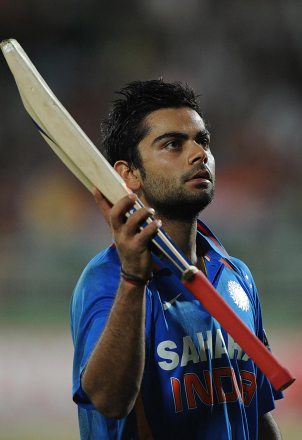
Virat Kohli, with his rapidly rising run tally and maturity, with an extended run in Test Cricket can become a fulcrum of the Next Gen Middle Order

The case discussed earlier could’ve also dented the confidence of RP Singh, who’d have probably been more surprised than anyone else on his call-up, given the fact that he hadn’t played a first class game since January. Such cases, with a hint of a double-edged swordness about them, have buried the careers of a number of talented cricketers who have been victims of poor decision making.

What Indian cricket needs to build on requires the skill of a movie director – role play. Harsha Bhogle had spoken on this earlier, and if it wasn’t evident back then, it is evident right now. If this approach isn’t taken downstream, the absence of the cusp would mandate an explanation. This is very unlikely to materialize during the build up to the Australian tour, given the fact that all the senior players would play a role in the starting XI – given that this might be their last series down under.

But if the names don’t change, at least the structure can. Back the quickies and give the younger batsmen an extended run. Most crucially, eliminate the bottlenecks. Now that is where the trouble begins.


Chandrasekhar Jayaramakrishnan, The Couch Expert

October 13, 2011

Note: This is not so much an article as it is a random rambling. This is a collection of thoughts observed and gathered during conversations with strangers, but cricket lovers, during a few weeks of cricket activity that I couldn’t quite follow due to various reasons. This may lack flow, grammar, and in some cases may even defy common/cricketing sense – but are we ever worried about all this when we’re just … rambling.

A remarkable thing happened in Jaipur recently: Shikar Dhawan became the first batsman in the history of the Irani Trophy to score a century in each innings. And yes, as I write this, the Indian cricketing fraternity is approaching the final of the Challenger Trophy that features another hero from the recently concluded Irani Trophy game.

And we’re also one day away from the start of the 1st ODI featuring England and India, again. This time, the arena is a lot more humid and the wicket, a lot drier.

It is not surprising to see the buzz of activity in the cricketing setup within India – the blitzkrieg happenings of CLT20, the patient mauling of the Ranji Champions Rajasthan in the Irani Trophy, the ongoing ‘where-did-that-come-from’ Challenger Trophy series and at last, some International Cricket taking stage featuring two teams that played each other, well, not too long ago.

Too much to register right? And yes, I was speaking about Abhinav Mukund towards the end of the first paragraph. He looks in good touch – with a century in both the second innings of the Irani Trophy and the first List ‘A’ game of the Challenger Trophy. He followed it up with another impressive half century to take his team, India Red, through to the finals.

Mukund and Dhawan have looked in fine touch, with the former carrying his form on to the Challenger Trophy

And so did Uthappa and Aniruddha Srikkanth, with centuries apiece to take India Green to the finals. So what do I infer from this? Well, only that none of these guys are part of the Indian ODI team that is going to face England tomorrow in Hyderabad.

But then who are the new guys in the squad to face England? S Aravind, of Bangalore Royal Challengers. And by the way, he represents Karnataka in the Ranji Trophy – he finished behind Vinay Kumar and Abhimanyu Mithun, also Karanataka players with Indian caps against their names, in the wickets tally last season.

But wait, wasn’t he the same guy who’d conceded in excess of 60 odd runs against the pyrotechnics of David Warner? Yes, he was. But the squad was picked by then – and still, I’ll give him more credit for his Ranji exploits than the ones with BRC. So, good luck to him – and Rahul Sharma, someone in whom I see a lot of promise and ability.

Which Ranji team does he play for? Let me be honest. I had to cross-check with Cricinfo to put it in here that he plays for Punjab. But I did see him in the Irani Trophy game – he was good, although Ojha’s figures would have overshadowed his performance that game.  

Will Rahul Sharma get a game? Or will he do a Varun Aaron

But what about that guy who bowls in excess of 150, and never ended up bowling in England even though he took that long flight to Heathrow from somewhere in Australia? Varun Aaron is in the squad – although I’m not too sure he’ll play. They’ve got Vinay Kumar and Umesh Yadav. I saw all these guys during the Irani Trophy. And Parthiv Patel too – he’d received the trophy once ROI won the game.

So where does one lay his focus with so much happening within a very short span of time? If you’re looking at through the eyes of the selector, maybe it isn’t as complicated as we think it is.

Players who’ve done well in the T20 setup find their way into the Indian squad with relative ease these days, a trait that you would have hardly imagined if you’d been following the game for over a decade now. It makes it all the more easier to sympathize with those names that have toiled their trade, very successfully, in the domestic circuit for years and years, and were quite unable to fulfill their dreams of sporting Indian colors due to reasons aplenty.

The challenge has not really come from the commercialization of the sport alone, but in the form of entertainment value, in which cricketers are chartered by unorthodoxy to create their own techniques, according to public vision. And you can bet that these visions do not include the skill sets that come via long periods of concentration, temperament and playing the style to suit “the team’s needs” – based on every individual’s strengths and weaknesses.   

Having said that, the Irani Trophy heroes – Dhawan, Rahane, Mukund and Ojha – have all had their share and taste of international cricket, nascent as it may have been in the case of the first three. Had their IPL teams qualified for the CLT20, these names, with the exception of Mukund, would have been missing from the ROI squad that stepped up to face the Ranji Champions Rajasthan in Jaipur last week.

So, what we’re concluding is that the team that is lining up against England tomorrow will consist of players who’ve completed playing two contrasting formats of the game, some coming from injuries and a few after inaction. So, if England end up winning tomorrow, some of the key facts for the post mortem are have already been scripted for use.

But why start with a tone of pessimism? The Indian U-19 team did emerge victorious recently, somewhere in Andhra! Now what was all that about?


Chandrasekhar Jayarama Krishnan

Head of Cricket, CouchExpert

4 February 2011

Indian cricket has hardly been without unpleasant instances of brusque departures of captains: not least when Mohammad Azharuddin was forced to walk out after a tryst with match-fixing, a series of incidents that left the global cricketing community embittered. Zonalism, politics and self-worth are not easily untangled, precisely explaining why mistrust had often been an element within the Indian cricketing scenario.

Captains have also often been known to under utilize players in the squad who they didn’t favor. A captain even as late as Saurav Ganguly was known for his suspected treatment of Sunil Joshi, where in the Karnataka spinner was just given two overs in a game, and also sent up the order against an attack where his batting wouldn’t speak for itself. Naturally, he failed to impress and slowly faded in to the wilderness.

Yet, the current Indian captain is one who trespassed the urge to establish the primacy of Indian cricket over the Imperialists. The T20 world cup victory in South Africa has taken Indian cricket a lot further than anyone could have ever imagined with the IPL being the greatest consequence. A bunch of raw, talented youngsters, under his leadership, proved their worth to bring home the trophy. It is very easy to forget how it all started.

MS Dhoni is a captain of great deeds, but confirmed greatness yet awaits him. He has undoubtedly been one of the better captains around since Stephen Fleming, who, in Shane Warne’s words could have made it to the World XI squad in lieu of his captaincy alone. Yet, Dhoni realizes that all this isn’t enough – not when half the nation looks to bite him over his suspected incorrect moves during various periods over the recently concluded series in South Africa. As the saying goes, when the game bites, it takes a huge chunk.

But that the meager voices in corners of India calling for a change in captaincy – on the old principle that people who live in glasshouses shouldn’t throw stones – is easy to gainsay. He’s never tried to reach beyond himself. For one, his penchant for moves from out of the blue – opening with off spinner R Ashwin, throwing the ball to Suresh Raina during a crucial period of play, restricting the Aussies to within 200 in a day on a Nagpur wicket to slow the rate down – are not remotely as ransom as they may seem.

He has always followed his instincts, and more often than not, has backed them up with phenomenal results. Yet, achieving what by far is one of the prouder results from outside the subcontinent, in a land where we have never fared well, goes for a toss. Cynics can be forgiven for disclosing the idle state of their common sense during that period, for I can only see the funny side of it.

In some ways, it is fair to say that Dhoni would have aptly fitted in as a captain during the earlier decades when the team didn’t boast of too many superstars. He’s definitely one of those guys who can portray a team which is significantly greater than the sum of its parts. It takes a shrewd mind to do that, and he is one of the best in the business.

Dhoni’s strokes of genius have often come during periods where India have looked pedestrian, during the course of a test match, after weathering long stretches of ineffectiveness. From out of the blue, a plot is devised, a trap is laid and a pretty scorecard turns its tables. Restricted menace in India’s bowling attacks have often meant that they are likely to be dominated eventually, but clever moves at the apt time have helped India stay way ahead of their game.

These days, the role of a captain is often underplayed. Back then, teams did not have a bunch of analysts with their laptops, cunningly devising a strategy to attack a player’s weakness. The simple and pure art of observation is a lost one, but a rare few have retained it – the subject of the topic being one of them.

Much can be extracted from the current make-up of the Indian squad, but one thought that reassures us every now and then, even if the cynics hate to admit it, is to have the rope tethered around Dhoni. Sure, his batting form hasn’t been the best of late but I’m one of those guys who’d love to believe that he’ll bring the best out of him, and the team, in front of the home crowds during cricket’s biggest event. He did it in South Africa during the inaugural World Cup pertaining to the shortest form of the game – it isn’t hard to imagine him repeating that feat in the upcoming tournament.

Its a shame that great performances alone go noticed in big tournaments, and captaincy is barely a fact that is stressed on. It’d be interesting to see how captains rally their teams this World Cup, for after a very long time, we see no clear favorites in the tournament. If there did exist a Captain of the Tournament award, I’d definitely put my money on MSD.

The thought of looking for an alternative captain, then, is an admission of having a potent weapon on the playing side and a tactically shrewd thinker on the mental side. The question is: is there an alternative? Quite vividly, I see no one. At least, not yet.


Srikrishnan Chandrasekaran

Bangalore

26 January 2011

I have been watching cricket over last two decades and am a great fan of Indian cricket. I am sharing my comments on how I look at each game in the last series in SA and what ways we could have improved / done well. There will be definitely other cricket fans who will disagree to my comments, but this is something what I feel they can improve on.

MS Dhoni: Too defensive?

—This was one of India’s better performances on SA soil. In short, India played better cricket than SA in the whole series (Test, ODI, and T20). They gave a very good fight and managed a decent show.

—The top order of Indian team batting line-up failed to show their strength in both ODI and Tests. There had been few notable performances in the bowling department, but they should have done better in their batting. This Test team is one of the best Indian sides in recent years and they had a good opportunity to win the series on SA soil, but their inconsistent batting and inefficient captaincy gave an edge to SA in making it 1-1 easily and also win the ODI series.

—Looking at the each day’s play closer with session-to-session, it was not really as tough a series as expected. India would have outplayed SA if Dhoni had put some effort in being more aggressive with his captaincy. He is not as attacking captain as other Indian captains of yesterday, but one should at least make an attempt to learn something either by experience or looking at the way the past cricket captains’ performances.

Below are some of the highlights where Dhoni should have taken a much better decision than he eventually did

Test Matches:

1. Should have attacked SA batsmen in 1st innings of 1st Test, especially on Harbhajan’s bowling.
2. Should have shown some amount of fighting spirit in the South African 2nd innings of the 3rd Test. By setting a field of 5 fielders outside the ring in a Test match will allow the opponent to play comfortably. At one instance, it given a feel like 3rd test involved some match fixing. Kallis was not comfortable playing, but there is no effort from Dhoni to put pressure on him.
3. When you have bowler with 300+ Test wickets, one should have three fielders round the batsmen irrespective of match condition. Spreading a field will not give any confidence to the bowler. If Dhoni had bothered to set even a 10% attacking field while Boucher-Kallis were batting, I think we would have easily won the Test series
4. It looked at one point, Dhoni was not interested in bowling out the opposition as Indian team would be in trouble if the target was less than 200 with 120+ overs to bat on.

ODIs:

1. As a captain Dhoni should have tried to stay till the end of match in the 3rd ODI. There is much to learn even looking at Botha on how he likes to stay at the crease.
2. In the 4th ODI, he should have brought in front-line bowlers when SA lost 5 wickets for 140-odd. As an outsider, I can very well judge Duminy is good against spinners, it was really bad to see Dhoni bowl the spinners at him till he got settled.
3. In the same game, while chasing their target and there was possible chance of rain later that night, why didn’t the middle-order batsmen try to stay on for some period in the middle when Kohli is playing a superb innings?
4. In the 5th ODI, again after the loss of de Villiers when Duminy walked in, no fast bowler was brought into the attack. If Dhoni is so confident on the spinners, at least he would have tried with pace at one end. Zaheer bowled exceptionally well against left-handers. It was very difficult to understand the strategy of Dhoni in not bringing Zaheer on with the series up for grabs.
5. When everyone clearly knows it’s going to rain heavily during 2nd half of the day, no body in the world will win the toss and elect to field especailly with the D/L method in place. It gives a feel like Dhoni had decided not to win the series when he sent the opponent in after winning the toss.
6. While chasing a mammoth total (also since we didn’t scored more than 225 in the series), one would have tried with pinch hitters especially Harbhajan / Zaheer. These 2 players are sometimes more sensible than the top-order players. No idea why Dhoni came at no. 4 only thrown his wicket.

In short, it is really Dhoni’s incapability of captaining the side that has lost the opportunity of winning both the Test series and ODI series.  In my view, the selectors should think whether Dhoni should continue leading the side. I am unable to recollect if there has been an instance wherein Dhoni has led India to win a series with his captaincy skills alone.

Appreciate your patience on reading this post!