Author Archive


Chandrasekhar Jayaramakrishnan

October 27, 2011

It is now apparent that the year 2011 will be remembered for symmetrical disasters, focusing two nations that destructed the enemy on their own soils. Both these nations were made to portray a political peacock, powerless to manage their own vanities away from home.

The shift in cricketing super powers, of late, is happening at a rate unseen in cricket before. History will depict clearly that when the British Empire started entering its period of decline, the West was waiting, and ready, to take over the role of attaining global supremacy. It is about getting your best resources ready, as my colleague Goutham Chakravarthi pointed out in his recent article, with the best laid plans to counter your enemy and ascend to the top.

The 5-0 whitewash of England, a score line that would flatter any Indian fan when he goes through the scorecards some day in the future, paints a picture of a team that simply wasn’t ready to build its fortresses in stone as it travels across the world. But the bigger question remains: will the tilt in scales assist India in carving a path to supremacy that they had against their names, in the form of ICC Rankings, until a few months ago?

A lot would depend on how these ‘resources’ are handled. Time and again, the renowned cliché of great sides having great bowling units that can take 20 wickets, has come to haunt the Indians and impose a harsh reality check against this aspect of their supremacy. The long renowned criticism was that centric around the Indian bowlers lacking in pace, a theory whose hypothesis was proven recently by Zaheer Khan’s postulates on the inability of Indian players’ bodies not being designed to bowl fast.

Zaheer had raised a few eyebrows with his Theory on Indian Fast Bowlers

As farcical as this might sound to a few, especially when India’s neighbors to the Northwest churn our products that who are quick, Zaheer’s theory has a fundamental flaw. Historically, Indian fans have witnessed young, exciting talent who enter the arena with commendable speeds only to find that with time, their speeds decay exponentially to embarrassing levels. Likewise, genuine swing bowlers who’ve attempted to bowl fast to exclude themselves from this bracket of embarrassing entities have lost their art, almost mysteriously.

But any Indian fan would welcome the sight of a bowler who can put Zaheer’s theory to rest. After all, if neutrinos have suddenly emerged to question the validity of Einstein’s theories – that were based on the fact that particles that travel faster than light practically cannot exist – some bowlers could opt for the neutrino route to travel back in time and make Zaheer eat his words. After all, physics and cricket do mix – remember why the ball swings?

When Ishant Sharma was at his rampant best, during the tour of Australia back in 2008, I recall Harsha Bhogle making a statement along the lines of, “If anyone advises this kid to reduce his speed so that he sustain for longer periods in international cricket without being a victim of injuries, we’ll have to snap their hands off.”  I couldn’t have agreed with him more, and unfortunately, our worst fears came true.

The inherent drawbacks of having men in cricketing bodies across the country, mainly politicians and businessmen unqualified to run cricket, the sport revives itself in the worst possible way – similar to how the current Congress government has inflicted damage to the nation: the poor and the middle class will pay, in eternity, for the numerous sins of the powerful.  

So, can these resources be ready for war if the number of brick walls to climb internally is aplenty? If there are larger interests ahead that deviate the focus away from the core values of the sport, will it be reasonable for a fan to hope for an extended run at the top of the rankings? Yes, I know India has just whitewashed England at home, but I’d still like to think that England’s own flaws had a greater bearing on the result than India’s brilliance, which, I of course do not doubt.

With a challenging tour to Australia fast approaching, India can take a leaf out of England’s Ashes preparation last winter – a factor whose absence qualified (and quantified) India’s miserable display in England earlier this year. It might make a lot of sense to start afresh and build gradually on success, forgetting the fact that India were world beaters, if I may use the term, until not too long ago.

The platform now seems particularly ripe for a plan that can provide sufficient insurance to the impressive young crop of players who’ve done so well during the absence of the seniors. Aberrant errors, such as the simple case of including/calling A Mithun for a test match in the West Indies and not considering him as a replacement for the injured seamers during the tour of England, and ironically flying in RP Singh based on his 2007 series reputation need to be avoided.

Fortunately, the ideas for the platform have already been laid during the tenure of Gary Kirsten. Kirsten’s success as Indian coach is mainly attributed to his understanding of the Indian culture – one in which sensitivities played a very important role. Kirsten also saw the unprecedented need for psychological counseling for players who survived horrific spells of inconsistency/lack of form in the middle – for, the dynamics of the game had changed to such a great extent that the pool of players to choose from became so large, whereas the time a player got to showcase his potential was a matter of a few games.
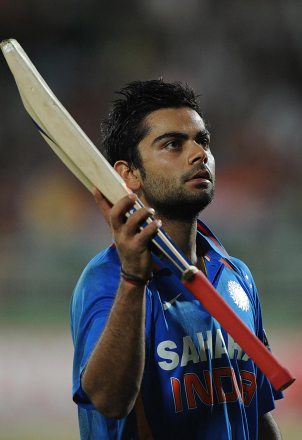
Virat Kohli, with his rapidly rising run tally and maturity, with an extended run in Test Cricket can become a fulcrum of the Next Gen Middle Order

The case discussed earlier could’ve also dented the confidence of RP Singh, who’d have probably been more surprised than anyone else on his call-up, given the fact that he hadn’t played a first class game since January. Such cases, with a hint of a double-edged swordness about them, have buried the careers of a number of talented cricketers who have been victims of poor decision making.

What Indian cricket needs to build on requires the skill of a movie director – role play. Harsha Bhogle had spoken on this earlier, and if it wasn’t evident back then, it is evident right now. If this approach isn’t taken downstream, the absence of the cusp would mandate an explanation. This is very unlikely to materialize during the build up to the Australian tour, given the fact that all the senior players would play a role in the starting XI – given that this might be their last series down under.

But if the names don’t change, at least the structure can. Back the quickies and give the younger batsmen an extended run. Most crucially, eliminate the bottlenecks. Now that is where the trouble begins.


Chandrasekhar Jayaramakrishnan, The Couch Expert

October 13, 2011

Note: This is not so much an article as it is a random rambling. This is a collection of thoughts observed and gathered during conversations with strangers, but cricket lovers, during a few weeks of cricket activity that I couldn’t quite follow due to various reasons. This may lack flow, grammar, and in some cases may even defy common/cricketing sense – but are we ever worried about all this when we’re just … rambling.

A remarkable thing happened in Jaipur recently: Shikar Dhawan became the first batsman in the history of the Irani Trophy to score a century in each innings. And yes, as I write this, the Indian cricketing fraternity is approaching the final of the Challenger Trophy that features another hero from the recently concluded Irani Trophy game.

And we’re also one day away from the start of the 1st ODI featuring England and India, again. This time, the arena is a lot more humid and the wicket, a lot drier.

It is not surprising to see the buzz of activity in the cricketing setup within India – the blitzkrieg happenings of CLT20, the patient mauling of the Ranji Champions Rajasthan in the Irani Trophy, the ongoing ‘where-did-that-come-from’ Challenger Trophy series and at last, some International Cricket taking stage featuring two teams that played each other, well, not too long ago.

Too much to register right? And yes, I was speaking about Abhinav Mukund towards the end of the first paragraph. He looks in good touch – with a century in both the second innings of the Irani Trophy and the first List ‘A’ game of the Challenger Trophy. He followed it up with another impressive half century to take his team, India Red, through to the finals.

Mukund and Dhawan have looked in fine touch, with the former carrying his form on to the Challenger Trophy

And so did Uthappa and Aniruddha Srikkanth, with centuries apiece to take India Green to the finals. So what do I infer from this? Well, only that none of these guys are part of the Indian ODI team that is going to face England tomorrow in Hyderabad.

But then who are the new guys in the squad to face England? S Aravind, of Bangalore Royal Challengers. And by the way, he represents Karnataka in the Ranji Trophy – he finished behind Vinay Kumar and Abhimanyu Mithun, also Karanataka players with Indian caps against their names, in the wickets tally last season.

But wait, wasn’t he the same guy who’d conceded in excess of 60 odd runs against the pyrotechnics of David Warner? Yes, he was. But the squad was picked by then – and still, I’ll give him more credit for his Ranji exploits than the ones with BRC. So, good luck to him – and Rahul Sharma, someone in whom I see a lot of promise and ability.

Which Ranji team does he play for? Let me be honest. I had to cross-check with Cricinfo to put it in here that he plays for Punjab. But I did see him in the Irani Trophy game – he was good, although Ojha’s figures would have overshadowed his performance that game.  

Will Rahul Sharma get a game? Or will he do a Varun Aaron

But what about that guy who bowls in excess of 150, and never ended up bowling in England even though he took that long flight to Heathrow from somewhere in Australia? Varun Aaron is in the squad – although I’m not too sure he’ll play. They’ve got Vinay Kumar and Umesh Yadav. I saw all these guys during the Irani Trophy. And Parthiv Patel too – he’d received the trophy once ROI won the game.

So where does one lay his focus with so much happening within a very short span of time? If you’re looking at through the eyes of the selector, maybe it isn’t as complicated as we think it is.

Players who’ve done well in the T20 setup find their way into the Indian squad with relative ease these days, a trait that you would have hardly imagined if you’d been following the game for over a decade now. It makes it all the more easier to sympathize with those names that have toiled their trade, very successfully, in the domestic circuit for years and years, and were quite unable to fulfill their dreams of sporting Indian colors due to reasons aplenty.

The challenge has not really come from the commercialization of the sport alone, but in the form of entertainment value, in which cricketers are chartered by unorthodoxy to create their own techniques, according to public vision. And you can bet that these visions do not include the skill sets that come via long periods of concentration, temperament and playing the style to suit “the team’s needs” – based on every individual’s strengths and weaknesses.   

Having said that, the Irani Trophy heroes – Dhawan, Rahane, Mukund and Ojha – have all had their share and taste of international cricket, nascent as it may have been in the case of the first three. Had their IPL teams qualified for the CLT20, these names, with the exception of Mukund, would have been missing from the ROI squad that stepped up to face the Ranji Champions Rajasthan in Jaipur last week.

So, what we’re concluding is that the team that is lining up against England tomorrow will consist of players who’ve completed playing two contrasting formats of the game, some coming from injuries and a few after inaction. So, if England end up winning tomorrow, some of the key facts for the post mortem are have already been scripted for use.

But why start with a tone of pessimism? The Indian U-19 team did emerge victorious recently, somewhere in Andhra! Now what was all that about?


Chandrasekhar Jayaramakrishnan

16 September 2011

Had it not been for image, power and charisma, Indian cricket’s state of affairs would be contracting even more than it has over this English summer. By not turning up for the ICC awards ceremony in London, deliberate or not, the force of the critics’ arguments have carried on in to the abyss.

The indications, thus far, are that Team India is unwilling to acknowledge mistakes on its part. The focus on their absence might have temporarily found some of the underperformers’ relief from being a part of obscure passages in tabloids, but the road away from London towards Wales will finally put an end to what has been nothing short of a disastrous series for India.

The Indians will certainly be hoping that crossing the English border would hopefully see a turn in their fortunes as batting stalwart Rahul Dravid, under strange circumstances, gets ready to wear the Indian blue outfit for the last time in his limited-overs career. That Graeme Swann had to openly admit that seeing Dravid for the last time would make the bowlers around the world heave a sigh of relief is a testament to his wonderful, illustrious career.

Rahul Dravid will bow out of the ODI arena at Sophia Gardens on Friday

Dravid has been the most perfect iteration of the textbook approach candidate. At various instances, during an era ruled by the hard hitters and shorter formats, a serene eye would squint as it witnessed Dravid attempt an odd slog, so unnatural of him, in the middle: open-chested, sweat-laded shirt, high elbowed, and ramrod straight – he could have so easily been the strict disciplinarian amidst pampered souls, lost in a world ruled by chaos.

The next-gen fan seems to have a primal need for watching the ball travel high and afar; cricket has become the modern day equivalent of The Epic of Gilgamesh. It is common wisdom among great cricketers that there are preconditions for attaining success at the very highest level – they key factor being mastering the basics. It is a trait that even fetched two of England’s top three batsmen, batting-order wise, highest honours during the ICC Awards ceremony in London a few days ago. The icing on the cake for both Cook and Trott would be to send the visitors back home without a win all summer.

History-making is rarely free, and the Englishmen are on a roll with the momentum backing them as they approach Cardiff. Broad’s injury would definitely deprive them of their star performer this summer, but the manner in which the replacements have slotted in and performed would give Andy Flower little headache.

India’s addiction to picking youngsters on tours outside the subcontinent and not giving them a run is very much like American addiction to Oil. Why Varun Aaron hasn’t been given a look in yet is a question that beats most of us. If they thought he was ready before he boarded the flight to London, one can’t seem to concretize on a reason why he wouldn’t be ready now. Even if Cardiff were to script a remitting horror story so reflective of this summer, it wouldn’t be a bad idea to witness what this youngster has in store.

Plenty of words have been written, both supportive and critical of the visiting team on and off the field. A victory in Cardiff wouldn’t alter the writing on the wall to an extent that the scars will heal effortlessly. But certainly, a win over the current World Number One would offer some credibility to a unit that has appeared as dry as dates with a loyal fan base slowly swallowing the bitter seed that they never would have imagined to have germinated after a memorable world cup win earlier this year.

As the curtains are about to close on a series that has been haplessly one-sided, a war hero from the victimized camp will slowly, and humbly, walk away from the arena in which he has amassed over 10000 runs at an average close to 40. As he bows out, so will an integral part of the art of classical batsmanship, from the shorter format of the game!


Chandrasekhar Jayaramakrishnan
12 September, 2011

It is hard to decide whether to laugh or frown after witnessing the scenes at The Lord’s on Sunday. While the result was clearly unexpected, the belligerence within was revealing through the body language of players from both camps, during different instances.

Dhoni’s frustration is understandable – the battle has gone bonkers with every route to success having brick walls with loaded artillery. Once again, the D/L method proved as hard to comprehend as The Grand Unified Theory, and as ruthless as terrorists as both camps underwent nervy moments when the rain gods intervened towards the end. A neutral, whole heartedly would state that a tie was a fair result. Not before both camps showed their reluctance to enter the field when the numbers were inclined to their side.

Quantitatively, India got off to a good start by weathering the new ball in order to prevent a repeat of what happened at The Oval. Qualitatively though, Rahane’s rather slow start to his innings witnessed moments of lunatic madness as he tried to whack the leather out of the white ball as frustration seeped in. Rahane would have completed an entire team’s innings had he been playing baseball instead of cricket.

Parthiv, at the other end, dismissed anything that was short of length by quickly shifting his weight on to the back foot and pulling the ball with confidence. Both the openers had luck on their side and trudged along at close to five-an-over. While the numbers seemed convincing, the approach, especially from Rahane, wasn’t. He’d have done well to learn from this innings on how to approach the game when shots keep finding the fielders.

Raina and Dhoni unleashed the pyrotechnics to get India up to 280

Another miniature collapse, following the dismissal of Dravid and Kohli almost immediately after one and other, saw the Indian skipper work on rebuilding the innings once again. With Raina, heart in sleeve, hoping to become a part of the reconstruction, a solid partnership was built to suitably daunt the English attack.

The run rate during the last ten overs headed towards the stratosphere, as over a hundred runs were gathered in a passage of play that helped India reach a more-than-respectable total of 280. It seemed as though the world had absorbed a lesson on Indian resolve, a characteristic that had made them world champions a few months ago.

The English reply was an unpredictable scatter of method and madness. Only Ian Bell’s fifty stood out amongst the top four batsmen, after the openers had departed in search of quick runs. Ravi Bopara, one of the heroes from The Oval, played an innings of undoubted steadfastness by building valuable partnerships with Bell, Bresnan and Swann. Signs of sloppiness on the field from the Indians were vivid once again with RP Singh being the culprit for a chance that he left begging at long on. Another instance of a frustrated Jadeja’s overthrow, way off radar, would surely have brought a smile on to the face of Steve Harmison, who definitely needed chaffing after publicly expressing his disgust over Durham CC when they had released his brother Ben.

At 173-5, bearing in mind Broad’s injury, the game seemed India’s to lose, with less than fifteen overs remaining. However, Bopara played intelligent cricket – strokes that demonstrated the work put in by a man who is clearly trying to cement a place in the current English setup. He targeted gaps, and slow fielders, to convert ones into twos and keep the rate ticking. The consequences of the Indian bowlers’ inability to walk through the lower order batsmen may become more apparent once the series is over, but England, no doubt, have enjoyed their role in the melodrama of lower order batting.

Ravi Bopara played a crucial innings for the second time in two games this series.

When rain intervened, the story had two parts to it: one, when the Indians were on the driving seat, and another, after another over, when the Englishmen took charge. With the score at 242, when the second spell of heavier rain hit the city, it seemed as though that England had clinched the game with the demanded D/L score at that juncture reading 240. Earlier, the Indians had a brief advantage but the spell of rain vanished by the time the teams could leave the ground.

But play resumed, much to the delight of the sport, to witness a spell of wickets falling in quick succession. Bopara departed by holing out to deep mid-wicket for a well constructed 96, but rain played spoil-sport again and used the D/L tenets do declare that the game was tied with England, at that time, further requiring 11 runs from 7 balls with a couple of wickets in hand. D/L doesn’t take into account the case of injured players who can’t bat.

Just like how an organization’s balance sheet doesn’t capture the true costs and risks of business activities, The Lord’s scorecard did likewise. The verdict would simply pose that England clinched the series with India yet to record a victory this summer. As the focus shifts to Cardiff, there is still no ballast to raise any hopes within the Indian camp.


Chandrasekhar Jayarama Krishnan

Head of Cricket – The CouchExpert

11 September, 2011

With just a day’s gap between the two ODIs in London, the drive from Kennington to St. John’s Wood have had the players reflecting over a result that is yet to witness a tilt in scales. In an awful collision between hope and reality, the Indians finally came through a game that witnessed their best chance to finally rope in a result to their favour.

The Indian top order crumbled by the time ten overs were bowled in the day, with vice-captain Suresh Raina falling to a heinous shot which, given the situation, was way out of bounds. In an act that reacted to insistence on largely relevant public opinions, featuring MSD’s determination and Ravindra Jadeja’s place, the innings was laudably rebuilt on a weak foundation by the two.

Jadeja's Man-of-the-Match performance wasn't enough to hand India its first victory this series

There are many who’ve voiced their mistrust over Jadeja’s place in the squad. For the youngster to respond the way he did speaks a lot on his temperament, a trait that is worth its weight in gold. Sure, there are a few glitches already in his relatively short career so far, but even the best sportsmen have had their share of mistakes committed when young.

India, yet again, finds itself in a conspicuously difficult situation; even if it seems apparent that the previous ODI showcased their ability down the order. Ashwin, with his intelligent innings late in the game, surprised many with his cheeky approach.

The Englishmen, on the other hand, just do not seem to run out of fuel. Bopara, a player who has been under the scanner since his return, steered England to victory. Munaf’s bowling, with an economy rate that would have sent a shiver down one’s spine had it been recorded on a Ritcher Scale, did no favours to an already depleted Indian morale. RP Singh, thankfully, looked a much quicker (and fitter) bowler than the one witnessed at The Oval a few weeks ago.

But nothing seemed enough to stop the Kieswetter cannon ball from firing explosives to give England the start that they needed. A charge down the track against Praveen to heave the ball into the midwicket boundary was a shot that would have had the heads of NY Mets coaches turn towards the youngster. Bopara and Bresnan, towards the end, acted as able catalysts to help England add another win to their tally this series.

As the game moves in to the Lord’s, it is only memories from the past that would shed any light into India’s hopes. England will look to play an unchanged squad, whereas the Indians, hopefully, might consider handing Varun Aaron his debut. That he might be raw and inexperienced doesn’t matter, his very inclusion could see an increase in the number of viewers who would turn on their TV sets on Sunday.

This may tell us something about the state of Indian fans around the world: the romantics are a tiny minority, the ones with oil of vitriol up their opinion glasses are high in number, but there may not be enough to lend energy to effect a turnaround at Lord’s. Righteous contempt seems called for, but it is never within the Indian nature to do so. You just have to ask the cold-blooded criminals who’re yet to be tried by the government – they could narrate tales longer than Navjot Sidhu on how fortunate they are.

If the Indians have to do something, they’ll have to do it without an iota of sympathy from the enraged fan.